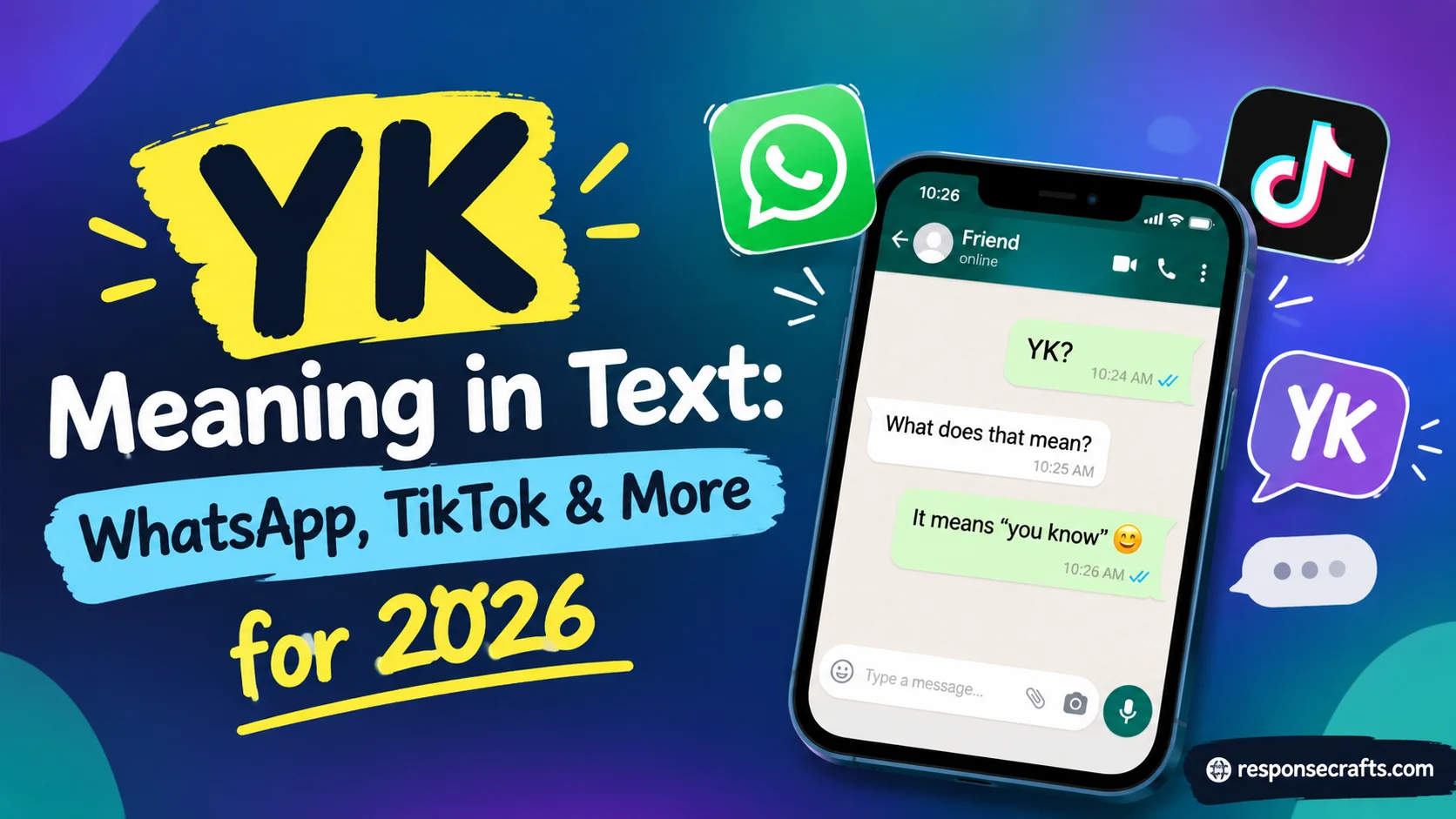
If you have seen “YK” in a WhatsApp chat, TikTok comment, Instagram DM, or casual text, you may wonder what it means. In most online conversations, YK is a short form of “you know.” People use it to make messages quicker, more casual, and easier to type. The abbreviation can appear at the beginning, middle, or end of a sentence, depending on how someone talks.
The meaning of YK can change slightly based on the conversation, tone, and context. Someone might write “YK what I mean” when they assume you understand their point, while “It was fun, YK?” can sound like they are seeking agreement. On TikTok, Instagram, and messaging apps, users often choose YK because it feels natural and informal. It is especially common in casual texting, where short forms save time and keep conversations relaxed.
Understanding YK meaning in text is useful because abbreviations can sometimes have different meanings in different communities. While “you know” is the most common interpretation in everyday messaging, the surrounding words usually reveal exactly what the sender intends. You may also see YK combined with other internet slang, emojis, or shortened phrases. In this guide, you will learn how YK works on WhatsApp, TikTok, Instagram, Snapchat, and other platforms, along with examples that make its meaning easy to understand.
Quick Answer
YK usually means “you know” in text messages and social media.
It is an informal abbreviation that people use to:
- Refer to something they think you already understand
- Ask for agreement or recognition
- Make a statement feel more conversational
- Add emphasis to an opinion or feeling
- Fill a conversational pause
- Create a sense of shared understanding
For example:
“That movie was actually really good, yk?”
This essentially means:
“That movie was actually really good, you know?”
The meaning stays simple, but the tone depends on the surrounding words.
Comparison Overview
The easiest way to understand YK meaning in text is to compare it with other common abbreviations.
| Abbreviation | Meaning | Typical use | Tone |
| YK | You know | Shared understanding or conversational filler | Casual |
| IK | I know | Quick agreement or acknowledgment | Casual |
| IDK | I don’t know | Uncertainty or lack of knowledge | Casual |
| IKR | I know, right? | Strong agreement | Casual |
| WYM | What you mean? / What do you mean? | Asking for clarification | Casual |
| TBH | To be honest | Introducing an honest opinion | Casual |
| IYKYK | If you know, you know | Referring to insider knowledge | Casual/social |
| YKW | You know what | Introducing a thought or change of direction | Casual |
The most important distinction is between YK and IYKYK. They look related because they are, but they aren’t interchangeable.
YK generally works like the spoken phrase “you know.”
IYKYK means “if you know, you know” and usually points toward an inside joke, niche reference, private experience, or shared cultural knowledge.
Main Differences Between YK Meaning in Text and Similar Abbreviations
Although short abbreviations can look interchangeable at first glance, they often perform different jobs in a conversation.
YK vs. IK
YK means “you know.”
IK means “I know.”
Compare these:
“YK I don’t like crowded places.”
“IK you don’t like crowded places.”
The first assumes or checks shared knowledge. The second confirms that the sender already knows the information.
That one-letter difference changes the direction of the statement.
YK vs. IDK
YK = you know
IDK = I don’t know
These are almost opposites in conversational function.
“YK what happened yesterday?”
The sender assumes the other person may know.
“IDK what happened yesterday.”
The sender admits they don’t know.
YK vs. IKR
IKR stands for “I know, right?” It usually expresses agreement with something another person has already said.
“That ending was terrible.”
“IKR!”
By contrast:
“That ending was terrible, yk?”
Here, yk makes the original statement sound more conversational and invites the other person to relate to it.
YK vs. IYKYK
This distinction matters on social media.
YK: “You know.”
IYKYK: “If you know, you know.”
The first is a normal conversational expression. The second deliberately leaves part of the meaning unstated because only certain people are expected to understand it.
What Does YK Stand For?
YK stands for “you know.”
In everyday texting, it works as an abbreviated version of the phrase rather than as a completely separate slang word.
People already use “you know” frequently in ordinary speech. Linguists often classify it as a discourse marker because it can help organize communication rather than add a major piece of factual information. Cambridge Dictionary specifically lists “you know” as an example of a discourse marker.
Research on spoken English has found that “you know” can perform several functions. Studies describe it as a way to invite inferences, introduce or elaborate information, manage turns, modify statements, and engage the listener.
Texting turns that familiar spoken expression into shorthand.
Why Do People Use YK?
There are several practical reasons.
- Speed: Two letters take less time than two words.
- Informality: It makes a message feel relaxed.
- Shared context: It suggests the recipient already understands something.
- Conversation-like rhythm: It imitates the way people naturally speak.
- Emphasis: It can give an opinion or feeling a little more weight.
- Connection: It can subtly invite the other person into the conversation.
The abbreviation isn’t doing all the work. The sentence around it carries most of the meaning.
What Does YK Mean in Text Messages?
In ordinary text messages, YK usually means “you know.”
The abbreviation can appear at the beginning, middle, or end of a message.
YK at the Beginning
“YK I don’t usually complain.”
Here, the sender assumes the recipient already knows this about them.
The expanded version would be:
“You know I don’t usually complain.”
YK in the Middle
“I was, yk, really tired after work.”
Here, it behaves more like a conversational filler. The writer is recreating the rhythm of spoken language.
YK at the End
“It just felt strange, yk?”
This is one of the most natural uses.
The sender isn’t necessarily asking a literal question. They’re often saying something closer to “You know what I mean?”
Academic research on “you know” supports this broader interpretation. The phrase can help a speaker signal that they want the listener to interpret or connect with what they’re saying.
YK Meaning on WhatsApp
On WhatsApp, YK generally means “you know” when it appears in a casual conversation.
It doesn’t suddenly acquire a special WhatsApp-specific definition. The platform simply provides another place where people use everyday texting shorthand.
You might see messages such as:
“YK how stressful this week has been.”
“I wasn’t angry, yk.”
“YK what I mean 😂”
“Some days you just need to stay home, yk?”
In each example, the surrounding sentence makes the intended meaning fairly clear.
Why YK Fits WhatsApp Conversations
WhatsApp conversations often resemble ordinary speech. People send short messages, follow up quickly, use emojis, and leave out unnecessary words.
That environment makes shorthand useful.
Someone who writes:
“It’s been a weird day, you know?”
might type:
“It’s been a weird day, yk?”
The second version feels quicker and more casual.
However, YK doesn’t mean something different simply because it appears on WhatsApp. Context still determines how the sender intends it.
YK Meaning on TikTok
On TikTok, YK usually means “you know” as well.
The abbreviation can appear in:
- Video captions
- Comments
- Replies
- Direct messages
- Text overlays
- Creator conversations
TikTok’s fast-moving comment culture encourages short expressions and abbreviations. A 2023 explainer from Dexerto also identifies “you know” as the usual meaning of YK on TikTok and notes that the abbreviation appears in captions, comments, and DMs.
Examples of YK on TikTok
“That one song just hits different, yk?”
“YK I had to try it 😂”
“It’s one of those days, yk?”
“YK exactly what I’m talking about.”
In a TikTok comment, yk can also make a statement feel more relatable. It gives the impression that the commenter expects other people to share the same experience.
That’s particularly useful in social-media conversations where people often bond over a shared feeling rather than a detailed explanation.
YK Meaning on Instagram and Snapchat
The same basic meaning carries over to Instagram and Snapchat.
You may see yk in:
- DMs
- Comments
- Story replies
- Captions
- Group chats
For example:
“YK I always support you.”
or:
“That outfit is perfect, yk?”
The abbreviation keeps the language informal.
Snapchat
Snapchat conversations often move quickly. As a result, short forms such as YK can fit naturally into rapid exchanges.
“YK what happened yesterday?”
“I was so tired yk 😭”
Again, the platform doesn’t create a new definition. YK remains shorthand for “you know.”
Read More: IMO Mean in Text: Meaning, Uses, Examples in 2026
How YK Changes the Tone of a Message
The most useful thing to understand about YK meaning in text is that the abbreviation itself doesn’t carry one fixed emotional tone.
The surrounding sentence matters more.
Friendly
“YK you can always talk to me.”
Here, YK reinforces familiarity.
Relatable
“Mondays are exhausting, yk?”
The writer expects the other person to understand the feeling.
Reflective
“Sometimes you just need some time alone, yk.”
The abbreviation makes the statement sound less formal and more conversational.
Seeking Agreement
“That restaurant was overrated, yk?”
The writer may be looking for confirmation.
Slightly Hesitant
“I don’t know, yk…”
Here, YK can make the statement feel unfinished or uncertain.
Occasionally Dismissive
“I already told you, yk.”
This one can sound irritated depending on the relationship and punctuation.
Notice the pattern: the same two letters appear in every example, yet the emotional effect changes.
That’s because digital tone comes from the whole message.
How Punctuation and Emojis Change YK Meaning
Text doesn’t have voice pitch, facial expressions, or body language. Writers often compensate with punctuation and emojis.
Compare:
They all contain the same abbreviation, but they can feel very different.
| Version | Possible tone |
| YK? | Asking for recognition or clarification |
| yk 😂 | Playful or humorous |
| yk… | Hesitant, emotional, or unfinished |
| YK! | Strong emphasis |
| yk. | Neutral or potentially blunt |
These interpretations aren’t fixed rules. They’re clues.
The relationship between the people, the topic, and the rest of the conversation matter more than capitalization or punctuation alone.
Is YK Rude?
No. YK isn’t inherently rude.
It’s simply informal shorthand.
However, almost any neutral expression can sound rude in the wrong context.
For example:
“You know I told you already.”
can sound irritated when someone emphasizes it sharply.
The same applies to:
“YK I already told you.”
The abbreviation doesn’t create the irritation. The surrounding statement does.
A useful rule is:
Don’t judge the tone of YK by the letters alone. Read the entire message.
That approach prevents a lot of unnecessary misunderstandings in text conversations.
Is YK Flirty or Romantic?
YK does not inherently mean flirting or romance.
Someone might use it while flirting, but that doesn’t make YK itself a flirtatious abbreviation.
Consider:
“That movie was actually good, yk?”
There’s nothing inherently romantic there.
Now compare:
“You looked really good tonight, yk? ❤️”
That message may feel flirtatious because of the compliment, context, and emoji. YK simply contributes to the conversational tone.
The same principle applies to searches such as “YK meaning from a girl” or “YK meaning from a guy.” The sender’s gender doesn’t give the abbreviation a secret definition.
Look at the whole conversation instead.
Real Text Examples of YK
The following examples show how the abbreviation works in different situations.
| Example | What YK means | What it communicates |
| “YK what I mean.” | You know | Assumes shared understanding |
| “It was awkward, yk?” | You know | Invites agreement |
| “I wasn’t mad, yk.” | You know | Softens an explanation |
| “YK I don’t like crowds.” | You know | Refers to known information |
| “Some days are just hard, yk.” | You know | Expresses a relatable feeling |
| “YK 😂 that’s exactly what happened.” | You know | Adds conversational humor |
| “I don’t know, yk…” | You know | Signals hesitation |
A Short Conversation
Person A: “I don’t really feel like going out tonight.”
Person B: “Yeah, sometimes you just need to stay home and recharge, yk?”
Here, YK doesn’t add new factual information. Instead, it creates a sense of shared understanding.
That function has a real linguistic basis. Research describes “you know” as an interactional expression that can help speakers guide how listeners interpret what they are saying.
A Simple Case Study: Why Context Matters
Imagine receiving this message:
Without context, you can’t know exactly what emotional tone the sender intended.
It could mean:
Friend: “They canceled the concert five minutes before it started.”
The meaning becomes clearer. The sender is expressing surprise and inviting shared disbelief.
Now consider:
Friend: “I think I should quit my job.”
The same words could sound more judgmental or concerned.
Lesson: The abbreviation stayed identical. The context changed the interpretation.
How to Respond When Someone Says YK
You don’t need to respond to the abbreviation itself.
Instead, respond to the idea surrounding it.
If They’re Seeking Agreement
“Yeah, exactly.”
“I know what you mean.”
If They’re Sharing a Feeling
“Yeah, I get that.”
“Honestly, same.”
If You Don’t Understand
“What do you mean?”
“What happened?”
If They’re Making a Joke
“😂 Exactly.”
“For real.”
The easiest approach is to treat YK as you would treat the spoken phrase “you know.”
You normally wouldn’t reply to the words “you know” themselves. You’d respond to the point the person is making.
Can You Use YK in Formal Writing?
Generally, no.
YK belongs to casual digital communication. It works well in a message to a friend but can look careless in professional or academic writing.
Avoid it in:
- Business emails
- Academic essays
- Research papers
- Job applications
- Cover letters
- Formal reports
- Official documents
- Customer-service communication
Instead, write the words out when they genuinely belong in the sentence.
For example:
Casual text:
“It was harder than I expected, yk?”
Formal writing:
“The task proved more difficult than expected.”
The second version doesn’t need “you know” at all.
That’s an important distinction. Formal writing isn’t improved simply by replacing every abbreviation with its full form. Sometimes the best edit removes the conversational filler completely.
Does Capitalization Change the YK Meaning?
Usually, no.
These forms normally mean the same thing:
- YK
- yk
- Yk
Capitalization often reflects typing habits rather than meaning.
Someone might type YK because they normally capitalize abbreviations. Another person might use yk because lowercase texting feels more natural.
Neither version automatically changes the definition.
The same applies across most platforms. You should focus on the sentence rather than assuming capitalization signals a hidden meaning.
Other Meanings of YK
Although “you know” is the dominant interpretation in ordinary texting, abbreviations can mean different things in specialized settings.
For example, YK may appear as part of:
- A username
- An artist name
- A brand or organization name
- A place or location reference
- A community-specific abbreviation
- A technical or professional abbreviation
That doesn’t make these alternative meanings equally likely in a normal text conversation.
If a friend sends:
“YK what I mean 😂”
then “you know” is overwhelmingly the natural interpretation.
If you see YK as part of a username or organization name, however, it may not be slang at all.
The Context Test
When you’re unsure, ask three questions:
- Where did I see YK?
- What words surround it?
- Does “you know” make grammatical and conversational sense?
If the answer to the third question is yes, you’ve probably found the intended meaning.
What Does “If YK YK” Mean?
This is where YK can get confused with a related expression.
“If you know, you know” is commonly shortened to IYKYK.
You may also encounter people informally writing variations such as:
“If yk yk.”
The idea is different from ordinary YK.
“You know” suggests shared understanding.
“If you know, you know” suggests that only people familiar with a particular experience or reference will understand.
For example:
“That late-night food spot after a long exam… IYKYK.”
The writer isn’t simply saying “you know.” They’re pointing toward an experience that some readers will immediately recognize.
Why “You Know” Works So Well in Online Conversation
There is a deeper reason YK feels natural in texting: people don’t communicate through facts alone.
Conversation also manages relationships, attention, uncertainty, agreement, and shared knowledge.
Research on the phrase “you know” has identified several functions, including introducing information, elaborating on an idea, inviting inferences, and managing how information is presented.
Another study describes “you know” as a marker that can help speakers seek cooperation from the listener and create a sense of shared understanding.
Texting preserves many of those social functions.
When someone writes:
“It’s been a rough week, yk?”
they aren’t necessarily asking whether you literally possess knowledge of their week.
They’re doing something more subtle.
They’re inviting you to understand the feeling.
That small distinction explains why YK can carry more conversational weight than its two letters suggest.
Common Mistakes When Interpreting YK
Even though the abbreviation is simple, a few mistakes can lead to awkward replies.
Assuming YK Always Means Agreement
It doesn’t.
Sometimes the sender uses it as a filler or transition.
Treating YK as a Question Every Time
A sentence ending in “yk?” may invite agreement, but it doesn’t always require a literal yes-or-no answer.
Assuming YK Is Flirty
It isn’t.
The surrounding message determines whether the conversation is romantic.
Assuming Every Platform Gives YK a New Meaning
Usually it doesn’t.
TikTok, WhatsApp, Instagram, Snapchat, and ordinary texting can all use YK in essentially the same way.
Confusing YK With IYKYK
These are related but distinct expressions.
YK = you know.
IYKYK = if you know, you know.
Conclusion
The YK meaning in text is usually “you know,” a short phrase people use in casual digital conversations. You may see YK on WhatsApp, TikTok, Instagram, Snapchat, and other social platforms. Its exact tone depends on the sentence and the relationship between the people talking. Someone might use YK to make a statement sound more casual, familiar, or conversational. In most cases, it does not carry a hidden or complicated meaning. Once you understand the context, YK is easy to recognize and use in everyday texting.
FAQs
What does YK mean in text?
YK usually means “you know” in texting and online conversations. People use it as a quick abbreviation when chatting with friends or others in informal settings.
What does YK mean on WhatsApp?
On WhatsApp, YK generally means “you know.” For example, someone might text, “YK I was busy yesterday,” meaning “You know I was busy yesterday.”
What does YK mean on TikTok?
On TikTok, YK commonly means “you know.” Users may include it in comments, captions, or messages to make their wording feel more casual and conversational.
Is YK formal or informal?
YK is informal texting slang. It works well in casual chats, social media, and messages with friends, but you should generally avoid it in formal emails, academic writing, or professional documents.
Can YK have another meaning?
Yes, YK can have different meanings depending on context, but “you know” is a common meaning in everyday texting. Always look at the surrounding words before deciding what the abbreviation means.














1 thought on “YK Meaning in Text: WhatsApp, TikTok & More for 2026”