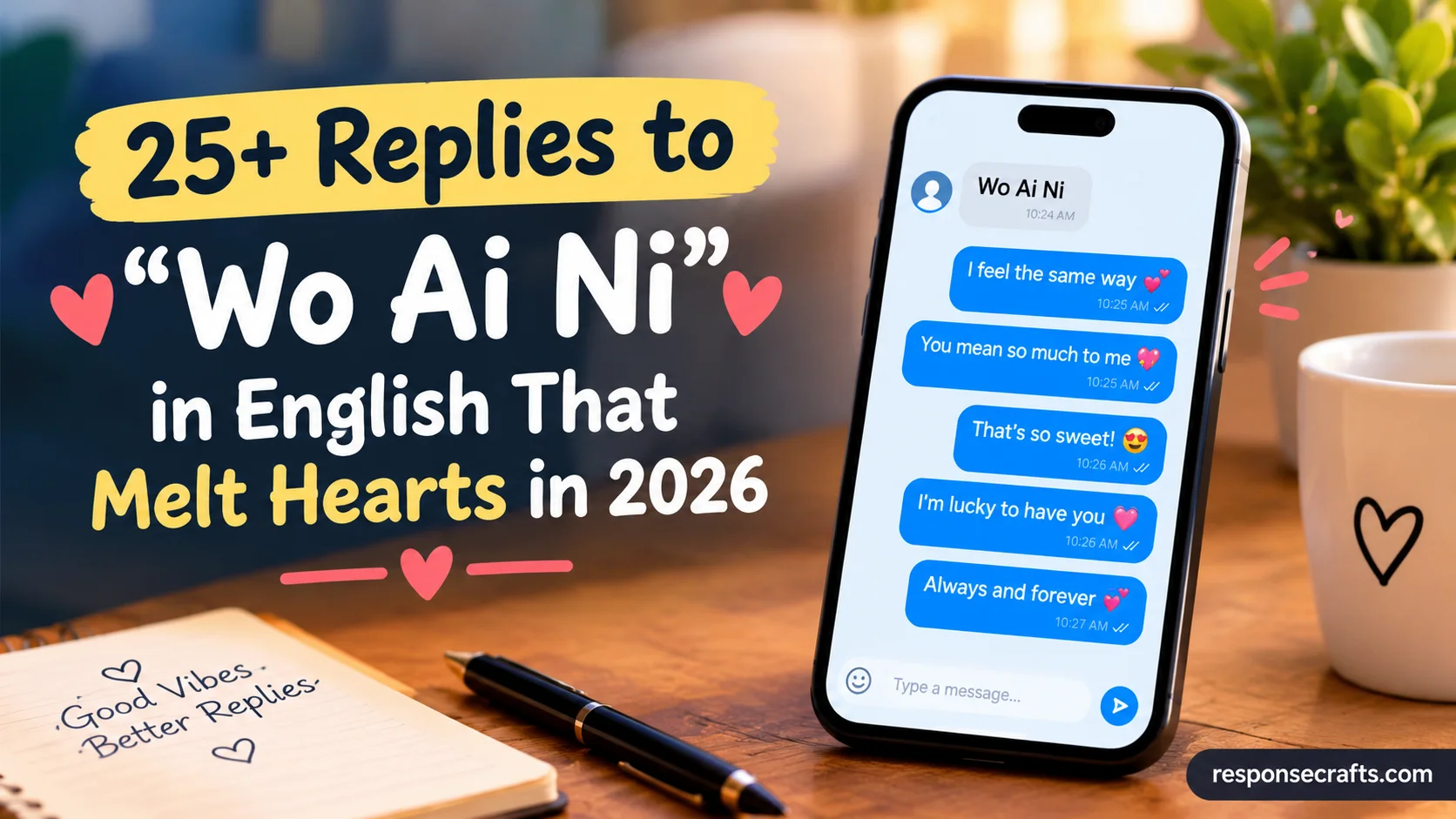
Hearing someone say “Wo Ai Ni” can be a sweet and meaningful moment, especially when you understand the feelings behind those words. This popular Chinese phrase means “I love you” in English and is often used to express romantic love, affection, and deep emotional connection. Whether your partner says it during a heartfelt conversation or someone special sends it in a text message, knowing how to respond can make the moment even more memorable and touching. A thoughtful reply does not need to be complicated; sometimes, a few genuine words are enough to show someone how much they mean to you.
There are many ways to reply to “Wo Ai Ni” in English, depending on your relationship, feelings, and personal communication style. If you feel the same way, you might respond with “I love you too” or “You mean the world to me.” For a more romantic and heartfelt response, you could say, “My heart belongs to you,” while a playful reply might be something like, “You just made me smile!” If a friend or someone you are still getting to know says these words, you can choose a warm but appropriate response that reflects your true feelings. The best reply is always one that feels natural, sincere, and comfortable for you.
In this article, you will discover 25+ replies to “Wo Ai Ni” in English, along with examples to help you express your feelings in different situations. From romantic responses and cute text messages to flirty, emotional, and friendly replies, these suggestions will make it easier to find the right words when someone expresses their love. You will also learn how to respond when you love them back, want to keep things playful, or are not quite ready to say those three special words yourself. By choosing a reply that matches your emotions and intentions, you can make your conversation more personal, meaningful, and unforgettable.
25 Best Ways to Reply to “Wo Ai Ni” in English
The following sections cover different ways to respond, with examples, meanings, tones, and situations where each reply works best.
1. “I Love You, Too”
When someone tells you “Wo Ai Ni,” replying with “I love you, too” is one of the most natural and heartfelt choices. It communicates that their feelings are mutual and that you appreciate their affection. You can use this response with your partner, spouse, or someone with whom you share a loving relationship. If the moment feels emotional, say it sincerely rather than adding unnecessary words. A gentle smile or a warm hug can make this simple reply even more meaningful.
Meaning: Your feelings are mutual.
Tone: Romantic, sincere, and affectionate.
Example: “Wo Ai Ni.” “I love you, too, more than you know.”
Best use: When you genuinely love the person and want to express the same feelings.
2. “I Love You More”
“I love you more” adds a playful, romantic twist to a classic declaration of love. It suggests that your affection is just as strong, if not stronger, than the other person’s. This reply works especially well when you and your partner enjoy teasing each other about who loves whom more. You can say it during a sweet conversation, over text, or when saying goodbye. Keep the tone warm and playful so the message feels affectionate instead of competitive.
Meaning: My love for you is even greater.
Tone: Sweet, playful, and romantic.
Example: “Wo Ai Ni.” “I love you more, and I can prove it with a hug.”
Best use: When you want to make an affectionate exchange more playful.
3. “You Mean the World to Me”
This response goes beyond simply returning the words “I love you.” It tells the other person that they hold an important place in your life. When someone expresses love in Chinese, answering with this English phrase can make the moment feel personal and sincere. It’s especially meaningful when your relationship has grown through shared experiences, trust, and emotional support. You can also personalize it by mentioning something you appreciate about the person, making your reply sound thoughtful rather than rehearsed.
Meaning: You are incredibly important to me.
Tone: Deep, heartfelt, and reassuring.
Example: “Wo Ai Ni.” “You mean the world to me, and I’m grateful you’re in my life.”
Best use: When you want to express deep appreciation for someone you love.
4. “You Make My Heart Smile”
Sometimes, love is less about grand declarations and more about how someone makes you feel every day. “You make my heart smile” expresses the happiness and warmth that their presence brings into your life. It’s a gentle way to respond when you want to sound romantic without being overly serious. The phrase works particularly well in affectionate texts, handwritten notes, or quiet conversations. It also gives the other person a reason to feel appreciated because it highlights the positive emotions they inspire in you.
Meaning: You bring happiness and warmth into my life.
Tone: Cute, tender, and romantic.
Example: “Wo Ai Ni.” “You make my heart smile every single day.”
Best use: When someone makes your everyday life brighter and happier.
5. “My Heart Belongs to You”
If you want a more intense romantic response, “My heart belongs to you” communicates devotion and emotional closeness. It suggests that the person has a special place in your heart and that your relationship means a great deal to you. This phrase is best suited to established relationships where both people feel comfortable expressing strong affection. You might use it in a heartfelt message, an anniversary card, or a quiet moment together. Its impact comes from genuine emotion, not from saying it dramatically.
Meaning: You have a special and lasting place in my heart.
Tone: Passionate, devoted, and sentimental.
Example: “Wo Ai Ni.” “My heart belongs to you, today and always.”
Best use: When you want to express strong romantic commitment.
6. “You’re My Favorite Person”
Not every loving reply needs to sound like a romantic movie. “You’re my favorite person” is warm, natural, and easy to say. It tells someone that you enjoy their company and value the connection you share. This response is particularly useful when you want to be affectionate without sounding overly formal or dramatic. Depending on your relationship, it can communicate romantic love or deep personal affection. Add a little detail about what makes them special to make your response feel even more genuine.
Meaning: You are the person I enjoy and appreciate most.
Tone: Casual, affectionate, and sweet.
Example: “Wo Ai Ni.” “And you’re my favorite person to talk to, laugh with, and spend time with.”
Best use: When you want a loving reply that sounds conversational.
7. “You Make Me Feel So Loved”
This response acknowledges not only the person’s words but also the emotional effect they have on you. Saying “You make me feel so loved” lets them know that their affection matters. It’s a thoughtful choice when your partner regularly shows care through words, actions, or small gestures. Rather than simply repeating “I love you,” you’re explaining how their love makes you feel. That little bit of emotional detail can help build a closer connection and encourage honest communication.
Meaning: Your affection makes me feel valued and cared for.
Tone: Grateful, vulnerable, and loving.
Example: “Wo Ai Ni.” “You make me feel so loved, and I hope I make you feel the same way.”
Best use: When you want to acknowledge someone’s care and affection.
8. “I Choose You Every Day”
Love often involves more than feelings. It can also involve showing up, offering support, and choosing to nurture a relationship over time. “I choose you every day” communicates that your affection is intentional rather than limited to a single romantic moment. This phrase is particularly meaningful for long-term partners who have experienced both happy and challenging days together. It offers reassurance without promising that every day will be perfect. The message is that you value the relationship and want to keep investing in it.
Meaning: I continue to value and choose our relationship.
Tone: Committed, mature, and reassuring.
Example: “Wo Ai Ni.” “I choose you every day, even when life gets complicated.”
Best use: When you want to express commitment in a serious relationship.
9. “You Make My Life Better”
A loving relationship can make ordinary moments feel more enjoyable. “You make my life better” recognizes the positive difference someone brings to your world. This reply is simple enough for everyday conversation but meaningful enough for a heartfelt exchange. You can make it more personal by mentioning how they support you, encourage you, or make you laugh. That extra detail shows that your appreciation comes from real experiences rather than a generic romantic phrase.
Meaning: Your presence adds happiness and value to my life.
Tone: Appreciative, honest, and warm.
Example: “Wo Ai Ni.” “You make my life better in so many little ways.”
Best use: When you want to express appreciation alongside romantic affection.
10. “I’m So Lucky to Have You”
This response communicates gratitude and affection at the same time. It tells the other person that you don’t take their presence for granted and that you appreciate the relationship you share. It works well in both spoken conversations and text messages, especially when someone has done something thoughtful for you. You don’t need to be celebrating a special occasion to use it. Sometimes, saying that you’re lucky to have someone is a beautiful way to acknowledge the happiness they bring into your everyday life.
Meaning: I feel fortunate to have you in my life.
Tone: Grateful, tender, and loving.
Example: “Wo Ai Ni.” “I’m so lucky to have you by my side.”
Best use: When you want to combine love with genuine appreciation.
11. “You Have No Idea How Much I Love You”
If your feelings are difficult to put into words, this response helps express their depth. It suggests that your love is stronger than a short sentence can fully explain. The phrase works particularly well when your partner says something unexpectedly sweet or when you’re sharing an emotional moment. You can follow it with a specific reason you love them, such as their kindness, patience, or sense of humor. Personal details make the response more memorable and help the other person understand what makes your relationship meaningful.
Meaning: My love for you is deeper than I can easily explain.
Tone: Emotional, passionate, and heartfelt.
Example: “Wo Ai Ni.” “You have no idea how much I love you, and I’m thankful for you every day.”
Best use: When you want to communicate intense affection.
12. “Forever and Always”
“Forever and always” is a short phrase that expresses enduring love and devotion. It’s often used between romantic partners who feel secure in their relationship and want to communicate a lasting connection. Because it’s brief, it can be especially effective in a text message or as a gentle response during a quiet moment. However, it carries a strong sense of commitment, so use it when it reflects your genuine intentions. A few sincere words can be more powerful than a long message when the feeling behind them is real.
Meaning: My affection and commitment are intended to last.
Tone: Romantic, sentimental, and devoted.
Example: “Wo Ai Ni.” “Forever and always, my love.”
Best use: When you share a committed relationship and want a lasting-love message.
13. “You’re My Happy Place”
This cute response describes the comfort and happiness you feel around someone. A “happy place” is a person or setting where you feel relaxed, accepted, and emotionally at ease. When you use this phrase in response to “Wo Ai Ni,” you’re telling the other person that their presence brings you peace as well as affection. It’s particularly fitting for couples who enjoy quiet evenings, shared hobbies, or simply spending time together without doing anything special. You can make it even sweeter by mentioning your favorite thing to do together.
Meaning: Being with you makes me feel happy and comfortable.
Tone: Cozy, sweet, and affectionate.
Example: “Wo Ai Ni.” “You’re my happy place, even on my hardest days.”
Best use: When someone makes you feel safe, relaxed, and understood.
14. “You Still Give Me Butterflies”
This is a lovely reply when you want to remind your partner that they still excite you. The expression “give me butterflies” describes the nervous, happy feeling people sometimes experience when they’re attracted to someone. It can refer to the early stages of a romance or the excitement that remains in a long-term relationship. Responding this way makes your affection feel lively and personal. It also reassures your partner that the spark between you still matters, even after you’ve spent a long time together.
Meaning: You still make me feel excited and romantically attracted to you.
Tone: Flirty, romantic, and playful.
Example: “Wo Ai Ni.” “You still give me butterflies every time you look at me like that.”
Best use: When you want to express attraction and excitement.
15. “Come Here and Give Me a Hug”
Sometimes, the best response to a declaration of love is an invitation to show affection. “Come here and give me a hug” turns a sweet exchange into an opportunity to share a comforting moment. It’s a natural choice when you’re physically together or planning to meet soon. You can also adapt it for a long-distance relationship by asking for a virtual hug or saying you can’t wait to hug them again. The phrase works best when the other person is comfortable with physical affection.
Meaning: I want to respond to your love with closeness and affection.
Tone: Warm, playful, and comforting.
Example: “Wo Ai Ni.” “Come here and give me a hug. I need one from you.”
Best use: When you want to turn affectionate words into a loving moment.
16. “You’re Stuck With Me Now”
If you and your partner enjoy playful teasing, this response adds humor to a romantic conversation. It jokingly suggests that your relationship is here to stay. Because the phrase sounds casual rather than deeply sentimental, it can make a sweet moment feel relaxed and fun. You might use it after exchanging loving messages or when your partner says something adorable. Your delivery matters: a smile or laughing emoji can make the playful meaning clear, especially when texting.
Meaning: I’m happily planning to stay close to you.
Tone: Funny, teasing, and affectionate.
Example: “Wo Ai Ni.” “You’re stuck with me now, and I’m not giving up my favorite person.”
Best use: When you share a playful relationship and enjoy joking together.
Read More: Responses When Someone Says They Like You
17. “Stop, You’re Making Me Blush”
This response is ideal when someone’s affection catches you off guard in the sweetest way. It acknowledges their loving words while expressing a little embarrassment or excitement. The phrase can be especially charming early in a relationship, when romantic compliments still make you nervous. It also works for established couples who enjoy flirting with each other. If you want to keep the conversation going, follow it with a compliment of your own or tell the person what you love about them.
Meaning: Your affection makes me feel shy and happy.
Tone: Shy, cute, and flirty.
Example: “Wo Ai Ni.” “Stop, you’re making me blush! Now I can’t stop smiling.”
Best use: When you feel pleasantly shy after receiving affection.
18. “You’re Making It Impossible Not to Smile”
This reply focuses on the happiness someone creates in the moment. Rather than returning a direct declaration of love, you’re describing the effect their words have on you. That makes it feel spontaneous and conversational, especially during texting or a playful exchange. It’s also a good choice when you want to be romantic without sounding overly serious. You can make the response more intimate by mentioning that their messages brighten your day or that hearing their voice always improves your mood.
Meaning: Your words make me genuinely happy.
Tone: Lighthearted, affectionate, and natural.
Example: “Wo Ai Ni.” “You’re making it impossible not to smile at my phone right now.”
Best use: When a sweet message makes your day better.
19. “I Was Hoping You’d Say That”
This response works especially well when you’re developing a romantic connection and have been waiting to hear how the other person feels. It suggests that their confession is welcome and that you may share their feelings. The phrase creates a little suspense and excitement without requiring a dramatic response. If you genuinely feel the same way, you can follow it with “I love you, too.” If you’re still exploring your feelings, keep the conversation honest so the other person doesn’t misunderstand your intentions.
Meaning: I was hoping you felt this way about me.
Tone: Excited, romantic, and slightly teasing.
Example: “Wo Ai Ni.” “I was hoping you’d say that. I’ve wanted to tell you the same thing.”
Best use: When mutual romantic feelings are becoming clear.
20. “Does That Mean I Get Extra Kisses?”
For couples who enjoy flirting, this response adds a little humor to a loving declaration. It takes the romantic moment and turns it into a playful invitation for more affection. The phrase can make your partner laugh while keeping the conversation warm and intimate. It works best when you already share this style of humor and both feel comfortable with the flirtation. You can adjust the wording to suit your relationship, perhaps asking for a hug, a date, or extra time together instead.
Meaning: I want to respond to your affection with more affection.
Tone: Playful, flirty, and cute.
Example: “Wo Ai Ni.” “Does that mean I get extra kisses today?”
Best use: When you and your partner enjoy lighthearted flirting.
21. “You’re the Best Thing That Ever Happened to Me”
This is a powerful response for someone who has made a meaningful difference in your life. It communicates appreciation, love, and the sense that your relationship has brought something valuable into your world. You might use it during an anniversary, a heartfelt conversation, or a moment when your partner has supported you through a difficult experience. Because the statement is emotionally strong, it feels most authentic when you can connect it to real memories or qualities you admire about the person.
Meaning: Our relationship has brought extraordinary happiness and value to my life.
Tone: Deeply romantic, grateful, and sincere.
Example: “Wo Ai Ni.” “You’re the best thing that ever happened to me, and I cherish what we share.”
Best use: When you want to express profound appreciation for your partner.
22. “I Feel the Same Way About You”
If you want to return someone’s affection without using the exact words “I love you,” this response is clear and reassuring. It confirms that you share their feelings while leaving room for your own communication style. It’s useful when you’re naturally reserved or prefer expressing emotions in a straightforward way. The phrase can also work when someone says “I have feelings for you” rather than making a direct declaration of love. Make sure your response accurately reflects your emotions so the other person receives an honest message.
Meaning: I share your feelings.
Tone: Sincere, calm, and reassuring.
Example: “Wo Ai Ni.” “I feel the same way about you, and I’m happy we can say it openly.”
Best use: When you want to confirm mutual feelings in a natural way.
23. “You Make Love Feel Easy”
Healthy relationships often involve communication, effort, and patience, but being with the right person can make affection feel natural. “You make love feel easy” expresses the comfort of a relationship where you feel accepted and understood. It can be a meaningful response when you appreciate how your partner listens, respects your boundaries, or works through disagreements with you. The phrase doesn’t suggest that relationships never require effort. Instead, it recognizes the ease and trust that can develop when two people treat each other with care.
Meaning: Being with you makes love feel natural and comfortable.
Tone: Mature, thoughtful, and romantic.
Example: “Wo Ai Ni.” “You make love feel easy, honest, and beautiful.”
Best use: When you want to appreciate the emotional comfort of your relationship.
24. “I Can’t Wait to See You”
This response is especially useful when someone says “Wo Ai Ni” through a text or phone call and you aren’t together in person. It expresses affection by showing that you’re looking forward to spending time with them. It can be romantic without becoming overly sentimental, making it suitable for couples with busy schedules or long-distance relationships. To make the message more personal, mention what you’re excited to do when you meet. A specific plan or shared activity can turn a simple reply into something memorable.
Meaning: I love being connected to you and look forward to seeing you.
Tone: Affectionate, excited, and hopeful.
Example: “Wo Ai Ni.” “I can’t wait to see you and hold you close again.”
Best use: When you miss your partner or are planning your next meeting.
25. “And I Love Every Little Thing About You”
This response highlights the details that make someone special to you. You might love their laugh, their kindness, the way they remember small things, or how they make you feel understood. Mentioning these qualities can make your reply more meaningful than a general declaration of love. It also shows that your affection comes from knowing the person rather than simply enjoying the idea of romance. Choose a detail that’s genuinely important to you, and your response will feel personal and memorable.
Meaning: I appreciate the qualities and little habits that make you who you are.
Tone: Tender, personal, and deeply affectionate.
Example: “Wo Ai Ni.” “And I love every little thing about you, especially the way you make ordinary days feel special.”
Best use: When you want to make someone feel appreciated for who they are.
How to Choose the Best Reply to “Wo Ai Ni”
The right response depends on your feelings and your relationship with the person. You don’t have to choose the most romantic sentence to make a meaningful impression. Instead, think about what you genuinely want to communicate.
Situation
Suggested reply
Why it works
Your feelings are mutual
“I love you, too.”
Direct and sincere
You want to be romantic
“My heart belongs to you.”
Expresses devotion
You’re flirting
“Stop, you’re making me blush.”
Keeps things playful
You’re shy
“You make me smile.”
Warm without pressure
You’re not ready to say it back
“That means a lot to me.”
Appreciative and honest
You’re in a long-distance relationship
“I can’t wait to see you.”
Expresses affection and anticipation
What Does “Wo Ai Ni” Mean in English?
“Wo Ai Ni” (我爱你) is the Mandarin Chinese expression for “I love you.”
Here’s a simple breakdown:
- Wo (我): I or me.
- Ai (爱): Love.
- Ni (你): You.
Together, the phrase means “I love you.” In standard Mandarin pinyin, it’s written wǒ ài nǐ, with tone marks that indicate the pronunciation.
The phrase can express romantic love, but its meaning also depends on the relationship and situation. Someone might say it to a romantic partner during an emotional moment, in a message, or as part of a loving conversation.
If you’re learning Chinese, remember that translating a phrase is only part of understanding it. The relationship, delivery, and context also influence how the words feel to the person hearing them.
How to Reply to “Wo Ai Ni” When You Don’t Feel the Same Way
You don’t have to say “I love you, too” simply because someone says it to you. A good response respects their feelings while remaining honest about yours.
Here are a few thoughtful alternatives:
- “That means a lot to me.” Use this when you appreciate their affection but aren’t ready to return the same words.
- “You’re really special to me.” Choose this when you care about them but want to avoid overstating your feelings.
- “I care about you, and I want to be honest with you.” This opens the door to a more serious conversation.
- “I’m not ready to say that yet, but I value what we have.” Use this when your feelings need more time to develop.
- “Thank you for telling me how you feel.” This acknowledges their vulnerability without making a promise.
The most important rule is to be kind without pretending. You can appreciate someone’s love and still have different feelings. An honest response helps both people understand where they stand.
FAQs
What is the best reply to “Wo Ai Ni” in English?
The best reply is “I love you, too,” if your feelings are mutual. You can also say “You mean the world to me” or “I love you more” for a warmer, more personal response.
How do you reply to “Wo Ai Ni” romantically?
You can say “My heart belongs to you,” “You make my life beautiful,” or “Forever and always, my love.” These phrases communicate affection and commitment.
How do you reply to “Wo Ai Ni” in a cute way?
Try “You’re my favorite person,” “Stop, you’re making me blush,” or “You make my heart smile.” These responses are sweet, natural, and easy to use in everyday conversations.
How do you reply to “Wo Ai Ni” if you’re shy?
You can say “You make me smile,” “That means so much to me,” or “You’re making me blush.” These responses let you acknowledge someone’s.
Can you reply to “Wo Ai Ni” in English instead of Chinese?
“I love you, too” is a direct and natural reply. You can also choose a personal English phrase that reflects your feelings, whether romantic, playful, or appreciative.
What if someone says “Wo Ai Ni” but you’re not ready to say “I love you”?
Be honest and considerate. You could say, “That means a lot to me, and I care about you deeply.” If you need more time, explain that rather than saying something you don’t mean.
Conclusion
Finding the right reply to “Wo Ai Ni” in English doesn’t have to be difficult. Whether you choose “I love you, too,” “You’re my happy place,” or a playful line like “Does that mean I get extra kisses?”, the best response is one that matches your feelings and your relationship. Use a romantic reply when you want to express devotion, a cute response when you want to make someone smile, or an honest message when you need to communicate your boundaries. You can even personalize a simple phrase with a memory, compliment, or shared joke. Ultimately, sincerity matters more than perfect wording. When your response reflects what you genuinely feel, even a few simple words can make a loving moment unforgettable.












1 thought on “25+ Replies to “Wo Ai Ni” in English That Melt Hearts in 2026”