Quick Answer
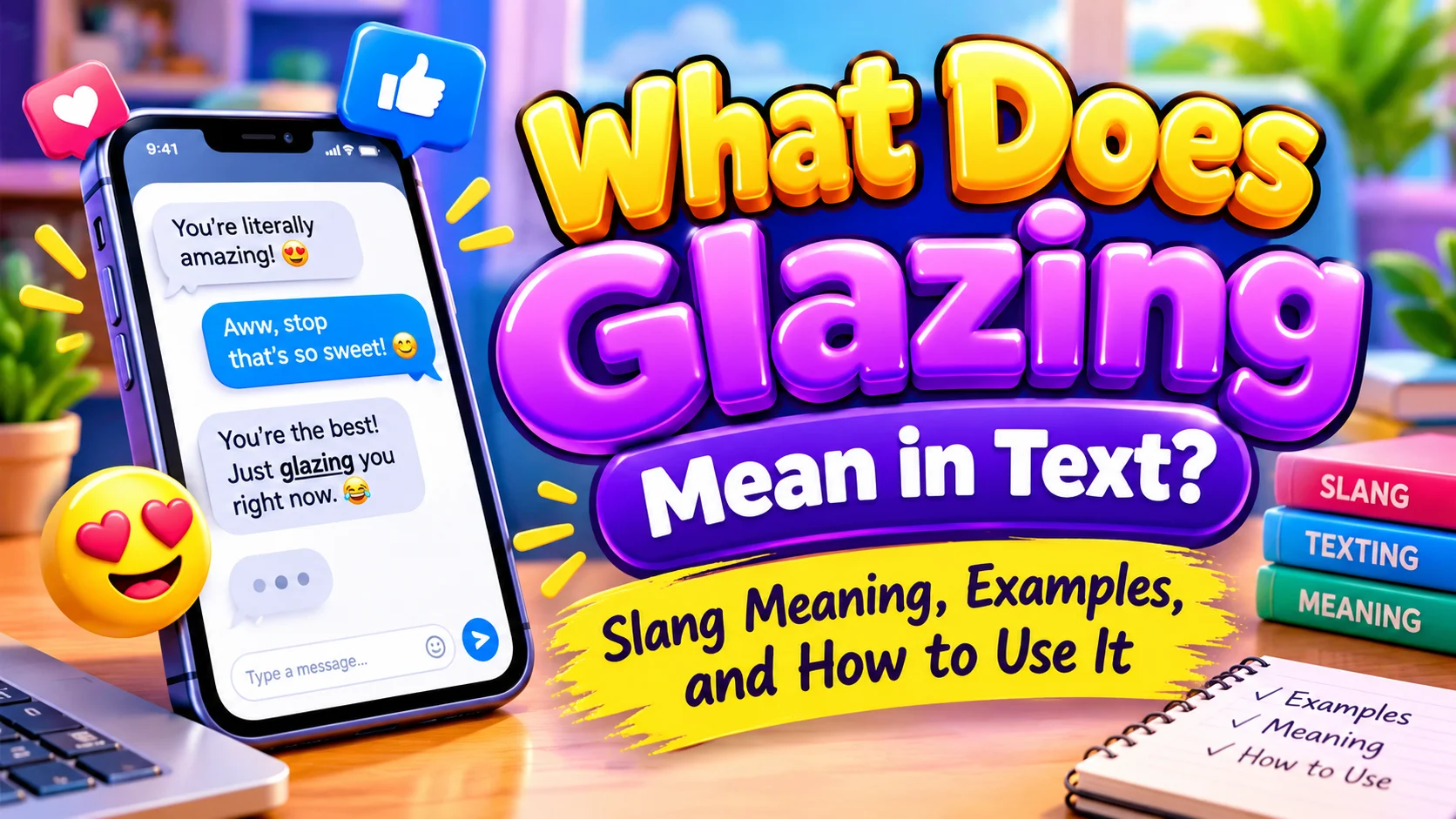
Glazing in text means giving someone excessive praise or compliments, often in a way that seems exaggerated or unnecessary. It’s commonly used in online conversations, especially on TikTok, Snapchat, and Instagram, when someone keeps praising a person, celebrity, or athlete. The tone is usually funny, teasing, or slightly critical. For example, if your friend keeps saying, “He’s the greatest person alive,” you might reply, “Bro, stop glazing!” It’s a casual slang term that means someone is overpraising another person.
If someone texts “Bro, stop glazing” after you praise an athlete, celebrity, streamer, or even a friend, they’re probably not talking about windows, donuts, or cake. In modern internet slang, glazing usually means giving someone way too much praise, attention, hype, or defense.
The term has become common across TikTok, Instagram, Discord, YouTube, X, gaming communities, sports discussions, and everyday group chats. You might see someone write “He’s glazing Messi,” “Why are you glazing her?” or simply “Bro is glazing 💀.” The meaning stays broadly the same, although the tone can range from playful teasing to genuine criticism.
Understanding the glazing meaning in text is mostly about recognizing the amount and style of praise involved. A normal compliment isn’t automatically glazing. The slang usually appears when someone thinks the praise has crossed the line into exaggeration, bias, or excessive admiration.
Comparison Overview
The easiest way to understand what glazing means in texting is to compare it with ordinary praise and related slang.
| Expression | Typical meaning | Example |
| Compliment | Reasonable positive comment | “She played really well.” |
| Hype | Strong enthusiasm or excitement | “That performance was insane!” |
| Glazing | Excessive or exaggerated praise | “She’s perfect at everything and never makes mistakes.” |
| Glazer | Someone who excessively praises another person | “You’re such a glazer.” |
| Simping | Excessive attention or devotion, often romantic | “He keeps doing everything for her.” |
| Fanboying | Extremely enthusiastic support for a favorite person or thing | “He’s fanboying over that new console.” |
| Stanning | Strong or devoted fandom | “She stans that singer.” |
The important distinction is excessiveness. Someone can genuinely admire a person without glazing them.
If you say, “That player had an excellent game,” you’re simply giving an opinion. If you say, “That player can do absolutely nothing wrong and is better than every athlete in history,” someone might call that glazing.
What Does Glazing Mean in Text?
The glazing meaning in text refers to excessive praise, admiration, hype, or defense directed toward someone.
People often use the term when they believe another person has become too enthusiastic about someone. The target might be a celebrity, athlete, musician, fictional character, influencer, gamer, politician, friend, or public figure.
The slang doesn’t necessarily mean the praise is false. That’s an important detail.
Someone can praise a genuinely talented person and still get accused of glazing. The criticism usually focuses on how much they’re praising the person rather than whether the person deserves any praise.
For example:
“That singer has an incredible voice.”
That’s ordinary praise.
“That singer has the best voice in human history, every song is flawless, and nobody will ever compare.”
That could easily be called glazing.
What Does Glazing Mean in Slang?
In slang, glazing describes behavior that seems excessively complimentary or overly supportive.
It can involve:
- Overpraising someone
- Exaggerating someone’s abilities
- Constantly complimenting the same person
- Defending someone against reasonable criticism
- Acting extremely impressed by everything someone does
- Ignoring a person’s obvious weaknesses
- Treating a favorite person as if they can do no wrong
The word became particularly useful online because social media conversations often move quickly. Instead of writing a long response such as “I think you’re being unnecessarily positive and biased toward this person,” someone can simply type:
“You’re glazing.”
That short phrase gets the point across immediately.
Main Differences Between Glazing, Complimenting, and Hype
The biggest difference comes down to intensity and balance.
A compliment usually recognizes something positive. Hype adds excitement. Glazing pushes that enthusiasm so far that another person notices the exaggeration.
| Behavior | Level of praise | Usually balanced? | Could be called glazing? |
| “Nice job.” | Low | Yes | No |
| “You did an amazing job.” | Moderate | Usually | No |
| “That was one of your best performances.” | Strong | Yes | Usually not |
| “You’re the greatest person alive.” | Very high | No | Possibly |
| “Everything this person does is perfect.” | Extreme | No | Yes |
| Defending every mistake they make | Extreme | No | Yes |
This distinction explains why glazing doesn’t simply mean liking someone.
You can be a huge fan of an athlete without glazing them. You can love a singer’s music without glazing them. You can support your favorite streamer without glazing them.
The slang usually enters the conversation when your enthusiasm becomes excessive enough for someone else to call it out.
Where Did the Slang “Glazing” Come From?
The modern slang use of glazing developed through internet culture rather than traditional formal English.
Know Your Meme documents early online usage in communities during 2021, including an early example associated with Discord in November 2021. The expression then spread through platforms such as X and TikTok, where short jokes and reaction phrases can travel extremely quickly.
You can read more about its documented internet history through.Dictionary.com also documents the modern slang meaning of glaze as excessive praise or admiration. Its explanation of the term shows how the word developed into a recognizable piece of internet vocabulary.The ordinary English word glaze, of course, has existed for much longer. It can refer to a glossy coating applied to food, ceramics, or other surfaces. The internet slang meaning represents a newer and completely different conversational use.
Why Did “Glazing” Catch On?
Internet slang tends to spread when a word is:
- Short
- Easy to understand from context
- Funny
- Easy to turn into a meme
- Useful in arguments or jokes
- Flexible across different communities
“Glazing” checks all those boxes.
Instead of writing several sentences about someone’s exaggerated fandom, a commenter can type “bro is glazing” and let the surrounding context do the rest.
What Does “Stop Glazing” Mean?
“Stop glazing” means “stop praising or hyping that person so much.”
It’s one of the most common forms of the slang.
Imagine two friends watching a soccer match. One player scores a good goal.
Friend 1: “That was a great goal.”
Nothing unusual there.
But then Friend 1 continues:
“He’s the greatest player ever. Nobody has his vision. Every touch is perfect. His passing is unmatched. Honestly, he’s on another level.”
Friend 2 might respond:
“Bro, stop glazing.”
The second friend isn’t necessarily saying the player is bad. They’re saying the praise has become too intense.
Is “Stop Glazing” Serious or Funny?
It can be either.
Among friends, “stop glazing” often works as playful teasing. Online, however, someone might use it seriously when they believe another commenter is being irrationally biased.
Look at the difference:
“Bro, you’re glazing 😂.”
This often sounds playful.
“Stop glazing him. You’re ignoring what actually happened.”
This sounds more critical.
The words are identical, but the surrounding conversation changes the tone.
What Does “Glazer” Mean?
A glazer is a person who engages in excessive praise or admiration.
The relationship between the terms is simple:
- Glaze = to praise excessively
- Glazing = the act of excessive praise
- Glazer = the person doing the excessive praising
For example:
“You’re glazing that streamer.”
means:
“You’re praising that streamer too much.”
Meanwhile:
“You’re such a glazer.”
describes the person as someone who repeatedly does this.
The term usually carries a teasing or negative edge, although friends may use it affectionately.
What Does “You’re Glazing” Mean?
When someone tells you “you’re glazing,” they’re calling attention to your behavior.
They may mean:
- You’re praising someone too much.
- You’re exaggerating their achievements.
- You’re defending them too strongly.
- You’re ignoring their mistakes.
- You’re acting like an extremely devoted fan.
Consider a sports debate.
Person A: “He had a bad game.”
Person B: “No way. He was actually perfect. The referee caused every problem. His teammates were the reason he didn’t score. He’s still better than everyone.”
Person A: “You’re glazing.”
Here, the accusation isn’t simply about liking the player. It comes from defending the player despite evidence of a poor performance.
Examples of Glazing in Text Messages
Real examples make slang much easier to understand because the meaning depends heavily on context.
Glazing in a Friend Group
Alex: “Sam’s presentation was actually really good.”
Jordan: “It wasn’t just good. It was the best presentation I’ve ever seen. Sam should teach the whole class.”
Alex: “Bro, stop glazing.”
Jordan’s praise becomes exaggerated. That’s what triggers the word.
Glazing in Sports Conversations
Sports discussions are especially fertile ground for glazing accusations.
“He missed four shots but you’re still calling him perfect. That’s glazing.”
Or:
“You’ve spent ten minutes explaining why he can never have a bad game. You’re glazing hard.”
Sports fans often have strong loyalties. That makes the term useful when a debate becomes overly one-sided.
Glazing in Gaming Chats
Gaming communities use the term in much the same way.
Player 1: “That streamer literally never makes mistakes.”
Player 2: “Bro, he just lost three matches.”
Player 3: “The glazing is crazy.”
The joke comes from the obvious mismatch between the person’s claim and what everyone just watched.
Glazing a Celebrity
Celebrity fandom provides another common example.
“She can do no wrong. Every movie she’s in is automatically a masterpiece.”
Someone might reply:
“You’re glazing.”
The accusation doesn’t prove the original opinion is wrong. It simply suggests the praise sounds far more extreme than reasonable criticism would allow.
Glazing in a Comment Section
Comment sections often compress the slang even further.
You might see:
- “Bro is glazing 💀”
- “The glazing is insane.”
- “Stop glazing.”
- “Average glazer.”
- “You’re glazing way too hard.”
These comments often appear underneath posts about celebrities, athletes, creators, fictional characters, or controversial personalities.
Also Read This: Perpendicular Mean in Text: Daily Language & Geometry Terms in 2026
Is “Glazing” a Compliment or an Insult?
Usually, glazing is not itself a compliment.
If someone calls you a glazer, they’re usually suggesting that your praise has gone too far. However, the word can sound harmless when friends use it as a joke.
Playful Use
“Bro is glazing his favorite player again 😂.”
This may simply be friendly teasing.
Critical Use
“You’re glazing him instead of addressing the facts.”
This is a direct criticism.
Sarcastic Use
“Wow, what an incredible achievement. Truly the greatest thing anyone has ever done. I’m definitely not glazing.”
Here, the speaker intentionally exaggerates the praise to make fun of it.
Because of these different uses, tone matters as much as the word itself.
Can “Glazing” Ever Be Positive?
Yes, although the traditional slang use remains focused on excessive praise.
Online speakers sometimes use related expressions such as “self-glaze” when joking about confidently praising themselves. Dictionary.com notes this newer usage as part of the evolving slang around the word.
For example:
“Let me self-glaze for a second. That was actually a great presentation.”
The speaker isn’t necessarily criticizing themselves. They’re joking about giving themselves the same exaggerated praise that they might normally give someone else.
This illustrates an important feature of internet slang: meanings can shift depending on community and context.
What Does Glazing Mean on TikTok?
On TikTok, glazing commonly appears in comments, videos, memes, sports edits, celebrity discussions, and creator content.
A typical scenario looks like this:
A creator posts a video praising a famous athlete. The praise becomes extremely dramatic. Commenters then respond:
“Bro is glazing.”
Or:
“The glazing is crazy.”
TikTok’s fast-moving comment culture makes short expressions particularly effective. Users don’t need to explain the entire joke because the video provides the context.
Know Your Meme has documented the term’s spread through TikTok and other social platforms during the early 2020s. You can review its timeline and examples here.
What Does Glazing Mean on Snapchat, Instagram, X, and Discord?
The core meaning doesn’t change dramatically from one platform to another.
| Platform | Common context for “glazing” |
| TikTok | Comments, memes, creators, sports, fandoms |
| Reels, celebrity posts, fan discussions | |
| Snapchat | Casual conversations between friends |
| X | Sports debates, celebrity discussions, arguments |
| Discord | Gaming, fandoms, community conversations |
| YouTube | Comments, livestream chats, creator discussions |
The platform influences how often you encounter the word, but the basic idea remains excessive praise or support.
Genuine Praise vs. Glazing
The line between a compliment and glazing isn’t always mathematical. Context matters.
Still, several clues can help.
Genuine Praise
Genuine praise usually:
- Identifies something specific.
- Stays reasonably proportionate.
- Allows room for disagreement.
- Doesn’t require ignoring obvious flaws.
- Focuses on what the person actually did.
For example:
“She handled that interview really well.”
That’s a clear opinion based on a specific action.
Glazing
Glazing tends to involve:
- Exaggeration
- Absolute statements
- Repeated praise
- Extreme loyalty
- Ignoring weaknesses
- Unreasonable comparisons
For example:
“Nobody in history has ever handled an interview better than her. She’s flawless in every possible way.”
Someone might reasonably respond:
“You’re glazing.”
Glazing vs. Simping, Fanboying, and Stanning
These terms can overlap, but they don’t mean exactly the same thing.
| Term | Main idea | Same as glazing? |
| Glazing | Excessive praise or hype | — |
| Simping | Excessive attention, devotion, or effort toward someone, often romantically | No |
| Fanboying | Extremely enthusiastic support for something or someone | No |
| Stanning | Very strong or devoted fandom | No |
| Hype | Excited promotion or enthusiasm | No |
For example, someone can fanboy over a new game without glazing a particular person.
Likewise, someone can be a devoted fan without constantly exaggerating how perfect their favorite celebrity is.
The overlap comes from intensity, but the specific behavior differs.
Common Phrases With “Glazing”
Once you understand the main definition, these common variations become easy to decode.
“Stop Glazing”
Means:
Stop praising that person so much.
“Stop glazing him. He isn’t that good.”
“You’re Glazing”
Means:
Your praise is becoming excessive.
“You’re glazing her way too much.”
“Bro Is Glazing”
Usually means:
This person is obviously overpraising someone.
“Bro is glazing his favorite streamer again 💀.”
“The Glazing Is Crazy”
Means:
The amount of excessive praise is ridiculous.
“He made one good play and the comments are going wild. The glazing is crazy.”
“He’s Such a Glazer”
Means:
He frequently gives excessive praise or support.
“He’s such a glazer when it comes to that team.”
“Glazing Hard”
Means:
Praising someone extremely enthusiastically.
“You’re glazing hard right now.”
How to Tell If Someone Is Calling You Out for Glazing
Sometimes the word appears without an obvious explanation. Look at the surrounding conversation.
Ask yourself:
- Was I praising someone repeatedly?
- Did I make an exaggerated claim?
- Did I defend someone despite clear criticism?
- Did I describe someone as perfect or unbeatable?
- Did the other person disagree with my opinion?
- Did they add laughing or skull emojis?
- Was this a casual conversation between friends?
Emojis can provide useful clues.
For example:
“Bro you’re glazing 😂”
usually feels lighter than:
“Stop glazing him. You’re ignoring the facts.”
The first sounds like teasing. The second sounds like an actual disagreement.
Case Study: How the Meaning Changes With Context
Consider the same phrase in three situations.
Scenario One: Close Friends
Mike: “That was the greatest goal ever.”
Chris: “Bro, stop glazing 😂.”
Here, Chris probably isn’t angry. He’s joking about Mike’s enthusiasm.
Scenario Two: Online Debate
User A: “He has never made a mistake in his career.”
User B: “You’re glazing. There are plenty of examples that prove otherwise.”
Here, the term challenges the reasonableness of the claim.
Scenario Three: Serious Argument
User A: “You’re glazing him instead of acknowledging what he did.”
User B: “I’m not defending what happened. I’m explaining the context.”
Here, “glazing” has become part of a genuine disagreement.
The word stays the same. The social meaning changes with the situation.
How to Respond When Someone Says “Stop Glazing”
You don’t need to get defensive. The best response depends on whether they are joking or genuinely challenging your opinion.
Funny Responses
“I’m just giving credit where it’s due.”
“Let me appreciate greatness.”
“You can’t handle the truth.”
Casual Responses
“I’m not glazing. I actually mean it.”
“Fair, but I still stand by it.”
Confident Responses
“Call it glazing if you want. The stats back me up.”
“I’m praising the performance, not worshipping the player.”
If You Actually Went Too Far
“Okay, maybe I got carried away.”
“Fair enough. I was definitely hyping him up.”
That last response can turn an argument into a joke. Sometimes admitting that you were laying it on a little thick is easier than turning a group chat into a courtroom.
Is “Glazing” Appropriate in Formal Conversations?
Usually, no.
Glazing is internet slang. It works naturally in casual conversations, but it doesn’t belong in most professional or academic writing.
Avoid using it in:
- Formal emails
- Academic essays
- Business reports
- Job applications
- Professional presentations
- Official documents
Instead of writing:
“The reviewer is glazing the company.”
a formal alternative could be:
“The reviewer appears to be offering unusually favorable praise.”
The second version communicates the idea without relying on internet slang.
Common Misunderstandings About the Glazing Meaning in Text
Because slang evolves quickly, people often attach meanings to glazing that aren’t quite accurate.
Glazing Doesn’t Mean Any Compliment
This is the most common misunderstanding.
Saying:
“That was a great performance.”
doesn’t automatically count as glazing.
The slang usually implies excessive or exaggerated praise.
Glazing Isn’t an Acronym
The term isn’t normally an acronym in which each letter represents a different word.
It’s an ordinary English word that acquired a newer slang meaning through internet culture.
Glazing Doesn’t Always Mean Obsession
A person can get called a glazer after making one exaggerated statement.
They don’t necessarily have an unhealthy obsession with the person they’re praising.
Context Matters
Someone might jokingly call their best friend a glazer after hearing one enthusiastic compliment.
Another person might use the same word during a serious online argument.
That’s why definitions alone can’t capture every use. Tone, relationship, and context fill in the missing pieces.
Facts About the Slang Term “Glazing”
A few practical facts help put the word into perspective:
- Glazing is internet slang, not a new formal English definition.
- The modern slang meaning centers on excessive praise or admiration.
- The term became increasingly visible across online communities during the early 2020s.
- TikTok, X, Discord, YouTube, and other social platforms helped spread the expression.
- “Glazer” describes the person doing the excessive praising.
- “Stop glazing” tells someone to stop overpraising another person.
- The word can be playful, sarcastic, or critical.
- The slang meaning differs from the traditional meanings of glaze, such as a glossy coating on food or ceramics.
FAQs:
What does glazing mean in texting?
Glazing means excessively praising, hyping, admiring, or defending someone. It often suggests that the speaker thinks the praise has become exaggerated.
What does “stop glazing” mean?
“Stop glazing” means stop praising or hyping that person so much. Friends often use it as a joke, while strangers may use it as genuine criticism.
What is a glazer?
A glazer is someone who excessively praises or supports another person. The term usually has a teasing or critical tone.
Is glazing a bad word?
Glazing is slang rather than a traditional swear word. It can sound insulting depending on how someone uses it, but friends often use it playfully.
Is glazing the same as simping?
No. The terms can overlap, but they’re different. Glazing focuses on excessive praise or hype, while simping generally describes excessive attention or devotion toward someone, often in a romantic context.
Conclusion:
The simplest explanation of the glazing meaning in text is this: glazing means praising, hyping, admiring, or defending someone way more than seems reasonable.
If your friend says “stop glazing,” they’re probably telling you that you’ve become a little too enthusiastic about someone. If someone calls you a glazer, they’re saying you have crossed from ordinary appreciation into excessive praise.
The key isn’t simply whether you said something positive. It’s how far you took it.
Simple rule: If normal praise turns into exaggerated admiration, people may call it “glazing.”
Once you understand that distinction, phrases like “bro is glazing,” “you’re glazing,” “stop glazing,” and “the glazing is crazy” become much easier to understand across TikTok, Discord, sports debates, gaming chats, and everyday texting.