Quick Answer
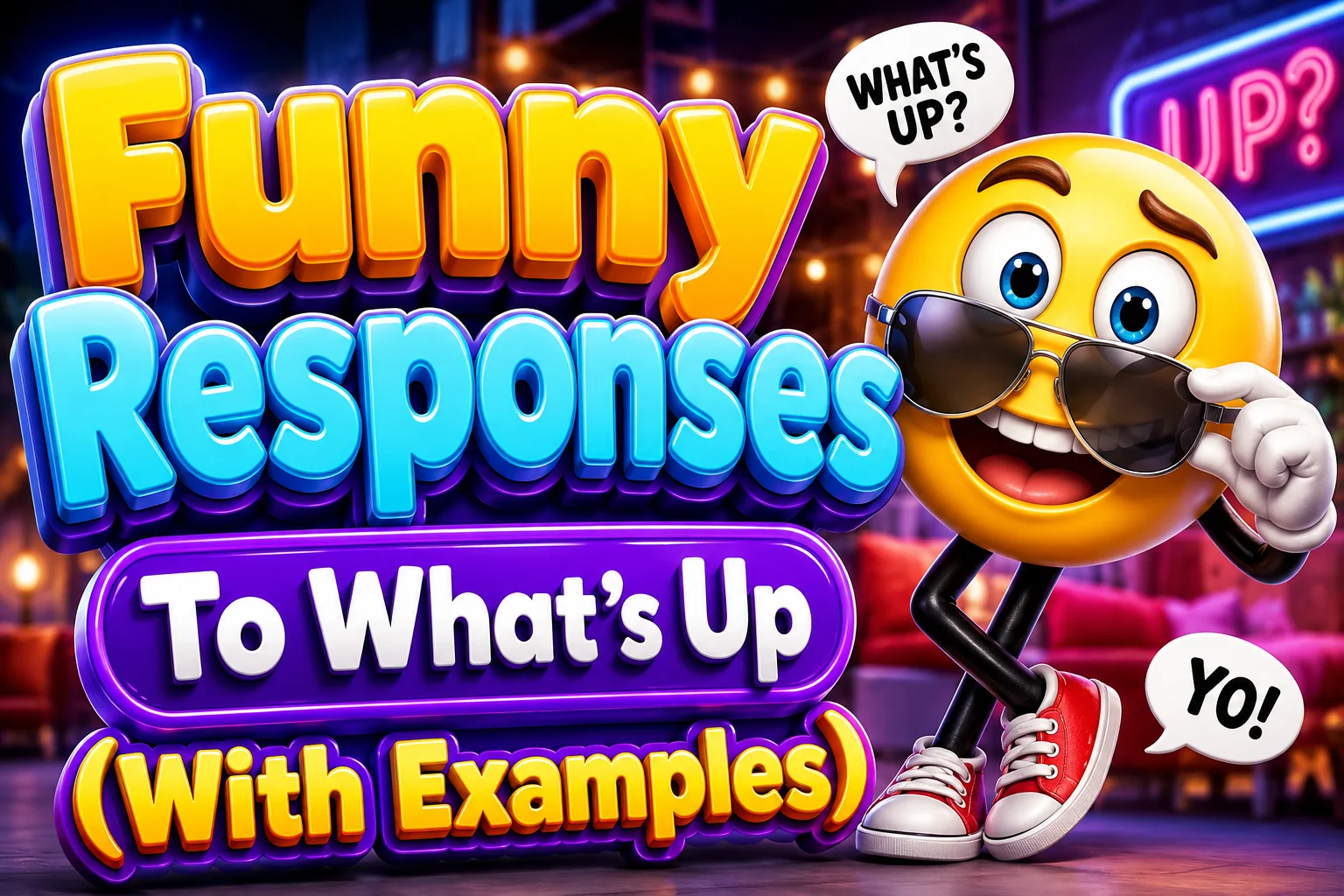
Funny Responses To What’s Up can make an ordinary conversation more entertaining and memorable. Instead of simply saying “Nothing much,” you can reply with something witty like “The sky, last time I checked!” or “My stress level!” These funny replies add humor, show your personality, and keep the conversation going in a playful way.
In everyday conversations, texts, online chats, and a message on your phone, What’s up is a commonly used question.
Funny Responses To What’s Up (With Examples) can make this casual greeting more enjoyable and help you stand out. You may hear it in DMs, at work, on social media, or in a group chat. A usual reply such as Not much or Nothing can feel like a boring reply, causing the conversation to dies before it starts. A funny response or humorous response can instantly change the tone, vibe, and interaction. From my experience, a simple, natural, and playful response works well because it adds humor without trying too hard. It can turn an ordinary question into an enjoyable, memorable moment and help you stand out.
The best funny responses do not always need a perfect joke. A right response can be a clever response that fits the situation, moods, and person you are talking to. With friends, a friend, or coworkers, hilarious ways to start something can spark laughs and create laughter. With crushes, gentle flirting may build a deeper connection, while a chill answer works well when chatting, texting, or replying to a story late at night. Good social interaction requires social awareness and awareness, helping you choose how bold your response should be. You can stay lighthearted, fun, relatable, or clever, depending on the person. The goal is to keep the conversation moving instead of kill momentum or letting the conversation dies.
1. The Ceiling, Obviously!
Sometimes the funniest answer is the most literal one. When someone says “What’s up?”, responding with “The ceiling” gives the question a deliberately silly interpretation. It’s an old-school joke, but it still works because it’s short, unexpected, and easy to understand.
This response works particularly well with close friends who already understand your sense of humor. You can also make it more dramatic by pretending the person asked a deeply philosophical question. A simple text like “The ceiling. It’s been there all day” can turn an ordinary greeting into a playful conversation.
Meaning: You’re jokingly interpreting “what’s up?” as a question about what’s physically above you.
Tone: Playful, sarcastic, and lighthearted.
Example: “What’s up?” — “The ceiling. Surprisingly, it hasn’t moved.”
Best use: Use it with friends, siblings, or people who enjoy simple jokes.
2. Not Much, Just Being Fabulous
If you want a confident and funny response, “Not much, just being fabulous” is a great choice. It combines a normal answer with exaggerated confidence, making it perfect for casual conversations.
The humor comes from acting as though simply existing is an impressive achievement. You don’t need to explain the joke because the exaggerated confidence makes the response work on its own. You can also personalize it by adding what you’re currently doing, such as eating, studying, working, or relaxing.
Meaning: You’re saying that nothing important is happening while playfully complimenting yourself.
Tone: Confident, humorous, and slightly dramatic.
Example: “What’s up?” — “Not much. Just being fabulous and avoiding responsibilities.”
Best use: Great for texting friends or responding to someone who knows your personality.
3. My Blood Pressure, Probably
This response takes the phrase “What’s up?” in a completely unexpected direction. Instead of describing what you’re doing, you answer with something ridiculous like your blood pressure.
It’s funny because the person probably expected an ordinary response such as “I’m good” or “Nothing much.” The unexpected answer creates a quick comedic moment. You can replace blood pressure with anything else that sounds absurdly serious, depending on the conversation.
Meaning: You’re deliberately giving an unexpected answer instead of answering normally.
Tone: Dry, sarcastic, and silly.
Example: “What’s up?” — “Probably my blood pressure after looking at my inbox.”
Best use: Use this with friends or coworkers when the conversation is casual enough for humor.
4. My Rent, Unfortunately
If you want a relatable funny response, “My rent, unfortunately” can work especially well. It turns “What’s up?” into a joke about rising expenses.
The response is short enough for texting but relatable enough to start a conversation. Someone might laugh and respond with their own complaint about bills, groceries, or everyday expenses. That’s what makes this type of comeback useful—it doesn’t just make a joke; it gives the other person something to respond to.
Meaning: You’re joking about how expensive life has become.
Tone: Relatable, sarcastic, and casual.
Example: “What’s up?” — “My rent. Every month, apparently.”
Best use: Best for friends, coworkers, or adults who appreciate everyday humor.
5. Absolutely Nothing, and I’m Proud of It
Sometimes doing absolutely nothing is an achievement. This response turns laziness or relaxation into something worth celebrating.
Instead of saying “Nothing much,” you add a humorous attitude. It works especially well when you’re spending the day relaxing, watching television, scrolling on your phone, or avoiding responsibilities. The confident ending makes the response more playful than a standard answer.
Meaning: You’re relaxing and have no intention of feeling guilty about it.
Tone: Casual, confident, and humorous.
Example: “What’s up?” — “Absolutely nothing, and honestly, I’m proud of my progress.”
Best use: Perfect for friends during a lazy weekend or relaxed evening.
6. Just My Stress Levels
If your day has been chaotic, “Just my stress levels” offers a funny way to describe it without giving a long explanation.
The response uses the double meaning of “up” to suggest that something is increasing. It can be especially relatable when you’ve had a busy day at school, work, or home. You can make it more dramatic by adding something like “and they’re breaking records.”
Meaning: You’re joking that your stress is increasing.
Tone: Sarcastic, relatable, and slightly dramatic.
Example: “What’s up?” — “Just my stress levels. They’re having a very successful day.”
Best use: Use it with friends or coworkers who understand your situation.
7. My Motivation Left the Chat
This is a perfect response when you want to joke about having zero motivation. It personifies motivation as if it were a person who simply decided to disappear.
The phrase sounds natural in modern texting culture and works particularly well when you’re tired, procrastinating, or avoiding a task. It can also encourage the other person to ask what happened, giving you an easy way to continue the conversation.
Meaning: You’re joking that you don’t have any motivation right now.
Tone: Funny, relatable, and conversational.
Example: “What’s up?” — “My motivation left the chat. It didn’t even say goodbye.”
Best use: Great for friends, classmates, coworkers, or anyone who understands procrastination.
8. Just Waiting for My Main Character Moment
For a playful and slightly dramatic answer, try “Just waiting for my main character moment.”
The phrase comes from the idea of treating your life like a movie in which you’re the main character. It makes an ordinary situation sound unnecessarily dramatic, which creates the humor. You can use it when you’re sitting around, waiting for something exciting, or simply joking about your life.
Meaning: You’re humorously pretending that something exciting is about to happen.
Tone: Playful, dramatic, and confident.
Example: “What’s up?” — “Just waiting for my main character moment to arrive.”
Best use: Ideal for friends and casual social media conversations.
9. Not the Ceiling, That’s for Sure
If you like wordplay, this response adds a small twist to the classic “The ceiling” joke.
Instead of simply answering “The ceiling,” you pretend that the person has asked whether anything interesting is happening. The contrast makes the response sound intentionally ridiculous. It also gives the other person room to continue with something like “Okay, then what’s actually up?”
Meaning: You’re playfully avoiding a serious answer.
Tone: Clever, dry, and playful.
Example: “What’s up?” — “Not the ceiling, that’s for sure. It’s been a slow day.”
Best use: Good for casual texting with friends.
10. My Eyebrows When I Saw Your Text
This comeback turns your reaction to the person’s message into the joke. Saying “My eyebrows when I saw your text” suggests that their message surprised you.
It works particularly well when someone messages unexpectedly. You can make the joke more dramatic by adding an emoji or explaining that your eyebrows practically reached the ceiling. The response feels personalized rather than like a generic one-liner.
Meaning: You’re pretending that their message surprised you.
Tone: Playful, teasing, and expressive.
Example: “What’s up?” — “My eyebrows when I saw your text.”
Best use: Great for friends or someone you’re comfortable teasing.
11. Currently Fighting My To-Do List
If your day is full of unfinished tasks, this response offers a humorous description without becoming negative.
Calling your to-do list an opponent makes an ordinary productivity problem sound like an action movie. You can even say you’re “losing badly” or “negotiating a ceasefire” for extra humor.
Meaning: You have several tasks and are struggling to finish them.
Tone: Relatable, witty, and casual.
Example: “What’s up?” — “Currently fighting my to-do list. It’s winning.”
Best use: Useful for coworkers, classmates, or friends.
12. My Screen Time
For a modern and relatable comeback, simply say “My screen time.” It’s short, recognizable, and especially funny when you’ve spent far too much time on your phone.
You can make it more humorous by adding a dramatic explanation. For example, you might claim that your phone and your screen-time report are currently in a complicated relationship.
Meaning: You’re joking about spending too much time on your phone.
Tone: Casual, self-aware, and funny.
Example: “What’s up?” — “My screen time. And honestly, we’re both concerned.”
Best use: Perfect for texting friends or posting casual social content.
Also Read This: In-Depth Blog Post Outline: What’s The Correct Spelling?
13. Nothing but My Ego
This answer adds a little playful self-confidence to an otherwise ordinary greeting. Instead of saying “Nothing,” you suggest that your ego is the only thing rising.
It works because the answer exaggerates confidence without taking itself too seriously. If your friend knows you’re joking, it can become a fun opening for some friendly teasing.
Meaning: You’re joking about being overly confident.
Tone: Confident, sarcastic, and playful.
Example: “What’s up?” — “Nothing but my ego after that compliment.”
Best use: Use it after receiving praise or when joking with close friends.
14. The Plot, Apparently
If something strange or unexpected is happening in your life, “The plot” is an excellent funny response.
It makes your life sound like a television series where every new event adds another surprising twist. The phrase works especially well when you’ve recently experienced something unexpected and don’t want to explain everything immediately.
Meaning: Something interesting, surprising, or complicated is happening.
Tone: Mysterious, witty, and playful.
Example: “What’s up?” — “The plot. Apparently, today came with a plot twist.”
Best use: Best for friends who might ask follow-up questions.
15. Just My Expectations, Sadly
This comeback uses self-deprecating humor to describe disappointment or low expectations.
Instead of giving a straightforward explanation, you turn the situation into a joke. It’s particularly useful when something didn’t go according to plan. You can use it after a bad test, failed plan, disappointing purchase, or awkward situation.
Meaning: You’re joking that your expectations have increased or changed.
Tone: Dry, self-aware, and sarcastic.
Example: “What’s up?” — “Just my expectations. Then reality showed up.”
Best use: Use it with friends who appreciate sarcastic humor.
16. The Price of Everything
This response works because it’s both funny and painfully relatable. When someone asks what’s up, you can jokingly point toward the increasing cost of everyday things.
The short answer creates a conversational opening. The other person might immediately agree or start talking about groceries, rent, fuel, or shopping. It turns a simple greeting into shared humor.
Meaning: You’re joking about rising prices and everyday expenses.
Tone: Relatable, sarcastic, and conversational.
Example: “What’s up?” — “The price of everything. Apparently, nothing wants to stay affordable.”
Best use: Good for casual conversations with friends and coworkers.
17. My Chances of Going to Bed Early
If you constantly tell yourself you’ll sleep early but never do, this response can describe the situation perfectly.
It turns a common habit into a joke by implying that your chances of being responsible are rising—or perhaps disappearing. You can adapt it to other situations, such as your chances of finishing homework or being productive.
Meaning: You’re joking about failing to follow through on your plans.
Tone: Self-deprecating, relatable, and funny.
Example: “What’s up?” — “My chances of going to bed early. Oh wait, they’re actually down.”
Best use: Great for late-night conversations with friends.
18. Just My Wi-Fi Bill
A short financial joke can make an otherwise ordinary response more entertaining. “Just my Wi-Fi bill” works particularly well when you’re talking to someone who understands how expensive subscriptions and household bills can become.
You can also replace “Wi-Fi bill” with your phone bill, electricity bill, or any other expense. The formula remains simple: answer “What’s up?” with something you’d rather see going down.
Meaning: You’re joking about an unwanted expense.
Tone: Dry, relatable, and casual.
Example: “What’s up?” — “My Wi-Fi bill. Unfortunately, it found another way to surprise me.”
Best use: Use it in casual conversations with friends or coworkers.
19. Nothing. I’m Just Existing Professionally.
This response gives everyday existence an unnecessarily formal title. Calling yourself a professional at doing nothing makes the answer funny because it sounds like an actual career.
It’s especially useful when you’re relaxing and don’t have anything exciting to report. The exaggerated professionalism gives a normal situation a comedic twist.
Meaning: You’re doing nothing important but joking about it.
Tone: Deadpan, clever, and playful.
Example: “What’s up?” — “Nothing. I’m just existing professionally.”
Best use: Great for casual texting and friendly conversations.
20. My Laziness Is Thriving
When you’re having a lazy day, there’s no need to hide it. Turn it into the joke.
Saying your laziness is “thriving” makes it sound like a successful personal project. You can make the response even more entertaining by describing your achievements, such as finishing an entire season of a show without leaving the couch.
Meaning: You’re relaxing or procrastinating.
Tone: Funny, honest, and self-aware.
Example: “What’s up?” — “My laziness is thriving. Productivity hasn’t been invited.”
Best use: Perfect for friends during weekends or days off.
21. My Caffeine Levels
For coffee lovers, this is an easy and relatable answer. “My caffeine levels” suggests that you’re running on coffee rather than actual energy.
You can personalize the response depending on how much coffee you’ve had. If you’ve already consumed several cups, exaggerating the situation can make the joke even better.
Meaning: You’re relying on caffeine to get through the day.
Tone: Casual, energetic, and humorous.
Example: “What’s up?” — “My caffeine levels. My personality hasn’t loaded yet.”
Best use: Excellent for morning conversations with friends or coworkers.
22. Nothing, Unless You Count My Existential Crisis
This response adds exaggerated drama to a simple greeting. It works best when you want to make fun of yourself rather than discuss a genuinely serious problem.
The humor comes from describing an ordinary day as if you’re dealing with a major philosophical crisis. Keep the tone clearly playful, especially in text, because dry humor can sometimes be misunderstood.
Meaning: You’re joking about overthinking life or having a confusing day.
Tone: Dry, dramatic, and self-aware.
Example: “What’s up?” — “Nothing, unless you count my completely unnecessary existential crisis.”
Best use: Best with close friends who understand your humor.
23. My Patience, Heading Out
If you’re having one of those days when everything feels annoying, this response lets you express it humorously.
Instead of saying you’re frustrated, you personify your patience as someone who has decided to leave. That makes the complaint feel lighter and more entertaining.
Meaning: You’re becoming impatient or frustrated.
Tone: Sarcastic, humorous, and relatable.
Example: “What’s up?” — “My patience, heading out without even saying goodbye.”
Best use: Use it with friends or coworkers when discussing a frustrating but harmless situation.
24. The Same Old Chaos
Sometimes the funniest response is also the most honest. If your life feels busy or unpredictable, “The same old chaos” gives the other person a quick update while keeping things light.
It can also encourage them to ask what’s happening. If they do, you can share the funny or interesting details behind the chaos.
Meaning: Nothing has changed; life is still busy or unpredictable.
Tone: Casual, witty, and conversational.
Example: “What’s up?” — “The same old chaos. It apparently renewed its subscription.”
Best use: Great for friends, family, and casual chats.
25. Just Waiting for You to Ask a Better Question
If you’re looking for a cheeky response, this one turns the question back on the other person.
It’s playful rather than genuinely rude when you use it with someone who knows your personality. The exaggerated criticism creates an opening for banter, especially if the other person responds with another question.
Meaning: You’re teasing the person for asking a basic question.
Tone: Cheeky, sarcastic, and teasing.
Example: “What’s up?” — “Just waiting for you to ask a better question.”
Best use: Use this with close friends or people who enjoy playful banter.
FAQs
What is a funny response to “What’s up?”
A classic funny response is “The ceiling!” Other options include “My caffeine levels,” “The plot,” and “My motivation left the chat.” Choose one that fits your personality and the person you’re talking to.
What can I say instead of “Nothing much”?
You can say “Just being fabulous,” “Fighting my to-do list,” “Existing professionally,” or “The same old chaos.” These answers are more engaging because they add humor to an otherwise ordinary response.
How do I respond to “What’s up?” in a flirty way?
Try a playful response such as “My eyebrows when I saw your text” or “Just waiting for you to make my day interesting.” Keep the response light and match the level of flirting already present in the conversation.
What is a sarcastic response to “What’s up?”
Some sarcastic options include “My rent,” “My stress levels,” “My patience, heading out,” or “Just waiting for a better question.” Use sarcasm with people who understand your sense of humor.
Is “The ceiling” a good response to “What’s up?”
Yes. “The ceiling” is a classic literal joke that works because it interprets “what’s up?” as a question about what’s physically above you. It’s short, harmless, and easy to understand.
Conclusion
Knowing 25 funny responses to “What’s up?” gives you plenty of ways to avoid the same boring “Nothing much” reply. Whether you prefer sarcasm, wordplay, self-deprecating humor, playful teasing, or simple one-liners, there’s a response for almost every casual conversation.
The best comeback depends on your relationship with the other person and the situation. Keep your humor natural, friendly, and appropriate, and don’t be afraid to personalize a response. Sometimes the funniest answer isn’t the cleverest one—it’s the one that sounds most like you.
So, the next time someone asks “What’s up?”, don’t automatically say “Nothing.” Give them a response that makes them smile and keeps the conversation going.