Quick Answer
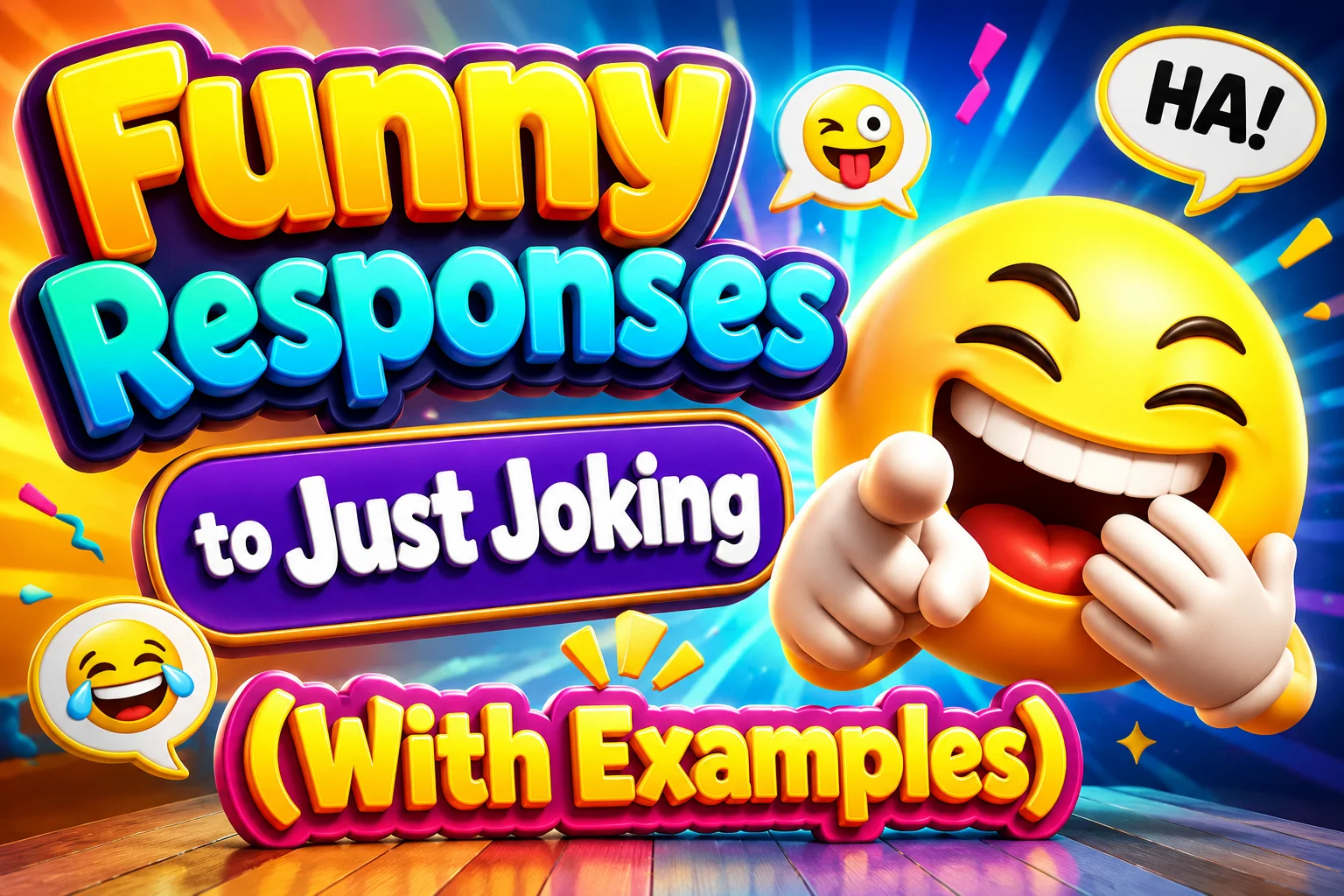
Funny Responses to Just Joking (With Examples) can help you keep a conversation playful, witty, and entertaining when someone says, “Just joking.” You can reply with a sarcastic comeback, a clever one-liner, or a lighthearted joke to match their humor. The best response depends on your relationship and the situation, so keep it fun without hurting anyone’s feelings.
When someone says just joking, 25 Funny Responses to Just Joking (With Examples) can help you turn a quick escape into a clever comeback.
A friend, crush, or coworker may drop a bold statement, tease you, or share an unexpected opinion before quickly backtracking with just joking. Instead of creating an awkward or serious moment, a funny response can flip the mood, show confidence, and keep the conversation moving. In texts, DMs, group chats, or the workplace, a smart, sassy, or sarcastic reply can become comedy gold. A little wit, humor, and banter can make the exchange more memorable, while a sweet, playful response can add a touch of flirtation when the vibe feels right.
The best comeback depends on the context, personality, and energy of the interaction. If someone makes your heart skip, jaw drop, or brain short-circuit, you can roll with the jokes instead of taking them too seriously. A text-ready or scroll-stopping response can make anyone laugh or blush, especially when it feels natural. Whether you want a sarcastic quip, a witty reply, or a playful comeback, the goal is to keep the conversation engaging, show personality, and leave a lasting impression without forcing the joke.
1. “Too Late, I Already Took You Seriously!”
When someone says “Just joking” after making a ridiculous statement, this response lets you play along while pretending you completely believed them. It works especially well when the original joke was surprisingly convincing or when you want to exaggerate your reaction. Saying, “Too late, I already took you seriously!” creates a funny reversal because the other person expects you to laugh and move on. Instead, you act as though their joke has already caused a dramatic consequence. Your delivery matters, so keep your tone light and playful. A smiling emoji can make it even clearer that you’re teasing rather than genuinely upset.
Meaning: You’re pretending that you believed the joke before they revealed it was only a joke.
Tone: Playful, sarcastic, and exaggerated.
Example: “I was already planning my entire week around that. Too late, I already took you seriously!”
Best Use: Use it with friends or people who understand your sense of humor.
2. “You Almost Had Me!”
Sometimes the best response to “Just joking” is to admit that the joke was actually convincing. “You almost had me!” is short, natural, and easy to use in everyday conversations. It tells the other person that their joke worked without making the exchange overly serious. This response can be especially funny when someone delivers their joke with a completely straight face. You can also exaggerate your reaction by adding, “I was about to panic!” or “I almost believed you!” The simplicity makes this comeback useful in texts, social media chats, gaming conversations, and casual face-to-face interactions.
Meaning: You’re saying their joke was believable enough to fool you.
Tone: Friendly, amused, and conversational.
Example: “Wait, you actually had me for a second. You almost had me!”
Best Use: Great for jokes that are surprisingly believable.
3. “My Trust Issues Just Got a Promotion.”
This is a humorous way to respond when someone pulls a prank or makes you believe something before saying “Just joking.” Instead of directly complaining, you turn the situation into an exaggerated joke about your trust. “My trust issues just got a promotion” sounds dramatic while remaining playful. It works particularly well with close friends who enjoy sarcasm. The phrase also adds personality because you’re not simply acknowledging the joke—you’re creating a second joke of your own. If the original prank was particularly convincing, this comeback can make the conversation even more entertaining.
Meaning: You’re joking that their prank made you trust them less.
Tone: Sarcastic, dramatic, and playful.
Example: “You really made me believe that? My trust issues just got a promotion.”
Best Use: Use it after a convincing prank or deceptive joke.
4. “Joke’s on You—I Knew!”
Turning the situation around can make your response even funnier. “Joke’s on you—I knew!” works because it suggests that you weren’t fooled at all, even if you clearly were. The humor comes from confidently pretending that you understood everything from the beginning. You can make it even more entertaining by maintaining a completely serious expression. In text conversations, adding a laughing emoji can communicate that you’re joking. This response is particularly useful when you want to playfully challenge the person rather than simply accept that they fooled you.
Meaning: You’re pretending that you knew the person was joking all along.
Tone: Confident, teasing, and humorous.
Example: “You thought I believed you? Joke’s on you—I knew!”
Best Use: Perfect when you want to turn the prank back on the other person.
5. “I Was About to Call the Authorities!”
For situations where the joke was completely outrageous, exaggeration can create the funniest response. Saying “I was about to call the authorities!” makes the situation sound much more serious than it actually was. Obviously, you’re not suggesting that the person did anything criminal. The humor comes from pretending their harmless joke was so shocking that it required an official response. This works best when the original statement was absurd or unexpected. Your delivery should make it obvious that you’re exaggerating for comedic effect.
Meaning: You’re dramatically pretending that their joke was extremely serious.
Tone: Over-the-top, silly, and sarcastic.
Example: “You had me worried for a second. I was about to call the authorities!”
Best Use: Best for absurd or outrageous jokes.
6. “Wow, My Heart Wasn’t Ready for That.”
A playful emotional reaction can make a simple conversation much more entertaining. “Wow, my heart wasn’t ready for that” works particularly well when someone’s joke surprises you. Instead of saying, “That was funny,” you pretend that the joke created an emotional crisis. This gives the response a dramatic edge without becoming rude. It can also work in friendly texting because it sounds natural and expressive. If you want to make it even more humorous, you can add something like, “I need a recovery period.” That turns the response into a mini comedy routine.
Meaning: The joke surprised you more than expected.
Tone: Dramatic, playful, and expressive.
Example: “You can’t just say things like that! My heart wasn’t ready for that.”
Best Use: Use it when someone catches you completely off guard.
7. “Congratulations, You Almost Ruined My Day.”
This comeback uses mock drama to make the conversation funny. Instead of genuinely complaining, you pretend that the joke nearly destroyed your entire day. The exaggeration tells the other person that you understand the playful nature of the conversation. It can work especially well when someone makes a fake announcement, sends a prank message, or gives you surprising information before revealing they were joking. Because the wording sounds serious at first, the humor comes from the absurd exaggeration. Keep your delivery cheerful so the other person knows you’re participating in the joke.
Meaning: You’re joking that their prank almost caused a huge emotional reaction.
Tone: Dramatic, sarcastic, and lighthearted.
Example: “Congratulations. You almost ruined my entire day with that one.”
Best Use: Great for friends who enjoy dramatic humor.
8. “I’ll Remember This Betrayal.”
If your friend tricks you with a joke, pretending that they have committed a serious betrayal can be hilarious. “I’ll remember this betrayal” is short enough for texting but expressive enough to create a funny reaction. You’re obviously not saying that the friendship is actually damaged. Instead, you’re creating playful fake drama. The response becomes even funnier if the original joke was completely harmless. You can add a laughing emoji or follow it with “This changes everything” for extra exaggeration. It works especially well among close friends who frequently tease each other.
Meaning: You’re pretending their joke was a serious act of betrayal.
Tone: Dramatic, sarcastic, and playful.
Example: “Just joking? Sure. I’ll remember this betrayal.”
Best Use: Perfect for friendly pranks and teasing.
9. “That Joke Came With Emotional Damage.”
Modern casual conversations often use exaggerated phrases to describe ordinary situations. “That joke came with emotional damage” turns a harmless joke into a fake dramatic event. It’s particularly useful when someone says something that surprises, embarrasses, or briefly worries you. Rather than responding negatively, you’re acknowledging the joke while adding another layer of humor. The phrase can work especially well in social media conversations, group chats, and gaming communities. If you want a stronger punchline, follow it with something like, “I’ll need five business days to recover.”
Meaning: The joke affected you emotionally, but you’re saying it humorously.
Tone: Modern, sarcastic, and exaggerated.
Example: “Okay, that was funny, but that joke came with emotional damage.”
Best Use: Great for casual online conversations and group chats.
10. “Nice Save With the ‘Just Joking.’”
Sometimes you can tease the person for using “Just joking” as an escape route. Saying, “Nice save with the ‘just joking’” suggests that you noticed exactly what they were doing. It works especially well when someone says something bold and immediately tries to soften it by claiming it was only a joke. You’re not accusing them of anything serious; you’re simply keeping the playful exchange going. This response is useful when you want to show confidence and humor without sounding offended. A laughing emoji can make the intention even clearer in text.
Meaning: You’re teasing them for using “just joking” to escape their statement.
Tone: Clever, teasing, and sarcastic.
Example: “That was a bold statement. Nice save with the ‘just joking.’”
Best Use: Use it when someone quickly backtracks after teasing you.
11. “Sure… That’s What They All Say.”
This response adds a classic sarcastic twist. “Sure… that’s what they all say” humorously suggests that you don’t completely believe the person’s explanation. It can be especially funny when someone says something suspicious and then immediately follows it with “Just joking.” The response doesn’t require a complicated setup, making it ideal for quick conversations. Your tone is important because the phrase is meant to be playful rather than confrontational. If you’re texting, a laughing emoji can help communicate that you’re simply teasing them.
Meaning: You’re pretending that you don’t believe their claim that it was only a joke.
Tone: Sarcastic, skeptical, and playful.
Example: “You didn’t mean that? Sure… that’s what they all say.”
Best Use: Great when you want a quick sarcastic comeback.
12. “I’m Filing a Complaint.”
Pretending to take official action against someone’s joke can create an exaggerated and funny response. “I’m filing a complaint” makes a harmless situation sound like a formal incident. You can make the joke even better by pretending to have a fictional department handling your complaint. For example, you could say, “I’m filing a complaint with the Department of Bad Jokes.” This kind of response works because it turns a normal conversation into an imaginary serious situation. It’s playful, harmless, and easy to adapt.
Meaning: You’re jokingly pretending that their comment deserves an official complaint.
Tone: Mock-serious, funny, and exaggerated.
Example: “That joke was unacceptable. I’m filing a complaint.”
Best Use: Use it with friends who appreciate absurd humor.
Also Read This: 25 Funny Responses to Crazy Story (With Examples)
13. “You’re Lucky I’m Laughing.”
This response creates a playful sense of fake authority. “You’re lucky I’m laughing” suggests that the person narrowly avoided your imaginary anger because their joke was funny. It can be especially effective when someone teases you about something personal but harmless. The phrase allows you to acknowledge the joke while playfully pretending that they took a risk. It also leaves room for a follow-up such as, “You get one free pass.” That extra line can make the exchange feel spontaneous rather than rehearsed.
Meaning: You’re saying the joke was acceptable because it made you laugh.
Tone: Playful, confident, and teasing.
Example: “You’re lucky I’m laughing, because that was dangerously close.”
Best Use: Good for friendly teasing among people who know each other well.
14. “I’ll Pretend I Didn’t Believe You.”
This comeback is funny because it openly acknowledges the possibility that you were fooled. “I’ll pretend I didn’t believe you” gives you a way to protect your pride while still enjoying the joke. It works particularly well when the other person catches you completely off guard. Instead of admitting defeat directly, you jokingly rewrite the story as though you were never fooled. This kind of playful self-awareness often makes conversations feel more natural because you’re willing to laugh at yourself.
Meaning: You probably believed the joke, but you’re pretending otherwise.
Tone: Self-deprecating, friendly, and humorous.
Example: “I definitely didn’t believe you. I’ll pretend I didn’t believe you.”
Best Use: Perfect when someone successfully fools you.
15. “Good One. I’ll Get You Back.”
When a friend successfully jokes around with you, “Good one. I’ll get you back” keeps the playful competition alive. Rather than treating the joke as the end of the conversation, you turn it into a friendly challenge. This response works especially well when both people regularly tease each other. It communicates that you enjoyed the joke but aren’t going to let the other person win without a future comeback. The phrase is simple, natural, and flexible enough for texting or face-to-face conversations.
Meaning: You enjoyed the joke but plan to tease them back later.
Tone: Friendly, competitive, and playful.
Example: “Okay, good one. I’ll get you back when you least expect it.”
Best Use: Best for ongoing playful banter with friends.
16. “I Knew There Was a Catch!”
This response works when someone’s statement initially sounds believable but has an unexpected twist. “I knew there was a catch!” allows you to pretend that you were suspicious from the beginning. Even if you genuinely believed the joke, you can use the line to create a funny moment. It also works well when someone reveals the punchline after letting you wonder what was happening. The phrase keeps the conversation light while giving you an opportunity to act dramatically clever.
Meaning: You’re pretending that you suspected the joke all along.
Tone: Clever, playful, and exaggerated.
Example: “Free pizza? I knew there was a catch!”
Best Use: Use it after a surprising joke or fake offer.
17. “Okay, You Got Me.”
Sometimes the funniest response is also the simplest. “Okay, you got me” openly admits that the other person successfully fooled you. There’s no need to overcomplicate it. This response is especially effective when the joke was genuinely clever. You can add a playful challenge afterward, such as, “Enjoy your victory while it lasts.” That transforms a simple acknowledgment into friendly banter. It also demonstrates confidence because you’re comfortable admitting when someone gets the better of you.
Meaning: You admit that their joke successfully fooled or surprised you.
Tone: Honest, friendly, and amused.
Example: “Okay, you got me. I actually believed that for a second.”
Best Use: Ideal for clever jokes and successful pranks.
18. “And I Was About to Write a Whole Speech!”
This is a funny way to exaggerate how seriously you initially reacted. “I was about to write a whole speech!” suggests that you were preparing an extremely detailed response before discovering that the person was joking. The absurdity makes the line funny without requiring complicated humor. You can personalize it depending on the situation. For example, if someone gave you surprising news, you could say you were already preparing a dramatic announcement. The response works well because it adds personality and keeps the conversation moving.
Meaning: You’re joking that you were taking their statement extremely seriously.
Tone: Dramatic, expressive, and humorous.
Example: “I was already preparing a ten-minute speech! And now you’re saying you’re joking?”
Best Use: Great for dramatic reactions to surprising statements.
19. “My Lawyer Will Hear About This.”
Pretending to involve a lawyer is a classic form of exaggerated humor. “My lawyer will hear about this” makes a harmless joke sound like a major legal dispute. The contrast between the serious wording and the silly situation creates the humor. You don’t need an actual complaint or serious context for this response. It’s simply a playful way to exaggerate your reaction. If you’re texting a friend, you can make it even funnier by adding, “Expect paperwork.” That turns the comeback into a miniature comedy scene.
Meaning: You’re pretending that their joke caused a serious legal problem.
Tone: Absurd, dramatic, and sarcastic.
Example: “You really thought that was funny? My lawyer will hear about this.”
Best Use: Use it for harmless jokes that deserve an exaggerated reaction.
20. “You’re Paying for My Therapy.”
This response takes an ordinary joke and gives it an absurdly dramatic consequence. “You’re paying for my therapy” suggests that the joke was so shocking that professional help is now required. Obviously, the statement is meant humorously rather than literally. It’s best used among people who are comfortable with exaggerated humor. You can make the line even more playful by adding, “I accept cash, snacks, and pizza.” This keeps the mood silly and prevents the response from sounding genuinely upset.
Meaning: You’re joking that their prank affected you so dramatically that you need recovery.
Tone: Dramatic, sarcastic, and exaggerated.
Example: “That was way too convincing. You’re paying for my therapy.”
Best Use: Best for close friends and playful conversations.
21. “That’s Exactly What a Joking Person Would Say.”
This comeback deliberately refuses to accept the explanation that the person was joking. “That’s exactly what a joking person would say” creates a funny loop because their attempt to explain the joke becomes evidence that they are still joking. It’s a clever way to extend the conversation rather than ending it. This response works particularly well when someone keeps insisting, “I’m just joking!” You can deliver it with mock seriousness to make the exchange even funnier.
Meaning: You’re pretending that their explanation makes them even more suspicious.
Tone: Clever, sarcastic, and playful.
Example: “You’re just joking? That’s exactly what a joking person would say.”
Best Use: Great for extended teasing and playful arguments.
22. “I’ll Allow It This Time.”
This response makes you sound like the imaginary judge of the conversation. “I’ll allow it this time” suggests that the joke barely passed your fictional approval process. The humor comes from acting as though the other person needs your permission to make jokes. It works well when someone teases you and then says “Just joking.” You can make the response even more playful by adding, “But don’t let it happen again.” This keeps the interaction light and gives you a confident comeback.
Meaning: You’re jokingly granting permission for their joke.
Tone: Confident, playful, and mock-serious.
Example: “Just joking? Hmm. I’ll allow it this time.”
Best Use: Use it when you want a short, confident comeback.
23. “Your Timing Saved You.”
Sometimes the joke itself isn’t the problem—the timing is. “Your timing saved you” suggests that the other person escaped your imaginary punishment because they revealed the joke quickly enough. This creates a playful sense of suspense. You can use it when someone makes a bold statement and immediately says they’re kidding. The phrase works particularly well with close friends because it sounds like friendly banter rather than criticism. It also gives you room to continue the joke with another line.
Meaning: You’re joking that they were lucky to reveal the joke when they did.
Tone: Teasing, confident, and humorous.
Example: “You’re lucky you said ‘just joking’ when you did. Your timing saved you.”
Best Use: Perfect for quick jokes and playful teasing.
24. “Okay, Comedian, Take a Bow.”
Calling someone “comedian” after they reveal that they’re joking is a simple but effective way to tease them. “Okay, comedian, take a bow” pretends that their joke was a professional performance worthy of applause. You can make the moment more theatrical by pretending to clap or adding a fake standing ovation. This response works because it acknowledges their humor while giving them a playful little challenge. It’s especially suitable for someone who loves making jokes and constantly tries to get reactions from others.
Meaning: You’re playfully praising them for their joke.
Tone: Sarcastic, lighthearted, and theatrical.
Example: “Okay, comedian, take a bow. That was actually pretty good.”
Best Use: Great for friends who regularly make jokes.
25. “Fine, You Win This Round.”
Ending with “Fine, you win this round” turns the joke into a friendly competition. Instead of simply acknowledging that someone was joking, you make it sound like they have won a humorous battle. This response is particularly effective when you and your friend regularly compete over who can deliver the better comeback. It also keeps the door open for future banter. You can follow it with “But I’m coming back stronger” or “Enjoy your victory while it lasts.” That gives the conversation a playful ending without sounding forced.
Meaning: You admit that their joke worked this time.
Tone: Competitive, friendly, and playful.
Example: “Okay, fine. You win this round, but I’m coming back with a better one.”
Best Use: Use it when you want to end the exchange with friendly banter.
FAQs:
What is a funny response to “Just joking”?
A funny response can be something playful like “Too late, I already took you seriously!”, “You almost had me!”, or “Fine, you win this round.” The best choice depends on the relationship and the type of joke. With close friends, you can use stronger sarcasm and exaggerated humor. In a casual conversation, a short response is usually more natural.
How do you respond when someone says “Just joking”?
You can acknowledge the joke while adding your own humor. Try saying “Nice save!”, “Okay, comedian!”, or “I’ll remember this betrayal.” If the joke genuinely made you uncomfortable, you don’t have to force yourself to laugh. A simple, honest response is perfectly acceptable.
What is a sarcastic response to “Just joking”?
Some sarcastic responses include “Sure, that’s what they all say,” “Nice save with the ‘just joking,’” and “That’s exactly what a joking person would say.” These responses work best when both people understand that the exchange is playful.
How can I make my response to “Just joking” funnier?
Use exaggeration, playful sarcasm, unexpected comparisons, or mock seriousness. For example, instead of saying “That wasn’t funny,” try “My lawyer will hear about this.” The goal is to add another joke without making the other person feel attacked.
What should I say if a friend keeps saying “Just joking”?
If a friend repeatedly uses the phrase, you can turn it into ongoing banter. Try “That’s exactly what a joking person would say,” “I’m keeping score,” or “You’re lucky I’m laughing.” If their jokes genuinely bother you, however, it’s better to communicate that clearly rather than relying only on sarcasm.
Conclusion:
Knowing funny responses to “Just joking” can make everyday conversations more entertaining and help you keep playful banter going. The best comeback isn’t necessarily the most complicated one. A simple phrase like “You almost had me!” can work just as well as an exaggerated response like “My lawyer will hear about this.” Choose your response based on the person, situation, and level of comfort between you.
Most importantly, keep the humor friendly, natural, and respectful. When used thoughtfully, a clever comeback can turn an ordinary “Just joking” into a memorable and genuinely funny conversation.