Quick Answer
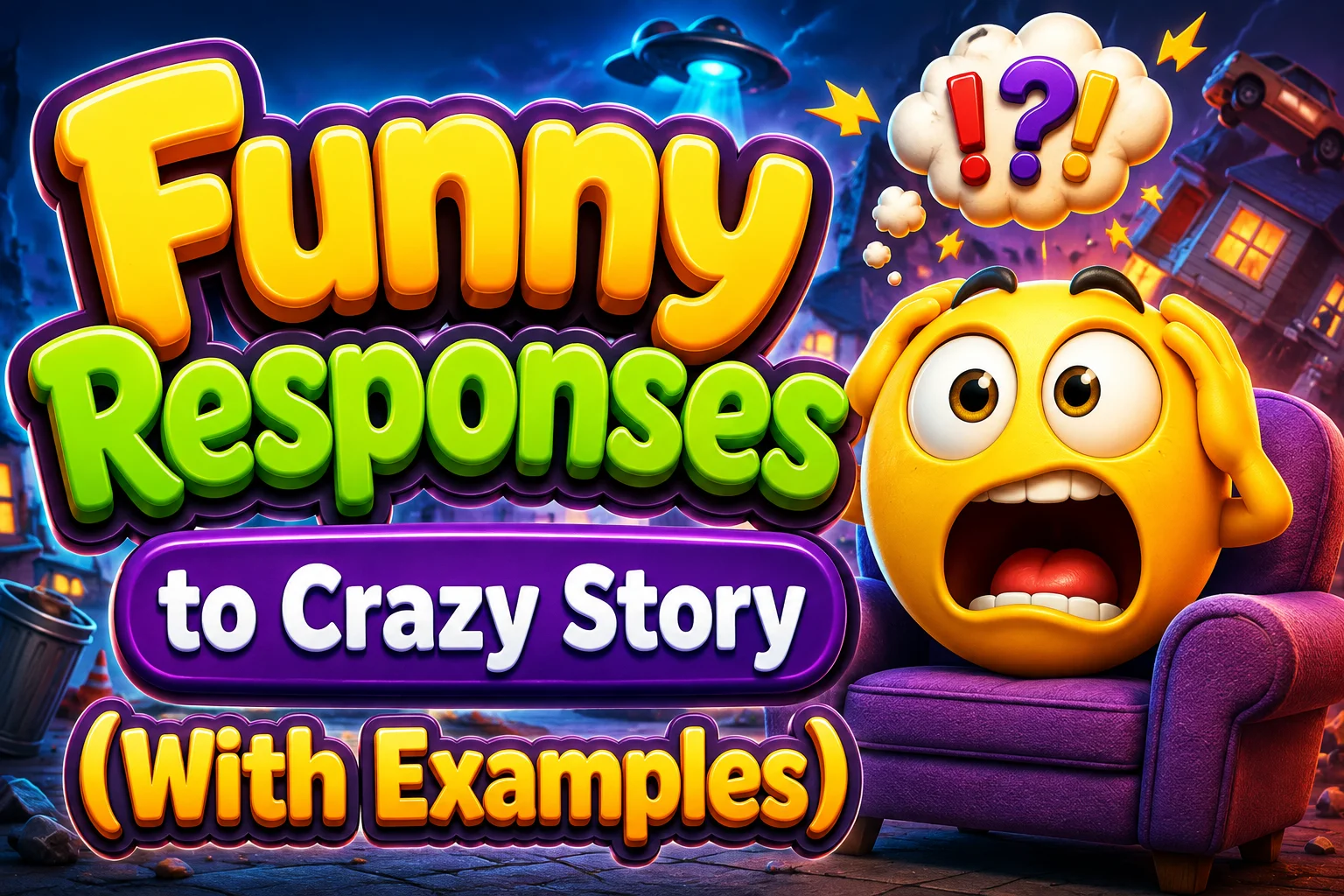
Looking for funny responses to crazy story moments? When someone tells you an unbelievable or wild story, a clever reply can make the conversation even more entertaining. You can say things like “And people say my life is dramatic!” or “Wait, is this a story or a Netflix series?” These funny responses help you react with humor, surprise, and personality while keeping the conversation fun.
Discover 25 Funny Responses to Crazy Story (With Examples) for a wild reply that adds humor, charm, and personality when a story gets ridiculous.
When a friend, coworker, or crush sends a crazy story, you may struggle with what to say, especially when the story is wild enough to make you laugh or gasp. In texts, DMs, group chats, work threads, real-life hangouts, or a text on your phone, a simple wow can sound boring. A clever reply can instantly upgrade the vibe, show personality, and keep conversations flowing when someone drops something ridiculous or over-the-top. The best funny responses make story moments more memorable, charming, and iconic.
If you have ever struggled with That’s crazy, you do not always need a thorough, thoughtful response. A little humor and laughter can create the right response for a boring chat and turn it into a memorable moment. Whether you want flirtation, playful flirts, or witty comebacks, a ready arsenal of replies is a lifesaver. This list is an ultimate cheat sheet for anyone who wants to respond like a pro without awkward thinking.
1. “You Can’t Make This Stuff Up!”
When someone tells you a story that sounds too ridiculous to be real, this response immediately shows that you’re entertained. It works especially well when the situation involves unexpected events, strange coincidences, or unbelievable behavior. Imagine your friend explaining how they accidentally walked into the wrong wedding, sat down, and only realized their mistake after ten minutes. Instead of simply laughing, saying, “You can’t make this stuff up!” makes the moment even funnier. It tells the storyteller that their experience sounds like something from a comedy movie. This response is casual, expressive, and perfect for keeping a funny conversation alive.
Meaning: The story is so unbelievable that it sounds fictional.
Tone: Funny, amazed, and playful.
Example: “You accidentally joined a stranger’s family dinner? You can’t make this stuff up!”
Best Use: Use it when someone shares an unbelievable or ridiculously funny story.
2. “Bro, What Kind of Movie Is This?”
Some stories are so dramatic that they feel like scenes from a movie. If your friend describes a chain of bizarre events, you can jokingly compare their life to a film. “Bro, what kind of movie is this?” is especially effective with close friends because it sounds spontaneous and conversational. For example, if someone tells you they missed their bus, found a wallet, met the wallet owner at a café, and somehow ended up helping them move houses, the story has clearly gone beyond normal expectations. This response adds humor and exaggeration without making fun of the person.
Meaning: The situation sounds unbelievably dramatic or cinematic.
Tone: Casual, humorous, and surprised.
Example: “You went out for coffee and ended up helping a stranger move? Bro, what kind of movie is this?”
Best Use: Perfect for dramatic, complicated, or unexpectedly connected stories.
3. “That Escalated Quickly!”
“That escalated quickly!” is one of the easiest funny responses when a normal situation suddenly becomes chaotic. Maybe someone started arguing about a parking space and somehow ended up involving three neighbors, a security guard, and a confused dog. That’s exactly when this response works. It highlights the unexpected progression of events without requiring a long reply. It can also be used sarcastically when the story becomes increasingly ridiculous. The beauty of this phrase is that it works in texts, social media conversations, group chats, and face-to-face discussions. It keeps your reaction short while still showing genuine amusement.
Meaning: The situation became much more intense or complicated than expected.
Tone: Witty, surprised, and slightly sarcastic.
Example: “You went to ask about the noise and ended up organizing a neighborhood meeting? That escalated quickly!”
Best Use: Use it when a simple situation suddenly turns chaotic.
4. “I Need to See the Director’s Cut!”
A truly wild story sometimes feels like the storyteller has left out half the details. “I need to see the director’s cut!” jokingly suggests that there must be an extended version of the story. It’s a creative response for friends who have just told you something unbelievable. Suppose your friend says they went to the store and somehow ended up participating in a street performance. You could respond by asking for the “director’s cut,” implying that the full story must be even crazier. This phrase adds a movie-inspired twist and encourages the person to continue explaining what happened.
Meaning: You want the full, detailed version of the crazy story.
Tone: Playful, clever, and curious.
Example: “You met your favorite actor at a grocery store? I need to see the director’s cut!”
Best Use: Great when you want someone to tell more details.
5. “Your Life Needs a Sitcom!”
Some people regularly find themselves in situations that sound like comedy episodes. If your friend is constantly sharing strange encounters, saying “Your life needs a sitcom!” is a hilarious compliment. It suggests that their everyday experiences are entertaining enough to become a television show. For example, if your friend describes accidentally ordering twenty pizzas because of a delivery-app mistake, you can imagine the entire situation as an episode. This response works because it recognizes the humor in their experience without criticizing them. It also gives the conversation a playful, exaggerated feel.
Meaning: Your experiences are so funny that they could become a comedy show.
Tone: Friendly, complimentary, and humorous.
Example: “You locked yourself out, climbed through a window, and scared your roommate? Your life needs a sitcom!”
Best Use: Best for friends who constantly experience funny or chaotic situations.
6. “And You Thought That Was a Normal Tuesday?”
This response uses sarcasm and understatement to make a crazy story even funnier. If your friend casually describes something outrageous as though nothing unusual happened, this is the perfect reaction. Imagine someone saying, “Yeah, I accidentally met a celebrity, lost my phone, and got chased by a goose.” Responding with “And you thought that was a normal Tuesday?” makes the absurdity obvious. It works particularly well when the storyteller doesn’t realize how ridiculous their experience sounds. The phrase can create a friendly laugh while showing that you’re genuinely entertained by their story.
Meaning: Your ordinary day sounds anything but ordinary.
Tone: Sarcastic, playful, and amused.
Example: “You got stuck in an elevator with a magician? And you thought that was a normal Tuesday?”
Best Use: Use it when someone casually describes an extraordinary event.
7. “Please Tell Me There’s a Part Two!”
When a crazy story ends with an unexpected twist, “Please tell me there’s a part two!” is a natural way to show curiosity. It suggests that the first part was so entertaining that you want to know what happened afterward. This response works particularly well in text conversations because it encourages the other person to continue typing. For example, if your friend tells you about accidentally sending a private message to the wrong group chat but stops before explaining the reaction, you can immediately ask for the sequel. It keeps the conversation active and makes the storyteller feel that their story genuinely captured your attention.
Meaning: You want to hear what happened next.
Tone: Curious, excited, and humorous.
Example: “You sent the message to your boss instead? Please tell me there’s a part two!”
Best Use: Ideal when the story ends with an unresolved or funny twist.
8. “I’m Laughing, But Are You Okay?”
Sometimes a story is both funny and stressful. In those situations, it helps to combine humor with genuine concern. Saying “I’m laughing, but are you okay?” lets the person know that you find the situation amusing while still caring about how they feel. Imagine your friend telling you about slipping in front of a crowd, accidentally knocking over a display, and then getting up as if nothing happened. You might laugh at the story while checking whether they were actually hurt. This response creates a balanced tone because it doesn’t turn someone’s difficult experience into a joke without acknowledging their feelings.
Meaning: The situation sounds funny now, but you care about their well-being.
Tone: Caring, humorous, and supportive.
Example: “You fell into the fountain in front of everyone? I’m laughing, but are you okay?”
Best Use: Use it when a crazy story involves a minor accident or stressful moment.
9. “This Sounds Like a Fever Dream!”
A fever dream is commonly used humorously to describe something strange, surreal, or difficult to believe. If someone tells you a story involving several bizarre events, saying “This sounds like a fever dream!” immediately communicates how unusual it is. For instance, your friend might explain that they saw a man walking a cat on a leash, accidentally entered a dance competition, and then met their childhood teacher at the same event. None of it seems connected, which makes the phrase perfect. It’s a modern, informal expression that fits well into texting and casual conversations.
Meaning: The story sounds surreal, bizarre, or unreal.
Tone: Funny, dramatic, and informal.
Example: “You saw a goat riding in the back of a taxi? This sounds like a fever dream!”
Best Use: Best for surreal, random, or bizarre experiences.
10. “Okay, I Have Questions!”
Sometimes a crazy story leaves you with more questions than answers. “Okay, I have questions!” is a simple but effective response because it naturally invites the storyteller to explain further. It can be delivered with genuine curiosity or exaggerated humor. If someone says, “I went to the mall and somehow ended up backstage at a concert,” you immediately have questions. The phrase signals that their story has crossed into unexpected territory. It also avoids sounding judgmental. Instead, you’re showing interest while creating an opportunity for a longer conversation.
Meaning: The story is confusing, surprising, or unbelievable enough to require an explanation.
Tone: Curious, amused, and conversational.
Example: “You met the singer backstage without a ticket? Okay, I have questions!”
Best Use: Use it when a story contains mystery, confusion, or surprising details.
11. “Plot Twist!”
Few phrases are shorter or more recognizable than “Plot twist!” When a story suddenly changes direction, this response fits naturally. Maybe your friend spends five minutes explaining how they thought someone stole their wallet, only to discover it was in their own pocket. The ending becomes the perfect plot twist. You can use this phrase whenever the outcome is unexpected, ironic, or completely different from what you anticipated. It also works well in group chats because it is short enough to send instantly. The phrase adds a playful storytelling element to ordinary conversations.
Meaning: Something happened that completely changed expectations.
Tone: Dramatic, playful, and witty.
Example: “You spent an hour looking for your keys, and they were in your hand? Plot twist!”
Best Use: Perfect for stories with an unexpected ending.
12. “I’m Going to Need the Full Timeline.”
When a story contains too many twists, you may need a complete explanation just to understand what happened. “I’m going to need the full timeline” humorously presents the story like a complicated investigation. It works especially well when events happened in a confusing sequence. For example, your friend might say they missed their train, met an old classmate, ended up at a restaurant, and somehow became part of a birthday celebration. Rather than trying to understand everything immediately, you can ask for the timeline. This response is funny because it treats an everyday story like a major historical event.
Meaning: The story is complicated and needs to be explained from beginning to end.
Tone: Curious, dramatic, and humorous.
Example: “Wait, you missed your train and ended up at a wedding? I’m going to need the full timeline.”
Best Use: Use it when a story has multiple twists or confusing events.
Also Read This: 25 Funny Responses to I’m Lost (With Examples)
13. “You’re Living on Hard Mode!”
This response jokingly compares someone’s chaotic experience to playing a video game on its most difficult setting. “You’re living on hard mode!” works especially well when everything seems to go wrong for someone. Imagine your friend losing their keys, missing the bus, spilling coffee, and arriving late to work—all before noon. Calling it “hard mode” turns their bad luck into a humorous observation. The phrase is usually best with friends who understand playful teasing. It can make someone laugh without dismissing what happened, especially when delivered with empathy.
Meaning: Everything seems unusually difficult or chaotic for you.
Tone: Teasing, supportive, and funny.
Example: “You missed the bus, lost your wallet, and forgot your lunch? You’re living on hard mode!”
Best Use: Best for bad-luck stories and chaotic days.
14. “Netflix Would Reject This Script!”
Sometimes a story is so unrealistic that you can joke that even a streaming service wouldn’t believe it. “Netflix would reject this script!” exaggerates the situation for comedic effect. Suppose someone tells you about accidentally meeting their childhood crush at an airport, discovering they live in the same city, and then ending up on the same flight. The coincidence is so dramatic that comparing it to a rejected script makes the story even funnier. This response is particularly effective among friends who enjoy pop-culture humor and playful exaggeration.
Meaning: The story is so unbelievable that it sounds too unrealistic for television.
Tone: Sarcastic, dramatic, and playful.
Example: “You met your old teacher on the same flight and sat beside them? Netflix would reject this script!”
Best Use: Use it for extremely unlikely coincidences or dramatic stories.
15. “I’m Not Saying I Don’t Believe You…”
This response creates suspense because it humorously suggests that the story sounds almost impossible. “I’m not saying I don’t believe you…” can be followed by a playful comment such as, “I’m just saying I need photographic evidence.” It works best with close friends where there is enough trust for teasing. The phrase doesn’t necessarily mean you genuinely doubt them. Instead, it highlights how wild and unbelievable the situation sounds. When delivered with the right tone, it can lead to laughter and encourage the storyteller to provide even more details.
Meaning: The story sounds unbelievable, although you may still believe it.
Tone: Teasing, skeptical, and playful.
Example: “I’m not saying I don’t believe you, but you might need three witnesses for this one.”
Best Use: Great for wild stories that sound almost impossible.
16. “That Story Took Me on a Roller Coaster!”
A crazy story can contain so many emotional ups and downs that it feels like a roller coaster ride. Saying this response tells the storyteller that their story kept you entertained from beginning to end. It can be especially funny when the story moves through several unexpected emotions. Perhaps your friend starts by telling you they lost something, then finds it, then discovers something else, and finally ends up celebrating. Calling it a roller coaster captures the whole experience in a colorful way. It also sounds enthusiastic rather than judgmental.
Meaning: The story had many unexpected twists and emotions.
Tone: Energetic, positive, and humorous.
Example: “First you thought you lost your phone, then someone returned it, and then you found $20? That story took me on a roller coaster!”
Best Use: Use it for long stories with multiple twists and turns.
17. “My Brain Needs a Minute!”
When someone tells you something incredibly complicated or surprising, your brain may genuinely need time to process it. “My brain needs a minute!” turns that reaction into a joke. It works especially well when the story contains several unexpected details. You can say it after hearing something so ridiculous that you need a moment before responding. The phrase also makes your reaction feel authentic because you’re not pretending to have an immediate clever answer. Instead, you’re humorously admitting that the story has temporarily overwhelmed your ability to process it.
Meaning: The story is so surprising that you need time to process it.
Tone: Funny, dramatic, and genuine.
Example: “Your neighbor adopted a chicken and named it after the mayor? My brain needs a minute!”
Best Use: Perfect for unexpected, confusing, or ridiculous stories.
18. “There’s No Way That Happened!”
Sometimes the funniest response is exaggerated disbelief. “There’s no way that happened!” works when your friend’s story sounds completely impossible. Of course, you may actually believe them, but the dramatic reaction makes the conversation more entertaining. Imagine someone telling you that they accidentally ended up in the wrong classroom and somehow stayed for an entire lecture. Instead of calmly responding, you can jokingly challenge the story. This expression is especially effective when paired with laughter or a follow-up question. It shows that you’re surprised while encouraging your friend to defend their version of events.
Meaning: The story sounds extremely difficult to believe.
Tone: Shocked, playful, and skeptical.
Example: “You accidentally attended the wrong graduation ceremony? There’s no way that happened!”
Best Use: Use it when the story is especially unbelievable or unexpected.
19. “Please Tell Me You Got Pictures!”
When a crazy story sounds visually hilarious, asking for pictures is a natural response. “Please tell me you got pictures!” combines curiosity with humor. It suggests that the situation was so unusual that photographic evidence would make it even better. For example, if your friend describes seeing a dog wearing sunglasses while riding in a shopping cart, you would probably want proof. This response works particularly well in texting and social media conversations, where photos can instantly become part of the story. It also shows that you’re genuinely interested in what happened.
Meaning: The event sounds so funny that you wish there were photographic evidence.
Tone: Excited, curious, and playful.
Example: “You saw a parrot ordering food at a café? Please tell me you got pictures!”
Best Use: Best for funny, visual, or unbelievable moments.
20. “Your Story Has More Twists Than a Pretzel!”
This is a playful metaphor for a story with constant twists and unexpected turns. Comparing the story to a pretzel creates a silly image and makes the response memorable. It works particularly well when your friend has been telling you about a complicated sequence of events. Perhaps they thought they were meeting one person, accidentally met another, and eventually ended up somewhere completely different. Calling it a pretzel emphasizes just how tangled the story became. This response is lighthearted and can make a normal conversation feel more creative.
Meaning: The story has many unexpected twists and complications.
Tone: Silly, creative, and humorous.
Example: “You went looking for your friend and ended up meeting their cousin’s boss? Your story has more twists than a pretzel!”
Best Use: Great for complicated and twist-filled stories.
21. “I Need Snacks for This Story!”
A long and entertaining story deserves an imaginary movie-night setup. Saying “I need snacks for this story!” humorously tells the person that you are ready to hear everything. It works especially well when you can tell the storyteller has many details left to share. The phrase transforms an ordinary conversation into a playful storytelling event. Instead of simply asking them to continue, you exaggerate your interest by pretending to prepare for a long movie. This makes the storyteller feel that their experience is interesting enough to deserve your full attention.
Meaning: The story is entertaining and probably going to be long.
Tone: Excited, humorous, and engaged.
Example: “Wait, you haven’t even told me how it ended? I need snacks for this story!”
Best Use: Perfect for long, dramatic, or highly entertaining stories.
22. “This Is Peak Chaos!”
When a situation reaches an impressive level of disorder, “This is peak chaos!” provides a short and energetic reaction. It’s useful when multiple ridiculous things happen at once. Imagine your friend telling you that their dog escaped, their neighbor chased it, a delivery driver joined the chase, and everyone ended up at the same park. That’s not merely chaotic—it’s peak chaos. This phrase is modern, casual, and particularly useful in group chats. It can also be used as a caption or comment when someone posts a funny story online.
Meaning: The situation has reached an extreme level of chaos.
Tone: Energetic, humorous, and informal.
Example: “The dog escaped, the neighbor chased it, and the delivery guy joined in? This is peak chaos!”
Best Use: Use it for wild situations involving several people or events.
23. “Okay, That Was Not on My Bingo Card!”
“That was not on my bingo card!” is a fun way to describe something completely unexpected. People often use a metaphorical “bingo card” for things they expect to happen during a day, year, or situation. If your friend tells you something that nobody could have predicted, this response fits perfectly. For example, if they planned a quiet weekend but somehow ended up performing karaoke on stage, you can joke that the event wasn’t on your imaginary bingo card. It makes the reaction feel current, playful, and conversational while emphasizing how unexpected the story was.
Meaning: Something happened that you never expected.
Tone: Trendy, humorous, and surprised.
Example: “You entered a random karaoke contest and won? That was not on my bingo card!”
Best Use: Best for unexpected events and surprising developments.
24. “Honestly, I Would’ve Logged Off!”
When a story becomes too chaotic, this response humorously suggests that you would have simply given up and removed yourself from the situation. “Honestly, I would’ve logged off!” borrows language from the internet and social media, making it especially suitable for casual digital conversations. Suppose your friend tells you they experienced an embarrassing chain of events in public. You can joke that you would have mentally disconnected from reality. The phrase works because it exaggerates your reaction while still showing that you understand how ridiculous the situation must have felt.
Meaning: The situation would have been too much for you to handle.
Tone: Relatable, sarcastic, and funny.
Example: “You called your teacher ‘Mom’ in front of everyone? Honestly, I would’ve logged off!”
Best Use: Great for embarrassing, overwhelming, or chaotic experiences.
25. “And Somehow You Survived!”
A crazy story often ends with one obvious question: How did you make it through that? Saying “And somehow you survived!” gives the story a humorous sense of victory. It works particularly well when the experience was chaotic but ultimately harmless. For example, your friend might tell you about missing a train, getting caught in the rain, losing their phone, and finally finding their way home. You can respond as if they have returned from an epic adventure. This response adds warmth to the conversation because you’re laughing at the chaos while also celebrating the fact that everything turned out okay.
Meaning: You went through an extremely chaotic experience and somehow came out fine.
Tone: Warm, humorous, and supportive.
Example: “You missed the train, lost your wallet, and walked five miles home? And somehow you survived!”
Best Use: Use it when someone has made it through a ridiculous or difficult experience.
FAQs:
What is a funny response to a crazy story?
A funny response depends on the situation, but phrases such as “That escalated quickly!”, “Plot twist!”, and “You can’t make this stuff up!” are easy choices. They show surprise while keeping the conversation light and engaging.
How do you respond when someone tells you an unbelievable story?
Start with a reaction that matches the level of surprise. You can say “I have questions!”, “There’s no way that happened!”, or “I need the full timeline!” if you want them to explain more.
What is a good funny response to a wild story over text?
For texting, short responses usually work best. Try “Peak chaos!”, “Plot twist!”, “I need snacks for this story!”, or “Please tell me there’s a part two!” These phrases are quick, expressive, and easy to understand.
How can I make my response to a crazy story funnier?
Use exaggeration, playful sarcasm, comparisons, and unexpected reactions. Instead of saying “That sounds crazy,” compare the story to a movie, sitcom, roller coaster, or video game. Just make sure your humor matches the relationship and situation.
Should I make fun of someone when they tell me a crazy story?
Not always. Read the situation first. If the person is laughing about what happened, playful humor is usually appropriate. If the story involves fear, injury, embarrassment, or genuine distress, start with empathy and concern before adding humor.
Conclusion
A crazy story deserves more than a predictable “Wow, that’s crazy!” A clever response can make the conversation more memorable, encourage the storyteller to share more, and create a genuine moment of laughter. Whether you choose “That escalated quickly!”, “Your life needs a sitcom!”, “I need snacks for this story!”, or “And somehow you survived!”, the key is to match your response to the person’s mood and the situation.
The best funny responses to crazy stories feel natural rather than rehearsed. Use humor when the moment calls for it, show genuine interest, and remember that a little empathy can make even the funniest response feel more thoughtful. With these 25 funny responses, you’ll have plenty of playful ways to react whenever someone drops an unbelievable, chaotic, awkward, or downright hilarious story into your conversation.