Quick Answer
“Don’t work too hard” is usually a friendly way to show concern or wish someone an easier day. The best response depends on your relationship and the tone of the conversation. You can keep it polite and professional with “Thanks, I’ll try not to!” or make it friendly and casual with “I’ll do my best!” For a playful conversation, you could say, “No promises!” or “I’ll save some energy for later.” Choose a response that matches the situation and shows appreciation for their thoughtful message.
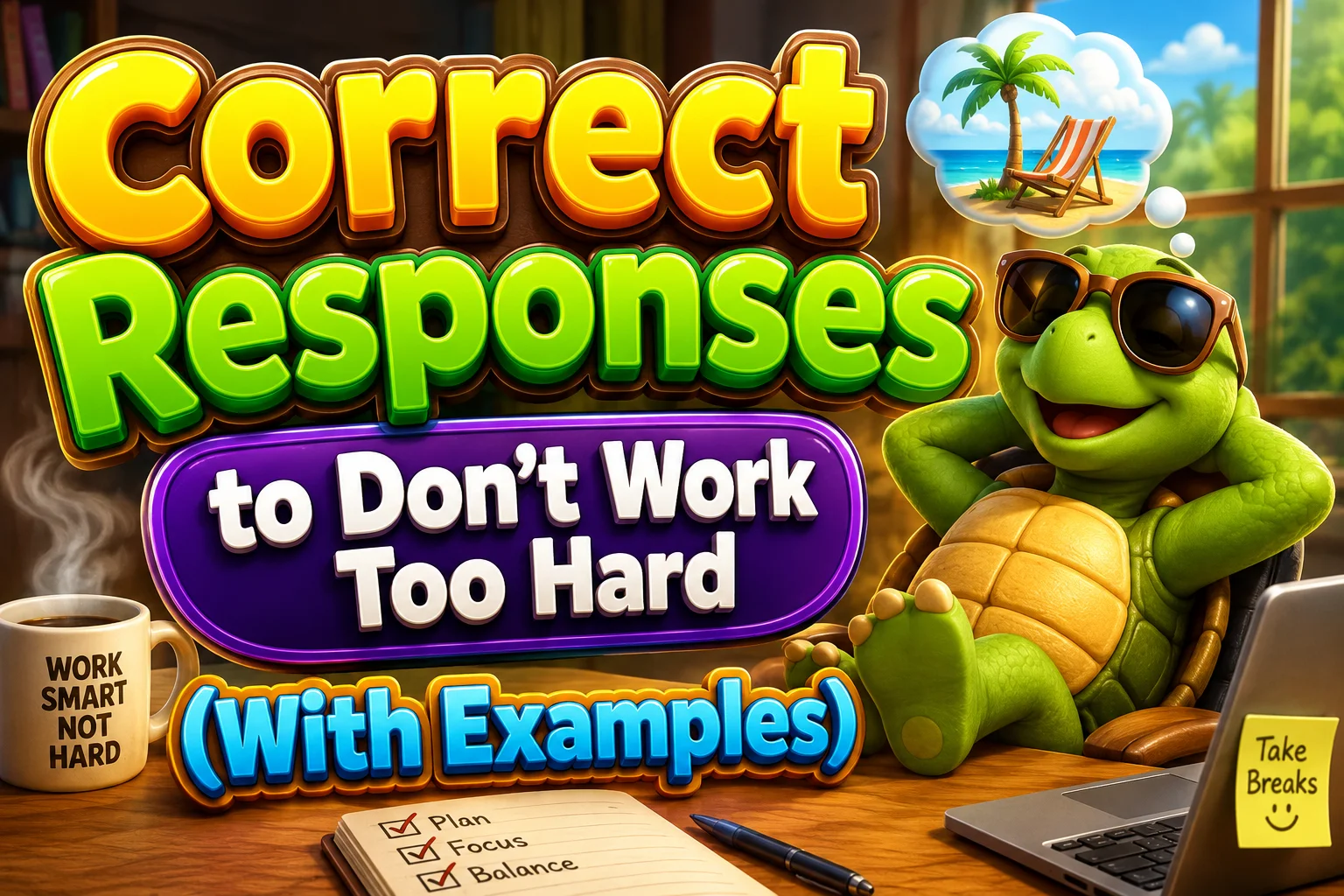
Correct Responses to Don’t Work Too Hard (With Examples) to handle friendly teasing, work talk, and casual replies with confidence.
In everyday socializing, friends, family, co-workers, and coworkers may good-naturedly tease someone with jokes, jokingly poke fun, or use banter when they say “Don’t Work Too Hard.” A buddy may tease you at work, while men, women, guys, and people may use playful teasing to hang out, build friendship, camaraderie, or male bonding. A natural reply can be a comeback, a chance to verbally spar, joke back, or offer a witty reply without becoming defensive. When the teasing takes a meaner way, strong social skills, social ability, conversational skills, communication, humor, confidence, and social confidence help you understand the situation, tone, and teasing dynamic.
After a long workday, people often hear “How was your work?” from a friend, partner, coworker, or family member, and your answer can shape where the conversation goes next. Whether you are talking about an exhausting, ordinary day, or something amazing, the right reply can make a casual conversation more enjoyable and meaningful while allowing your personality to add a personal or emotional touch. Good intentions can help you be good company and get along with people, even when you feel not up to par, are failing, or worry about becoming a punching bag. If you are down on themselves, fear others will look down on me, or wonder whether buddies will hang in there, friendly teasing, playful banter, and good intentions can support a healthy group, group interaction, and interpersonal interaction.
1. “I’ll Try My Best!”
Sometimes the simplest response is the most natural one. If a coworker tells you not to work too hard while you’re heading back to your desk, saying “I’ll try my best!” acknowledges their kindness without turning the conversation into something complicated. It has a friendly and relaxed tone, so it works especially well between colleagues who already have a comfortable relationship. It can also subtly suggest that you understand the reminder but still have responsibilities to handle. Rather than sounding defensive, this response keeps things positive and shows that you appreciate the person’s concern about your workload.
Meaning: You acknowledge the advice and promise to keep your workload manageable.
Tone: Friendly, positive, and casual.
Example: “I’ve got a few reports left, but I’ll try my best!”
Best use: Use it with coworkers, friends, or people you have a relaxed relationship with.
2. “Thanks, I’ll Keep That in Mind.”
A slightly more thoughtful response is “Thanks, I’ll keep that in mind.” This answer is useful when you want to acknowledge someone’s concern without joking around. Imagine your colleague notices that you’ve been staying late several evenings and says, “Don’t work too hard.” Instead of simply laughing it off, you can show that you genuinely appreciate the reminder. The phrase sounds mature and considerate while remaining conversational. It doesn’t promise that you’ll stop working, but it shows that you’re aware of the importance of maintaining a healthy balance between productivity and rest.
Meaning: You appreciate the advice and will remember it.
Tone: Polite, mature, and considerate.
Example: “Thanks, I’ll keep that in mind. I’ve definitely been putting in some long hours.”
Best use: Use it with coworkers, supervisors, acquaintances, or professional contacts.
3. “I’ll Take a Break When I Can.”
If you have a busy schedule but don’t want to sound dismissive, “I’ll take a break when I can” is a practical response. It recognizes the person’s concern while honestly explaining that you still have work to complete. This can be particularly appropriate in an office, during a project deadline, or when you’re handling several tasks at once. The response doesn’t exaggerate your situation or make a joke out of someone’s kindness. Instead, it creates a natural opening for a short conversation about workload, deadlines, or the importance of taking time to recharge.
Meaning: You understand the reminder and intend to rest when your schedule allows.
Tone: Honest, calm, and responsible.
Example: “Thanks! I’ll take a break when I can—I just need to finish this report.”
Best use: Use it when you’re genuinely busy but want to acknowledge someone’s concern.
4. “I’ll Try Not to!”
For a short, playful answer, “I’ll try not to!” works beautifully. The phrase mirrors the original comment and adds a lighthearted touch. If a friend or coworker sees you carrying a large stack of paperwork and says, “Don’t work too hard,” this response can make the moment more humorous without being sarcastic. It doesn’t take the comment too seriously, which makes it especially useful in casual conversations. The wording also leaves room for a smile or laugh, making it a natural choice when the other person is clearly being friendly rather than giving serious workplace advice.
Meaning: You jokingly agree to avoid overworking yourself.
Tone: Playful, light, and friendly.
Example: “I’ll try not to! Although this pile of paperwork has other plans.”
Best use: Use it with friends and coworkers in informal situations.
5. “Don’t Worry, I Know My Limits.”
When someone is genuinely worried that you’re pushing yourself too hard, “Don’t worry, I know my limits” can provide reassurance. It tells them that you’re aware of your workload and aren’t ignoring your own needs. This response is particularly useful if you’ve been working intensely and someone close to you notices. Instead of simply saying “thanks,” you can reassure them that you’re keeping an eye on your energy and responsibilities. It sounds confident without being rude. The statement also demonstrates self-awareness, which makes it appropriate when the other person’s comment comes from genuine concern.
Meaning: You reassure the person that you understand when you need to slow down.
Tone: Confident, reassuring, and calm.
Example: “Thanks for checking on me. Don’t worry, I know my limits.”
Best use: Use it when someone is sincerely concerned about your workload.
6. “I’ll Save Some Energy for Tomorrow.”
This response gives “Don’t work too hard” a positive twist. Saying “I’ll save some energy for tomorrow” shows that you understand the importance of pacing yourself. It can work particularly well at the end of a workday when you’ve already completed most of your responsibilities. The answer sounds relaxed rather than overly serious, and it suggests that you don’t intend to exhaust yourself just to finish everything immediately. It can also create a friendly workplace atmosphere because it acknowledges the reality that everyone needs rest before returning with fresh energy the next day.
Meaning: You intend to avoid exhausting yourself and preserve energy for the next day.
Tone: Positive, relaxed, and sensible.
Example: “You’re right. I’ll save some energy for tomorrow and finish the rest in the morning.”
Best use: Use it near the end of a busy workday.
7. “Thanks for Looking Out for Me!”
If the person’s comment feels especially caring, “Thanks for looking out for me!” is a warm response. It goes beyond acknowledging the words and recognizes the person’s intention behind them. This is a great option when a friend, teammate, or trusted colleague notices that you’re doing too much and encourages you to slow down. The response makes the interaction more personal without becoming overly emotional. It can also strengthen workplace relationships because people generally appreciate knowing that their concern has been noticed. A simple smile while saying it can make the response sound even more sincere.
Meaning: You appreciate the person’s concern and support.
Tone: Warm, appreciative, and friendly.
Example: “Thanks for looking out for me! I’ll make sure I get some rest tonight.”
Best use: Use it when someone’s comment comes from genuine care.
8. “I’ll Keep the Workaholic in Me Under Control.”
For a humorous response, you can jokingly blame your imaginary “workaholic” side. This works especially well when people already know that you’re someone who tends to stay busy or work longer than necessary. Instead of taking the statement literally, you’re turning it into a playful observation about your personality. The response can make a routine workplace exchange more entertaining while still showing that you understand the message. Because it uses humor, it’s better suited to informal conversations than serious professional situations where your workload may actually be a concern.
Meaning: You jokingly admit that you sometimes work more than necessary.
Tone: Funny, self-aware, and playful.
Example: “I’ll keep the workaholic in me under control. No promises, though!”
Best use: Use it with coworkers or friends who understand your sense of humor.
9. “I’ll Work Smarter, Not Harder.”
“I’ll work smarter, not harder” is a clever response that turns the conversation toward efficiency. Rather than promising to avoid work altogether, you’re saying you’ll focus on completing tasks more effectively. This phrase can fit particularly well in professional environments because productivity and time management are important workplace concepts. If your colleague sees you juggling multiple tasks and tells you not to work too hard, this answer reassures them that you’re thinking about efficiency rather than simply putting in more hours. It sounds confident while keeping the exchange light and constructive.
Meaning: You plan to focus on efficiency instead of unnecessary effort.
Tone: Smart, professional, and slightly humorous.
Example: “Thanks! I’ll work smarter, not harder and try to finish this efficiently.”
Best use: Use it with coworkers, teammates, or professional contacts.
10. “I’ll Make Sure to Get Some Rest.”
Sometimes a direct and sincere answer is best. “I’ll make sure to get some rest” tells the other person that you understand the importance of stepping away from work. It works well when someone has noticed that you’ve been busy for an extended period. The response is polite without being overly formal, making it suitable for both professional and personal conversations. It also communicates responsibility because you’re not saying you’ll abandon your duties. Instead, you’re recognizing that rest is part of maintaining productivity and well-being over time.
Meaning: You acknowledge the reminder and intend to make time for rest.
Tone: Sincere, responsible, and reassuring.
Example: “Thanks for reminding me. I’ll make sure to get some rest after I finish this.”
Best use: Use it when you want to give a genuine response to someone’s concern.
11. “I’ll Try to Keep It Under Control.”
If you’re dealing with a particularly busy day, “I’ll try to keep it under control” is a flexible response. It can refer to your workload, schedule, or tendency to take on too many tasks. The phrase doesn’t sound defensive, and it leaves room for a little humor depending on how you deliver it. For example, if your desk is covered with paperwork and a coworker makes the familiar “Don’t work too hard” comment, this response fits naturally. It acknowledges their concern while recognizing that the day may still be demanding.
Meaning: You will try to manage your workload without letting it become overwhelming.
Tone: Casual, cooperative, and reassuring.
Example: “I’ll try to keep it under control. There’s just a lot to finish today.”
Best use: Use it during busy but ordinary work situations.
12. “You Too—Take It Easy!”
A great way to turn the kindness back toward the other person is “You too—take it easy!” This response is short, natural, and reciprocal. If a coworker is leaving the office and tells you not to work too hard, there’s a good chance they’re also ready for some rest. By telling them to take it easy, you show that the concern goes both ways. It works particularly well because it doesn’t require a long explanation. You simply acknowledge their words and return the friendly sentiment, making it ideal for quick conversations.
Meaning: You return the person’s good wishes and encourage them to relax too.
Tone: Friendly, casual, and reciprocal.
Example: “Thanks! You too—take it easy on your way home.”
Best use: Use it when someone says the phrase casually while leaving or ending a conversation.
Also Read This: 25 Professional Polite Formal Responses (With Examples)
13. “I’ll Do My Best Not to Overdo It.”
This response is useful when you want to sound responsible without making an unrealistic promise. “I’ll do my best not to overdo it” acknowledges that you have work to complete while showing that you won’t intentionally push yourself beyond reasonable limits. It can be especially appropriate when a manager, colleague, friend, or family member notices that you’ve been unusually busy. The phrase feels sincere because it doesn’t claim that you’ll suddenly stop working. Instead, it shows that you’re willing to balance productivity with appropriate rest.
Meaning: You agree to avoid taking your workload too far.
Tone: Responsible, sincere, and balanced.
Example: “I’ve got a deadline, but I’ll do my best not to overdo it.”
Best use: Use it when someone is genuinely concerned about you working excessively.
14. “I’ll Pace Myself.”
“I’ll pace myself” is a concise response that communicates good time management. It suggests that you understand that working continuously isn’t always the most effective approach. This phrase is particularly useful when you’re involved in a long project rather than a quick task. For example, if your teammate notices that you’ve been working nonstop and says, “Don’t work too hard,” you can assure them that you’re managing your energy. It sounds mature and professional without becoming stiff. The answer is also easy to use in casual conversations because it’s short and conversational.
Meaning: You plan to manage your energy and workload steadily.
Tone: Practical, confident, and composed.
Example: “Thanks! I’ll pace myself. This project still has a few weeks to go.”
Best use: Use it for long projects, busy schedules, or extended periods of work.
15. “I’ll Try to Leave Some Work for Tomorrow.”
This response adds a humorous angle to the idea of taking things slowly. “I’ll try to leave some work for tomorrow” can be funny when you’ve developed a reputation for finishing everything immediately. It suggests that you might actually be too productive, which creates a playful contrast with the original comment. However, it should be delivered with the right tone. A smile or laugh can make it clear that you’re joking. In a formal environment, a more straightforward answer may be preferable, but among familiar coworkers, it can be a memorable and entertaining comeback.
Meaning: You jokingly suggest that you won’t try to finish everything at once.
Tone: Humorous, witty, and relaxed.
Example: “I’ll try to leave some work for tomorrow. I don’t want to make the rest of the team look bad!”
Best use: Use it with coworkers who appreciate workplace humor.
16. “Thanks! I’m Almost Done Anyway.”
If someone tells you not to work too hard when you’re close to finishing, “Thanks! I’m almost done anyway” is a natural answer. It reassures them that you’re not planning to spend the entire night working. At the same time, it explains why you’re continuing for a little longer. This can prevent the conversation from sounding like you’re ignoring their advice. The response is especially useful when you’ve only got one small task left. It keeps the interaction honest, friendly, and efficient while making it clear that you’re aware of your own workload.
Meaning: You appreciate the concern and explain that you’re nearly finished.
Tone: Casual, reassuring, and straightforward.
Example: “Thanks! I’m almost done anyway. Just need to send this last email.”
Best use: Use it when you’re close to completing your work.
17. “That’s the Plan!”
Sometimes you don’t need a detailed answer. “That’s the plan!” is short, upbeat, and confident. If someone tells you not to work too hard, this response can suggest that you’re already planning to maintain a reasonable balance. It can also sound playful depending on your delivery. For example, if your colleague knows that you’re usually the last person to leave the office, saying “That’s the plan!” can create a humorous moment because they may not completely believe you. The brevity makes this response perfect for quick workplace exchanges.
Meaning: You agree with the suggestion and intend to avoid overworking.
Tone: Confident, cheerful, and casual.
Example: “Don’t work too hard!” “That’s the plan!”
Best use: Use it when you want a quick, upbeat response.
18. “I’ll Try to Remember That!”
“I’ll try to remember that!” is a friendly response that acknowledges the advice without sounding overly serious. It works well when someone casually reminds you to slow down, especially if you tend to become absorbed in your work. The word “try” keeps it relaxed and avoids making a promise that you may not be able to keep. You can also add a smile to make the response sound playful. This option is flexible enough for everyday conversations with colleagues, friends, classmates, or family members.
Meaning: You appreciate the reminder and will keep it in mind.
Tone: Friendly, light, and appreciative.
Example: “Thanks! I’ll try to remember that once I get caught up.”
Best use: Use it when the comment is casual rather than a serious warning.
19. “I’ll Make Time to Relax.”
When you want to give a mature response, “I’ll make time to relax” is an excellent option. It directly recognizes the importance of balancing responsibilities with downtime. The phrase can be especially effective when you’re talking to someone who knows you’ve been under pressure. Rather than dismissing their concern, you show that you’ve heard them and are willing to make room for yourself outside of work. It also communicates a healthy attitude toward productivity: working hard doesn’t mean working continuously. Sometimes taking a break helps you return with better focus and energy.
Meaning: You intend to create time for rest despite having responsibilities.
Tone: Mature, thoughtful, and reassuring.
Example: “You’re right. I’ll make time to relax after I finish today’s priorities.”
Best use: Use it when someone is encouraging you to maintain a healthier work-life balance.
20. “I’ll Try to Keep My Workload Reasonable.”
For a professional setting, “I’ll try to keep my workload reasonable” is one of the more appropriate answers. It shows that you’re taking the person’s comment seriously and thinking about how much work you can realistically handle. This can be useful when speaking with a teammate or manager who is concerned about workload management. Rather than turning the comment into a joke, you’re acknowledging the importance of prioritization and sustainable productivity. It sounds measured and responsible, making it suitable for conversations where professionalism matters.
Meaning: You intend to avoid taking on an unreasonable amount of work.
Tone: Professional, responsible, and thoughtful.
Example: “Thanks for mentioning it. I’ll try to keep my workload reasonable this week.”
Best use: Use it in professional conversations about workload and deadlines.
21. “I’ll Rest When the Work Is Done!”
This response is best used as a playful exaggeration, not as a serious statement. Saying “I’ll rest when the work is done!” can create a humorous moment because it dramatically presents your commitment to finishing the task. If a friend knows you’re joking, they may respond with something like, “That’s exactly what I’m worried about!” The phrase works because it turns a normal concern into a dramatic declaration. However, avoid using it when someone is genuinely worried about your health or workload, because it could sound like you’re dismissing their concern.
Meaning: You jokingly claim that you’ll keep working until everything is finished.
Tone: Dramatic, humorous, and playful.
Example: “Don’t work too hard!” “I’ll rest when the work is done!”
Best use: Use it with friends or coworkers during lighthearted conversations.
22. “I’m Trying to Find the Balance.”
If you’re actively working on managing your time, “I’m trying to find the balance” is an honest and thoughtful response. It recognizes that being productive and taking care of yourself aren’t opposites. You can work hard while still making time to relax, socialize, and recharge. This answer can lead to a more meaningful conversation if the other person is also dealing with a demanding schedule. It avoids jokes and focuses on the reality of managing responsibilities. Because it sounds reflective rather than defensive, it works well with people you trust.
Meaning: You are working toward a healthy balance between productivity and rest.
Tone: Honest, thoughtful, and mature.
Example: “I’m trying to find the balance. I want to finish my work without spending every evening at my desk.”
Best use: Use it for genuine conversations about workload and work-life balance.
23. “I’ll Take That as a Reminder to Slow Down.”
This response directly acknowledges the intention behind the person’s words. “I’ll take that as a reminder to slow down” is especially effective when someone has repeatedly noticed that you’re taking on too much. It doesn’t simply say thank you; it shows that you’ve understood the underlying message. The wording can also demonstrate self-awareness and willingness to make adjustments. In a professional environment, it can help create a respectful exchange because you’re neither dismissing the person nor making the situation unnecessarily serious.
Meaning: You recognize that you may need to reduce your pace and take appropriate breaks.
Tone: Appreciative, reflective, and responsible.
Example: “Thanks. I’ll take that as a reminder to slow down and prioritize what really needs to be done today.”
Best use: Use it when someone is giving sincere advice about your workload.
24. “I’ll Try to Keep the Coffee Breaks Coming!”
For a fun workplace comeback, “I’ll try to keep the coffee breaks coming!” adds humor without being rude. It works particularly well when coffee breaks are already part of the office culture or when everyone is dealing with a busy day. The response suggests that you’re willing to balance work with small moments of relaxation. It also gives the other person something to laugh about, which can make a routine conversation more enjoyable. Of course, the phrase is intentionally playful, so it’s better for casual situations than formal conversations with senior management.
Meaning: You jokingly promise to take occasional breaks while working.
Tone: Funny, casual, and cheerful.
Example: “Don’t work too hard!” “I’ll try to keep the coffee breaks coming!”
Best use: Use it with friends and coworkers in relaxed workplace settings.
25. “Thanks! I’ll Know When to Call It a Day.”
A strong all-purpose response is “Thanks! I’ll know when to call it a day.” It acknowledges the person’s concern while showing that you can recognize when it’s time to stop working. The phrase sounds confident because you’re not promising to abandon your responsibilities. Instead, you’re saying that you’ll use your judgment and avoid unnecessary overtime. This makes it suitable for both casual and professional conversations. It can also demonstrate good boundaries, especially when someone notices that you’re still working after most people have finished for the day.
Meaning: You appreciate the concern and understand when it’s time to stop working.
Tone: Confident, mature, and reassuring.
Example: “Thanks! I’ll know when to call it a day. I only have one task left.”
Best use: Use it when you want a balanced response that works in professional and casual situations.
FAQs
What does “Don’t work too hard” mean?
“Don’t work too hard” is usually a friendly expression used to encourage someone not to overwork themselves. Depending on the situation, it can be sincere, humorous, or simply a casual way to say goodbye to someone who is working.
What is a polite response to “Don’t work too hard”?
A polite response could be “Thanks, I’ll keep that in mind” or “Thanks for looking out for me.” Both responses acknowledge the person’s concern and keep the conversation respectful.
What is a funny response to “Don’t work too hard”?
You can say “I’ll try not to!”, “I’ll work smarter, not harder,” or “I’ll rest when the work is done!” The best funny response depends on how comfortable you are with the person.
Can I say “You too” when someone says “Don’t work too hard”?
Yes. “You too—take it easy!” is a natural response, particularly when the other person is also working or heading home. It returns the friendly sentiment and keeps the conversation short.
Is “Don’t work too hard” sarcastic?
It can be, but it isn’t necessarily sarcastic. In most everyday situations, it’s a friendly expression of concern or a casual farewell. The speaker’s tone, facial expression, relationship with you, and context determine whether it’s sincere or humorous.
Conclusion
Knowing how to respond to “Don’t work too hard” gives you an easy way to keep everyday conversations friendly and natural. Your ideal answer depends on the situation: choose a polite response such as “Thanks, I’ll keep that in mind” for professional settings, a funny comeback such as “I’ll try not to!” with friends, or a reassuring answer such as “I’ll make sure to get some rest” when someone is genuinely concerned.
The key is to match your response to the relationship, tone, and context. Whether you want to sound professional, funny, appreciative, or casual, these 25 responses give you practical examples you can adapt to real conversations.