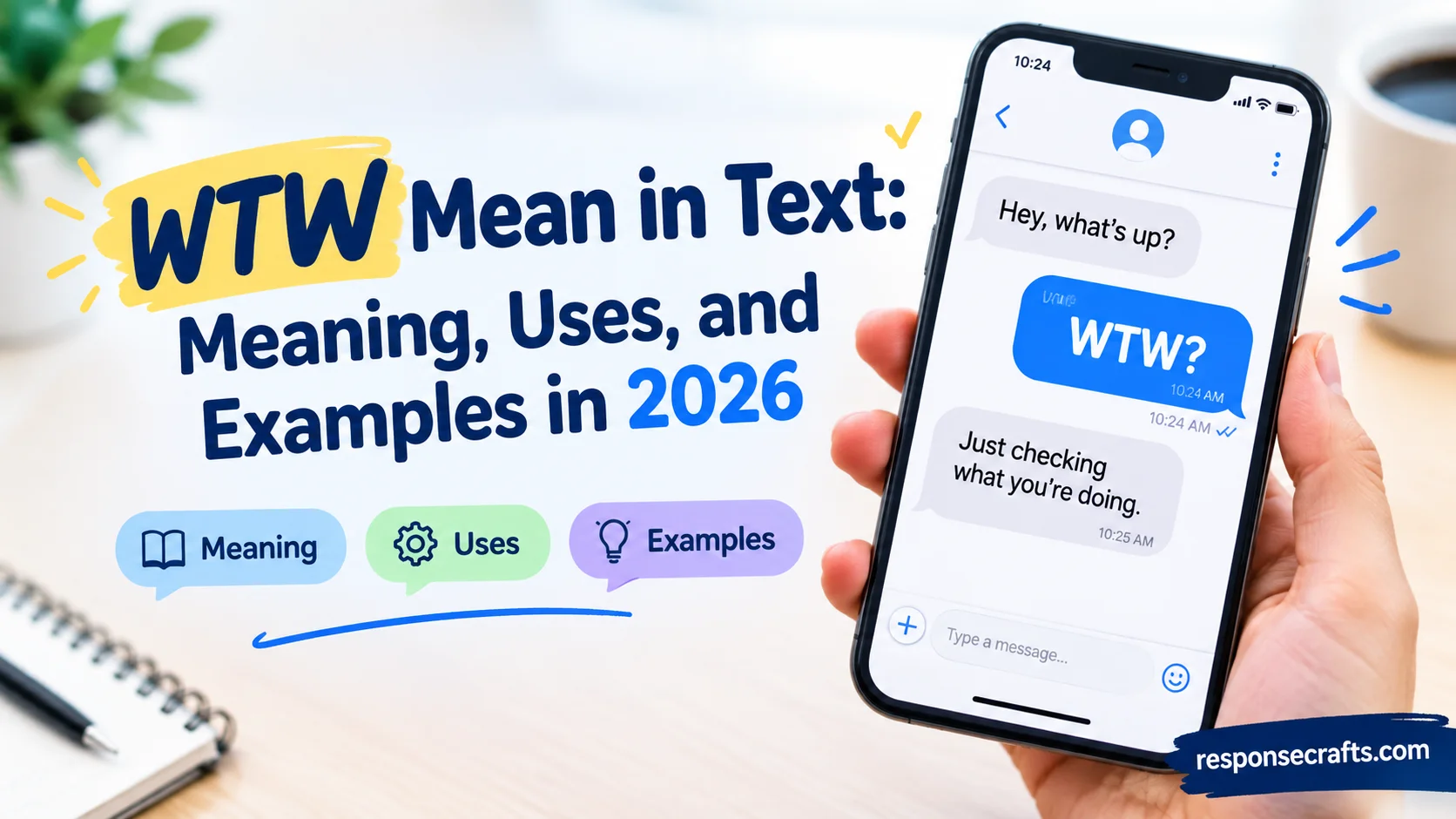
If you’ve ever received a message saying “WTW?” on Snapchat, Instagram, TikTok, or WhatsApp, you might have wondered what it means. In texting slang, WTW usually stands for “What’s the Word?” or “What’s the Wave?” People use it to ask what’s happening, what someone is doing, or whether there are any interesting plans. It’s a casual expression that makes conversations feel easy and natural. Instead of typing a long question, someone can simply send “WTW tonight?” to find out if you’re free or planning to go somewhere.
The meaning of WTW in text messages can change slightly depending on the conversation and the person using it. For example, a friend might text “Hey, WTW?” to start a chat, while someone else might ask “WTW this weekend?” to discuss possible plans. On social media platforms, this abbreviation often appears in direct messages, comments, and group chats. It works much like “What’s up?”, “What’s going on?”, or “What are you doing?” Although these expressions have similar meanings, WTW can sometimes suggest that the sender wants to make plans rather than simply check in.
Understanding WTW meaning in text helps you respond confidently without overthinking the message. If a friend sends you “WTW?”, you can reply with something simple like “Not much, you?”, “Just chilling,” or “Looking for something to do.” If you’re interested in hanging out, you could say “Nothing yet, got any plans?” The key is to consider the conversation context, your relationship with the sender, and the tone of the message. In this guide, you’ll learn the different meanings of WTW, how people use it in everyday conversations, and the best ways to reply in 2026.
Quick Answer
WTW means “What’s the word?” or “What’s the move?” in texting. People commonly use it to ask what’s happening, check in with friends, or find out what someone wants to do. In some contexts, it can also express surprise, although that interpretation is less common and depends on the conversation.
Example:
- Person A: “WTW tonight?”
- Person B: “Nothing planned yet. Wanna grab food?”
Here, WTW means “What’s the move?” The sender wants to know whether the other person has plans or wants to make some.
Comparison Overview
WTW is part of the informal language people use to communicate quickly online. Like other texting abbreviations, its meaning can shift slightly depending on the situation.
| WTW meaning | What it communicates | Example |
| What’s the word? | Asking what’s happening or checking in | “Hey, WTW with you?” |
| What’s the move? | Asking about plans or the next activity | “WTW this weekend?” |
| What the what? | Reacting to something unexpected | “WTW just happened?” |
| General conversation starter | Opening a casual chat | “WTW bro?” |
The first two meanings are the most useful to recognize in everyday texting. The surprise-related interpretation is less standardized, so you shouldn’t assume it without looking at the surrounding messages.
Main Differences Between WTW Mean in Text and Similar Abbreviations
Although WTW, WYD, WYA, and WSG may appear in similar conversations, they don’t ask exactly the same thing.
| Abbreviation | Full meaning | What the sender usually wants |
| WTW | What’s the word? / What’s the move? | An update or a plan |
| WYD | What are you doing? | Information about your current activity |
| WYA | Where you at? | Your location |
| WSG | What’s good? | A greeting or general check-in |
| WSP | What’s up? | A greeting or conversation opener |
| HBU | How about you? | Your answer to a question directed back at you |
For example, “WYD?” asks what you’re doing right now, while “WTW tonight?” usually asks what the plan is. The distinction is small but important.
Now that you understand the basic meaning, let’s look at how people use WTW in different conversations.
What Does WTW Mean in Texting?
WTW is a shorthand expression that helps people communicate without typing a complete sentence. Its exact meaning depends on what the sender wants to know.
WTW Meaning: What’s the Word?
One common interpretation of WTW is “What’s the word?” In casual conversation, this phrase can mean “What’s happening?” or “What’s new?”
People may use it to reconnect with a friend, ask for an update, or find out whether something interesting is happening.
Examples:
- “Hey, WTW? Haven’t talked to you in a while.”
- “WTW with the group project?”
- “Yo, WTW around campus today?”
In these examples, the sender wants information. They aren’t necessarily asking you to make plans.
The phrase can also serve as a relaxed greeting. Instead of sending a plain “Hey,” someone might write “WTW?” to invite a response and get the conversation moving.
WTW Meaning: What’s the Move?
Another common meaning is “What’s the move?” This expression asks about plans, activities, or the next step.
It’s especially useful when friends want to meet up but haven’t decided what to do.
Examples:
- “WTW tonight?”
- “It’s Friday. WTW?”
- “WTW after the game?”
- “We’re all free tomorrow. WTW this weekend?”
A typical reply might be, “Let’s go get dinner,” or “I’m down for a movie.”
In this context, WTW isn’t simply a greeting. The sender wants to figure out what everyone will do.
WTW Meaning: What the What?
In some conversations, WTW can express surprise or confusion as a shortened version of “What the what?”
For instance:
- Friend A: “He showed up at the party dressed as a dinosaur.”
- Friend B: “WTW? 😂”
Here, the second person reacts to something unexpected.
However, this interpretation is less consistent than “What’s the word?” and “What’s the move?” Some people may instead use WTW in a different way or simply be asking what’s going on. Read the entire exchange before deciding.
What Does WTW Mean on Social Media?
Social media makes short expressions useful because people communicate through comments, captions, replies, and private messages. WTW fits naturally into these informal settings.
Its meaning doesn’t automatically change from one platform to another. Instead, the conversation usually tells you what the sender intends.
WTW Meaning on Snapchat
On Snapchat, WTW may appear in a direct message when someone wants to start talking or find out what you’re doing later.
For example:
Snapchat conversation
- Alex: “WTW tonight?”
- Jordan: “Not sure yet. You trying to hang out?”
- Alex: “Yeah, let’s get something to eat.”
In this exchange, WTW means “What’s the move?” Alex wants to make plans.
Someone might also send “WTW?” without any additional information. That could mean they’re checking in or looking for something to talk about.
How to interpret it: If the message includes a time, an invitation, or a reference to an upcoming event, the sender probably wants to discuss plans.
WTW Meaning on TikTok
On TikTok, WTW can appear in comments, captions, or direct messages between users.
For example, someone might message a friend:
“WTW this weekend? We haven’t done anything fun lately.”
The sender is asking about possible activities. In a comment thread, however, WTW could function as a casual greeting or request for an update.
Consider this example:
- User A: “Finally finished my exams!”
- User B: “WTW now?”
Depending on their relationship, User B might be asking what’s next or suggesting that it’s time to make plans.
The platform itself doesn’t determine the meaning. The wording and situation do.
WTW Meaning on Instagram
Instagram users may send WTW in direct messages, reply to stories, or start conversations after seeing a friend’s post.
Suppose someone posts a story about being free for the weekend. A friend replies:
“WTW Saturday?”
The likely meaning is “What’s the move on Saturday?” They’re asking whether the person has plans or wants to meet.
WTW can also open a conversation without a specific invitation. For example, “WTW with you lately?” asks for an update.
If you’re unsure whether someone is inviting you somewhere, look for additional details. A message about a particular day or event is more likely to concern plans.
WTW Meaning on WhatsApp
On WhatsApp, WTW works well in private chats and group conversations.
Friends might use it to organize dinner, arrange a meetup, or find out what everyone is doing.
Example group chat:
- Sam: “Everyone’s free tomorrow, right?”
- Chris: “Yeah, I’m free.”
- Sam: “WTW then?”
- Taylor: “Let’s go bowling.”
Here, Sam uses WTW to ask the group to decide on an activity.
In another conversation, a person might write “WTW bro?” simply to check in. The abbreviation is flexible enough for both situations.
How Is WTW Used in Texting?
WTW can serve several conversational purposes. Recognizing the situation makes it easier to understand what the sender expects from you.
Using WTW to Ask About Plans
When someone wants to know what you’re doing later, WTW can be a quick way to open the discussion.
For example:
“WTW after work?”
The sender may want to meet for dinner, watch a movie, or find another activity. They haven’t necessarily made a firm invitation yet.
You could respond with:
- “I’m free after six. What’s up?”
- “Let’s grab dinner.”
- “Nothing planned. Got any ideas?”
- “I’m staying in tonight, but maybe this weekend.”
These replies acknowledge the question while making your availability clear.
Using WTW to Ask What’s Happening
Sometimes WTW means “What’s the word?” rather than “What’s the move?”
Imagine that your friend mentioned an upcoming event but hasn’t shared any details. You could text:
“WTW with the concert?”
You’re asking for an update about the concert, not necessarily suggesting an activity.
Other examples include:
- “WTW with your new job?”
- “WTW on the school trip?”
- “Hey, WTW? Everything good?”
This use is especially helpful when you want to reconnect or get information about something you’ve discussed before.
Using WTW to Start a Conversation
A short message such as “WTW?” can serve as an informal opener.
People often send these messages when they want to talk but don’t have a specific subject in mind.
For example:
- Alex: “WTW bro?”
- Marcus: “Not much, just gaming.”
- Alex: “Same. You playing anything good?”
The first message creates an opening for conversation. The other person can answer casually and introduce a topic.
Still, WTW doesn’t guarantee a long conversation. If you want to keep chatting, adding a specific question often works better than sending repeated one-word messages.
Using WTW to Express Surprise
WTW may also appear as a reaction to unexpected information.
For example:
- Mia: “Our teacher said the test is tomorrow.”
- Noah: “WTW?! I thought it was next week.”
Noah is expressing confusion and surprise.
This interpretation isn’t as universal as the two main meanings. In some cases, the sender may simply mean “What’s going on?” rather than using “What the what?”
If the message follows surprising news, a reaction is plausible. If it appears before a discussion about weekend activities, asking about plans is more likely.
WTW Meaning in Different Contexts
The same three letters can communicate different things because texting leaves out many clues found in face-to-face conversations.
When you hear someone speak, you can use their tone, facial expression, and body language. In a text message, you rely more heavily on the wording and conversation history.
| Text message | Most likely interpretation | Why |
| “WTW tonight?” | What’s the move? | It asks about plans for a specific time. |
| “WTW with you?” | What’s the word? / What’s happening? | It sounds like a general check-in. |
| “WTW bro?” | What’s the word? | It’s a casual conversation opener. |
| “WTW after the game?” | What’s the move? | It asks about the next activity. |
| “WTW?! That was crazy.” | A surprised or confused reaction | The punctuation and context suggest disbelief. |
These are likely interpretations, not fixed rules. A sender may use WTW differently based on personal habits or their social circle.
How Punctuation Changes the Tone of WTW
Punctuation can offer clues about the sender’s mood or intention.
- “WTW?” A general question or conversation starter.
- “WTW tonight?” A likely request to discuss plans.
- “WTW??” May signal curiosity, urgency, or impatience.
- “WTW lol” Can make the message feel more playful.
- “WTW?!” May express surprise or confusion.
Punctuation alone can’t confirm the intended meaning. However, it can help you interpret a short message when little else is available.
Examples of WTW in Realistic Text Conversations
Short conversations show how WTW works more clearly than a dictionary definition. Here are several everyday examples.
WTW Between Friends
Conversation
- Jake: “Yo, WTW?”
- Ryan: “Not much. Just got home.”
- Jake: “Wanna get some food?”
Meaning: Jake uses WTW to start a casual conversation. He then suggests meeting up.
The first message doesn’t explicitly ask about plans. Instead, it opens the door to a possible invitation.
WTW in a Group Chat
Conversation
- Emma: “We should all hang out this weekend.”
- Lily: “I’m free Saturday.”
- Noah: “Same here.”
- Emma: “WTW Saturday night?”
- Lily: “Dinner and a movie?”
Meaning: Emma asks what the group should do.
This is a straightforward example of “What’s the move?” The message invites suggestions rather than announcing a final plan.
WTW When Texting a Crush
Conversation
- Taylor: “Hey, WTW?”
- Morgan: “Just relaxing. What’s up?”
- Taylor: “Wondering if you want to get coffee sometime.”
Meaning: Taylor uses WTW to open a conversation before suggesting a date.
Does that make WTW a flirty abbreviation? Not by itself. The invitation may be romantic, but the abbreviation is also common in ordinary friendships.
Pay attention to the full exchange instead of treating a single abbreviation as proof of attraction.
WTW When Someone Wants an Update
Conversation
- Chris: “WTW with the apartment search?”
- Jamie: “I found two places I like. I’m visiting one tomorrow.”
- Chris: “Nice! Hope it works out.”
Meaning: Chris asks for an update about an ongoing situation.
Here, “What’s the word?” fits better than “What’s the move?” because Chris wants to know what has happened since their last conversation.
WTW After Unexpected News
Conversation
- Ava: “They canceled the event at the last minute.”
- Zoe: “WTW? I thought everything was confirmed.”
Meaning: Zoe expresses surprise and asks for clarification.
In this case, the message may be understood as “What the what?” or simply “What’s going on?” The context makes the reaction clear even if the exact expansion isn’t certain.
How to Reply to WTW in Text
The best response depends on what the sender wants to know. You don’t need to memorize every possible meaning. Start by looking at the surrounding conversation.
How to Reply When WTW Means “What’s the Move?”
If someone asks about plans, respond with your availability or suggest an activity.
Here are a few natural replies:
- “I’m free tonight. What are you thinking?”
- “Let’s get something to eat.”
- “Nothing planned yet. Got any ideas?”
- “How about a movie?”
- “I’m busy tonight, but I’m free Saturday.”
Example:
- Friend: “WTW tonight?”
- You: “Let’s grab burgers and catch up.”
Your answer moves the conversation toward a decision.
How to Reply When WTW Means “What’s the Word?”
When the sender is checking in, give them an update or ask what’s happening with them.
Possible replies include:
- “Not much. What’s up with you?”
- “Everything’s good. How about you?”
- “Just finished work. What’s going on?”
- “All good over here. Anything new?”
You can also bring up something you’ve discussed before. If the person asks about a job interview, for example, share the latest news.
How to Reply When WTW Expresses Surprise
If the sender appears confused or surprised, clarify the situation.
For example:
- Friend: “WTW?! They changed the date again?”
- You: “Yeah, they moved it to Friday.”
You could also respond with a question if you don’t understand their reaction.
- “Wait, which part surprised you?”
- “I know, right? I wasn’t expecting that either.”
These replies address the actual conversation instead of focusing on the abbreviation.
What to Say When You Don’t Understand WTW
If the message is unclear, asking for clarification is perfectly normal.
Try one of these responses:
- “Do you mean what’s happening or what the plans are?”
- “What’s up? Are you asking about tonight?”
- “What do you mean by WTW here?”
There’s no need to guess. A quick follow-up can prevent a confusing conversation from going in the wrong direction.
Read More: Encanto Mean in Text: Meaning, Examples, and How to Use It in Conversations
WTW vs. Similar Texting Abbreviations
WTW belongs to a larger group of informal abbreviations. Although many sound alike, each one serves a slightly different purpose.
WTW vs. WYD
WTW often asks about plans or what’s happening. WYD means “What are you doing?” and usually focuses on a person’s current activity.
Examples:
- WTW: “WTW this weekend?” — asking about plans.
- WYD: “WYD right now?” — asking what the person is doing at the moment.
The difference isn’t absolute. Someone who sends “WYD later?” may also be checking whether you’re available to meet.
WTW vs. WYA
WYA means “Where you at?” It asks about someone’s location.
For example:
- “WYA?” — asking where someone is.
- “WTW?” — asking what’s happening or what the plan is.
A friend might text “WYA?” while waiting outside a restaurant. They need your location, not a list of activity ideas.
WTW vs. WSG
WSG commonly stands for “What’s good?” It’s usually a greeting or casual check-in.
For example:
- “WSG bro?” — a relaxed way to say hello.
- “WTW tonight?” — a likely question about plans.
The two expressions can overlap in casual conversation. Someone might use either to start a chat, but WTW more directly invites an update or a discussion about what to do.
WTW vs. WSP
WSP generally means “What’s up?” It’s another informal greeting.
Consider these messages:
- “WSP?” — asking what’s going on or starting a conversation.
- “WTW after class?” — asking about possible plans.
Both are informal. However, WSP often works as a general greeting, while WTW can point toward a specific activity or update.
WTW vs. HBU
HBU means “How about you?” It’s usually a follow-up question rather than an opener.
For example:
- Person A: “I’m staying home tonight. HBU?”
- Person B: “WTW? Maybe we can go somewhere.”
The first abbreviation returns a question to the other person. The second asks what’s happening or what the plan might be.
Is WTW Flirty, Friendly, or Rude?
WTW is generally informal. Its tone depends on who sends it, what they say around it, and how they usually communicate.
Is WTW Flirty?
WTW can appear in conversations with a crush, but it isn’t inherently romantic.
Someone might send “WTW tonight?” because they want to spend time with you. They might also be asking the same question they would ask any friend.
Look for additional signs of interest, such as a personal invitation, warm conversation, or a clear expression of romantic intent. Don’t assume that the abbreviation alone reveals someone’s feelings.
Is WTW Friendly?
Yes, WTW commonly fits casual conversations between friends and acquaintances.
Messages such as “WTW bro?” or “WTW this weekend?” can sound relaxed and familiar. The abbreviation helps people get straight to the point without making the message feel formal.
Still, familiarity matters. If you rarely talk to someone, a short WTW message may feel abrupt simply because you don’t know their communication style yet.
Is WTW Rude?
WTW isn’t normally rude on its own. However, very short messages can sometimes come across as blunt.
For example, sending “WTW??” repeatedly when someone hasn’t replied may feel impatient. By contrast, asking “Hey, WTW tonight?” in an established group chat is usually harmless.
If you want to sound friendly, include a greeting or a little context. A few extra words can make your intention clearer.
Is WTW Still Used in 2026?
WTW remains recognizable as an informal texting abbreviation, although individual usage varies across communities and social circles.
People use short expressions because they’re convenient. A three-letter message can quickly open a conversation, check on plans, or invite someone to suggest an activity.
However, there isn’t one universal texting vocabulary. Some people use WTW frequently, while others prefer “What’s up?”, “Any plans?”, or “What are we doing?”
Its meaning also depends on familiarity. A person who regularly uses internet slang may understand WTW immediately, while someone unfamiliar with the abbreviation may need an explanation.
The practical takeaway is simple: WTW is useful informal language, but clarity matters more than using the latest abbreviation.
When Should You Use WTW?
WTW works best when the conversation is casual and the other person is likely to understand the abbreviation.
Appropriate Situations for WTW
You can use WTW when:
- Texting friends about weekend plans.
- Asking a group chat what everyone wants to do.
- Checking in with someone you know well.
- Starting an informal conversation on social media.
- Asking for an update about something you’ve discussed before.
For example, “WTW after class?” is a natural message to a friend when you want to explore possible plans.
When to Avoid WTW
Avoid using WTW when the setting requires formal or precise communication.
Examples include:
- Professional emails to managers or clients.
- Messages to people who may not recognize texting abbreviations.
- Formal invitations or business arrangements.
- Important instructions where ambiguity could cause problems.
Instead of writing “WTW about the meeting?”, try “Do we have an update about the meeting?”
The full sentence takes slightly longer to write, but it communicates your question more clearly.
Common Misunderstandings About WTW
Because WTW has more than one interpretation, a few mistakes are easy to make.
Assuming WTW Always Means “What’s the Move?”
A message such as “WTW?” doesn’t always mean someone wants to hang out. They may simply be checking in or asking for an update.
Read the surrounding conversation before deciding.
Assuming WTW Is Always Flirty
Someone who texts WTW isn’t automatically expressing romantic interest. Friends use it to organize activities and start conversations all the time.
Look at the broader interaction rather than reading too much into three letters.
Treating Every Interpretation as Equally Common
“What’s the word?” and “What’s the move?” are the main interpretations to recognize in everyday texting. “What the what?” is a less standardized possibility.
Not every person uses the abbreviation in the same way. When the context doesn’t provide a clear answer, ask.
Confusing WTW With WYD
These abbreviations are related but not interchangeable in every situation.
WYD usually asks about current activity. WTW often asks about plans or what’s happening more broadly.
For example, “WYD right now?” and “WTW tonight?” point toward different kinds of answers.
FAQs:
What does WTW stand for in texting?
WTW commonly stands for “What’s the word?” or “What’s the move?” People use it to ask what’s happening, check in with friends, or discuss plans.
Does WTW mean “What’s the move” or “What’s the word”?
It can mean either phrase. “What’s the move?” usually asks about plans or the next activity, while “What’s the word?” often requests an update or serves as a casual greeting.
What does WTW mean on Snapchat?
On Snapchat, WTW often means “What’s the move?” or “What’s the word?” Someone might send it to ask whether you’re free, start a conversation, or find out what’s happening.
How do you reply to WTW?
First, figure out whether the sender is checking in or asking about plans. If they want to make plans, suggest an activity or share your availability. You could reply, “I’m free tonight.
Does WTW mean someone likes you?
No, WTW doesn’t automatically mean someone likes you romantically. It’s a casual abbreviation used among friends, acquaintances, and people who are getting to know each other.
What is the difference between WTW and WYD?
WTW usually asks what’s happening or what the plan is. WYD stands for “What are you doing?” and generally asks about someone’s current activity.
Can WTW have other meanings?
Yes. Although “What’s the word?” and “What’s the move?” are the main meanings to recognize in casual texting, people may use WTW differently.
Conclusion
WTW is a useful texting abbreviation that commonly means “What’s the word?” or “What’s the move?” People use it to check in, ask for updates, start conversations, and figure out plans with friends. Its meaning depends on context. “WTW tonight?” usually asks about plans, while “WTW with you?” may be a general check-in. In some situations, WTW can also express surprise, although that use is less standardized. If you receive WTW in a message, look at the surrounding conversation before replying. And if you’re still unsure, a quick question will clear things up. Once you understand these common meanings, you’ll find it much easier to follow WTW in texts, group chats, and social media conversations.







1 thought on “WTW Mean in Text: Meaning, Uses, and Examples in 2026”