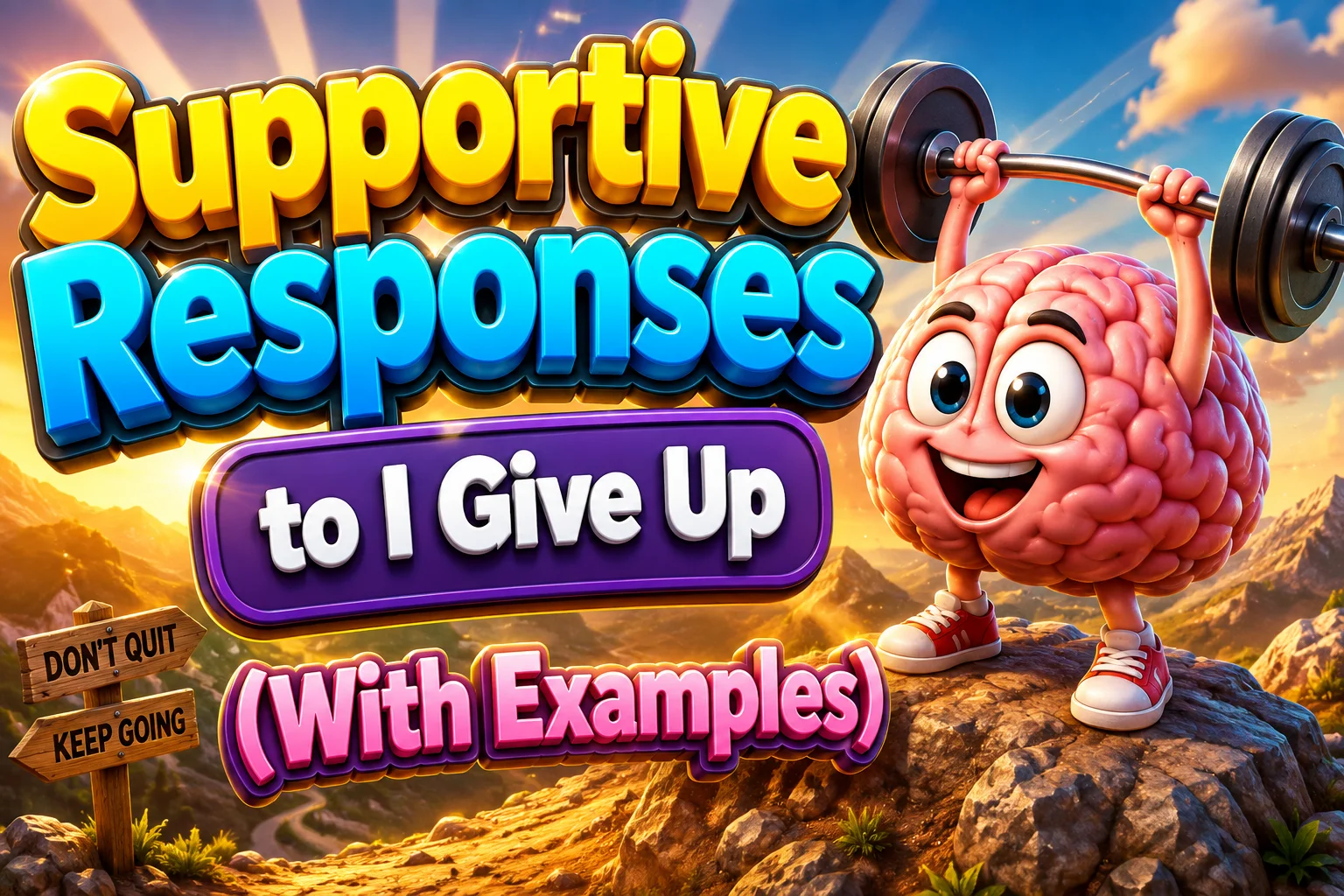
If someone says “I give up,” the best response is to show support, empathy, and understanding instead of immediately trying to fix the problem. Simple words like “You can do it,” “I believe in you,” or “I’m here for you” can offer comfort, boost confidence, and remind them they’re not alone. Whether they’re facing school, work, relationships, or everyday struggles, a caring, funny, or motivational reply can help break the tension, shift their mindset, and encourage progress.
These 25 Supportive Responses to I Give Up (With Examples) can help people facing frustration, exhaustion, disappointment, or feeling stuck.
When someone struggles at school, work, in relationships, or through everyday struggles, a thoughtful response based on understanding, empathy, and being present can offer real comfort. Instead of trying to fix the problem, simple supportive phrases can remind them they are not alone and that progress matters more than perfection.
During difficult moments and big challenges, words like “You can do it,” “I believe in you,” and “I’m here for you” can boost confidence, provide offer comfort, and leave someone feeling motivated and reassured. Good support can calm a person, motivate them, or lighten the mood with humor.
A funny reply or lighthearted reply can break the tension and shift their mindset, while a caring, supportive, and motivational message can guide them through different situations. The goal is to help them believe they can make progress, remain consistent, and continue with something you care about.
1.You don’t have to figure everything out today.
When someone says they want to quit, they often feel overwhelmed by the size of the problem rather than the problem itself. Reminding them that they don’t need every answer immediately helps reduce pressure and creates emotional breathing room. This response shifts the focus from the finish line to the next small step. It communicates patience, reassurance, and understanding instead of demanding instant solutions, making it one of the most supportive responses during stressful moments.
Meaning: You can solve things one step at a time.
Tone: Calm, reassuring, compassionate.
Example: “You don’t have to figure everything out today. Let’s focus on one small step.”
Best Use: When someone feels overwhelmed by responsibilities or difficult decisions.
2.It’s okay to take a break—you don’t have to quit.
Sometimes people confuse exhaustion with failure. A short break can restore energy and perspective, while quitting often feels permanent. This response validates their tiredness without encouraging them to abandon their goals. It gently reminds them that rest is productive too. Instead of criticizing their feelings, you acknowledge that everyone needs time to recover before continuing.
Meaning: Rest is different from giving up.
Tone: Gentle and encouraging.
Example: “Take a break if you need one. You don’t have to quit completely.”
Best Use: When someone is mentally or physically exhausted.
3.You’ve already come farther than you realize.
People often forget their own progress when they’re discouraged. This supportive response helps them reflect on how much they’ve already accomplished. By reminding them of previous victories, you replace self-doubt with confidence. Looking back at progress can provide the motivation needed to keep moving forward.
Meaning: Your efforts already matter.
Tone: Positive and uplifting.
Example: “Look at everything you’ve overcome already. You’ve come farther than you think.”
Best Use: When someone forgets their achievements.
4.I believe in you even if you don’t right now.
Confidence can disappear during difficult moments. Borrowing someone else’s belief can be powerful when they can’t believe in themselves. This response offers emotional support without pressure. It lets them know they’re not facing the struggle alone.
Meaning: My confidence can support yours.
Tone: Warm and heartfelt.
Example: “You may not believe in yourself today, but I believe in you.”
Best Use: When someone’s self-confidence is very low.
5.Let’s solve this together.
Many people feel isolated when facing challenges. Offering teamwork reduces loneliness and makes difficult tasks seem more manageable. Instead of giving advice from a distance, you’re joining them in the journey. That simple offer often brings immediate comfort.
Meaning: You’re not alone.
Tone: Friendly and cooperative.
Example: “Let’s figure this out together instead of facing it alone.”
Best Use: When someone feels isolated.
6.One bad day doesn’t define your future.
A disappointing day can make people believe everything is ruined. This response helps separate temporary setbacks from long-term success. It reminds them that failure is an event—not an identity.
Meaning: Today doesn’t decide tomorrow.
Tone: Hopeful.
Example: “Today was hard, but it doesn’t define what happens next.”
Best Use: After a recent failure.
7.I know this feels impossible right now.
Sometimes people don’t want solutions—they want understanding. Acknowledging their feelings before offering encouragement builds trust. It shows empathy rather than toxic positivity.
Meaning: Your feelings are valid.
Tone: Empathetic.
Example: “I know this feels impossible right now, and that’s okay.”
Best Use: During emotional conversations.
8.You’ve survived difficult moments before.
Looking back at previous struggles reminds people they’re stronger than they think. Past resilience often predicts future resilience.
Meaning: You have proof you’re strong.
Tone: Encouraging.
Example: “Remember everything you’ve overcome already.”
Best Use: When someone forgets their inner strength.
9.What if we try a different approach instead?
Sometimes the goal isn’t wrong—the strategy is. This response encourages flexibility instead of surrender.
Meaning: Change the method, not the dream.
Tone: Optimistic.
Example: “Maybe we just need a different strategy.”
Best Use: Problem-solving situations.
10.You’re allowed to feel tired.
Giving people permission to be human removes guilt. Emotional validation often reduces stress faster than advice.
Meaning: Your emotions are normal.
Tone: Compassionate.
Example: “You’re allowed to feel tired without feeling like a failure.”
Best Use: Burnout situations.
11.I know you’re stronger than this moment.
This separates the person from the current challenge. It reminds them their identity is bigger than today’s struggle.
Meaning: This challenge isn’t who you are.
Tone: Motivating.
Example: “This moment is hard, but you’re stronger than it.”
Best Use: During setbacks.
12.Every success story includes setbacks.
Almost every achievement includes failures behind the scenes. This normalizes mistakes and keeps hope alive.
Meaning: Failure is part of growth.
Tone: Inspirational.
Example: “Every successful person has faced moments like this.”
Best Use: After disappointment.
13.What would help you feel better right now?
Support sometimes means listening instead of speaking. This question centers the conversation on their needs.
Meaning: Your feelings matter.
Tone: Caring.
Example: “Tell me what you need most right now.”
Best Use: Emotional support.
Also Read This: 25 Best Responses to Excuse Me Please (With Examples)
14.I’m here no matter what happens.
Unconditional support creates emotional safety. People often recover faster when they know someone won’t judge them.
Meaning: My support isn’t conditional.
Tone: Loving.
Example: “No matter what you decide, I’m here for you.”
Best Use: Family and close friends.
15.Small progress is still progress.
Tiny victories build momentum. This response encourages patience with long-term goals.
Meaning: Every step counts.
Tone: Positive.
Example: “Even one small step forward matters.”
Best Use: Long projects.
16.You don’t have to carry this alone.
Sharing emotional burdens often makes them feel lighter. This reminds people help is available.
Meaning: Accept support.
Tone: Gentle.
Example: “Let me help however I can.”
Best Use: Stressful situations.
17.Let’s focus on what you can control.
Many worries involve things outside our control. Redirecting attention toward manageable actions restores confidence.
Meaning: Control what you can.
Tone: Practical.
Example: “Let’s focus on today’s next step.”
Best Use: Anxiety and uncertainty.
18.It’s okay if success takes longer.
Everyone moves at a different pace. Comparing yourself to others only creates unnecessary pressure.
Meaning: Growth isn’t a race.
Tone: Reassuring.
Example: “There’s no deadline on personal growth.”
Best Use: Career or education.
19.I know this isn’t the ending.
Today’s struggle isn’t the final chapter. This hopeful perspective encourages resilience.
Meaning: Better days are coming.
Tone: Optimistic.
Example: “This isn’t how your story ends.”
Best Use: Difficult life moments.
20.You’ve got people who care about you.
Loneliness often makes giving up feel easier. Reminding someone they’re loved strengthens emotional resilience.
Meaning: You’re supported.
Tone: Warm.
Example: “You’re not facing this by yourself.”
Best Use: Emotional conversations.
21.Let’s celebrate how far you’ve come.
Recognizing milestones boosts confidence and motivation.
Meaning: Progress deserves recognition.
Tone: Appreciative.
Example: “You’ve already achieved so much.”
Best Use: Motivation.
22.Your feelings are completely valid.
Validation builds trust before encouragement.
Meaning: It’s okay to feel this way.
Tone: Understanding.
Example: “Anyone in your situation would feel overwhelmed.”
Best Use: Emotional support.
23.Tomorrow might look different.
Difficult emotions often change with time. Hope grows when people remember feelings aren’t permanent.
Meaning: Bad days don’t last forever.
Tone: Hopeful.
Example: “Let’s see how tomorrow feels before making a final decision.”
Best Use: Temporary discouragement.
24.I know you can get through this.
Simple encouragement is often the most meaningful.
Meaning: I have confidence in you.
Tone: Supportive.
Example: “I truly believe you’ll make it through.”
Best Use: Everyday encouragement.
25.Whatever happens, I’m proud of you for trying.
Effort deserves recognition, even when outcomes aren’t perfect. This response removes the fear of failure and reinforces self-worth.
Meaning: Your courage matters more than perfection.
Tone: Loving and affirming.
Example: “I’m proud of you for giving it your best.”
Best Use: After setbacks or difficult challenges.
FAQs:
What is the best supportive response to “I give up”?
A thoughtful response like “I’m here for you” or “It’s okay to take a break—you don’t have to quit” works well because it acknowledges the person’s feelings while offering encouragement.
Should I try to motivate someone immediately?
Not always. First, listen and validate their emotions. Once they feel understood, gentle encouragement is usually more effective than immediate advice.
What should I avoid saying?
Avoid dismissive phrases such as “Just get over it,” “Everyone has problems,” or “Stop being dramatic.” These responses can make someone feel misunderstood.
How do I comfort a friend who wants to give up?
Listen without judgment, acknowledge their emotions, remind them of their strengths, and offer practical help if appropriate.
Can supportive words really make a difference?
Yes. Genuine encouragement helps reduce feelings of isolation, improves emotional resilience, and reminds people that they don’t have to face challenges alone.
Conclusion:
Finding the right words when someone says “I give up” isn’t about delivering the perfect speech—it’s about showing empathy, patience, and genuine support. These 25 Supportive Responses to I Give Up (With Examples) can help you encourage a friend, comfort a loved one, or simply let someone know they aren’t alone. The most meaningful response is one that comes from the heart and matches the person’s situation. Even a few sincere words can restore hope, strengthen relationships, and remind someone that difficult moments don’t last forever.