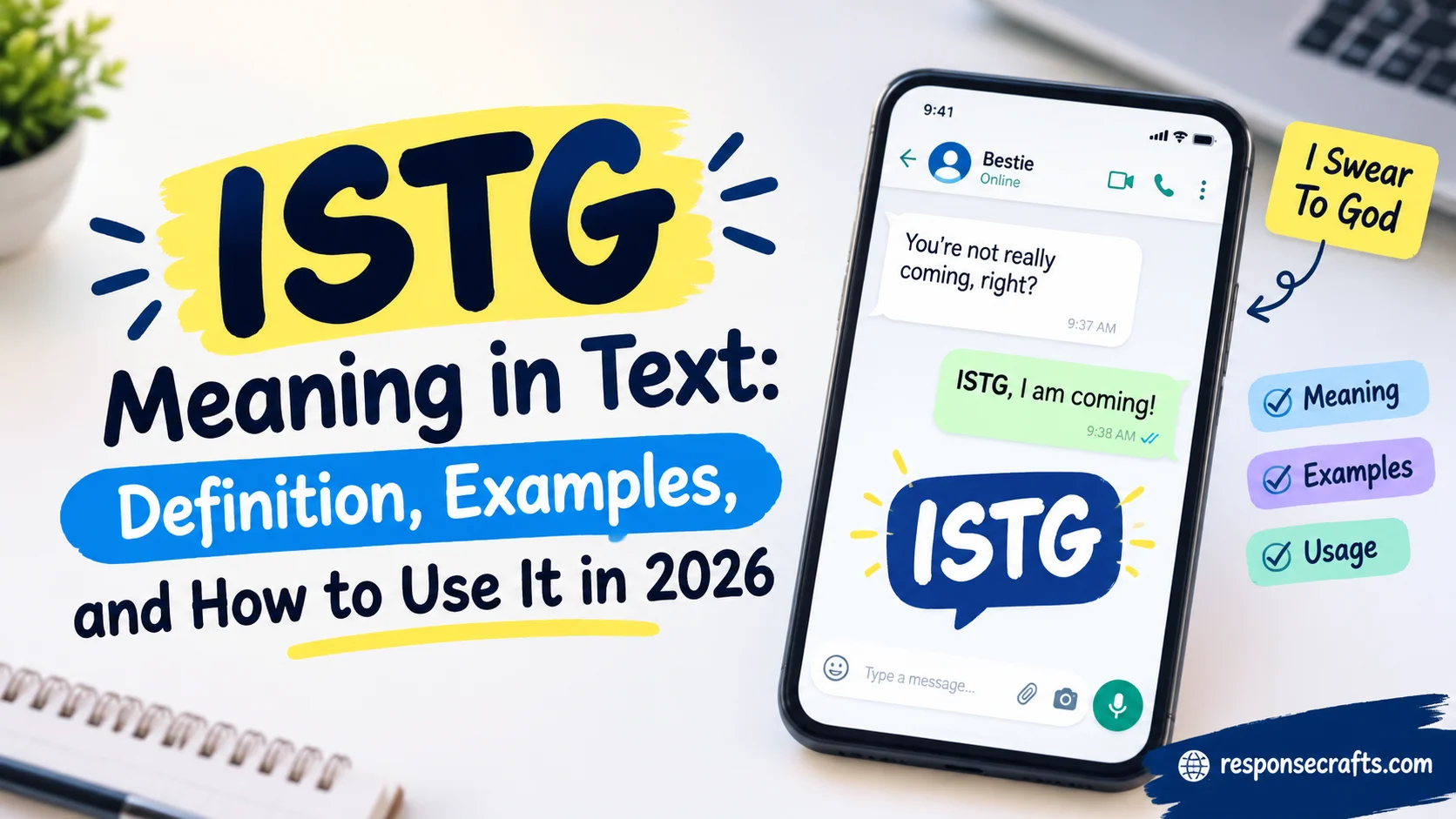
Have you ever received a message with “ISTG” and wondered what it means? In text messages, social media posts, and online chats, ISTG stands for “I Swear to God.” People use this popular texting abbreviation to show strong feelings, express frustration, make a promise, or emphasize that they are telling the truth. You may see it on Snapchat, TikTok, Instagram, WhatsApp, or in everyday conversations with friends.
The ISTG meaning in text can change slightly depending on the conversation, tone, and situation. For example, someone might write, “ISTG, I didn’t do it,” to show that they are being honest. Another person might say, “ISTG, this homework is never-ending,” to express annoyance or frustration. In a funny conversation, the same abbreviation can add drama, humor, or excitement. Although ISTG includes the words “I Swear to God,” many people use it casually without intending a serious religious statement.
In 2026, ISTG remains a familiar part of digital communication, especially among people who prefer short, quick messages. Understanding this internet slang can help you follow conversations and avoid confusing someone’s tone. However, remember that context matters because ISTG can sound playful, serious, angry, or emotional depending on how someone uses it. In this guide, you’ll discover the full meaning of ISTG, real-life texting examples, its use by girls and guys, and the difference between ISTG and similar abbreviations. You’ll also learn how to reply to ISTG naturally and when it’s appropriate to use it in your own messages.
Quick Answer
ISTG meaning in text: ISTG stands for “I Swear to God.” It’s a common texting abbreviation people use to emphasize honesty, frustration, surprise, excitement, or a promise.
Here are the main ways people use ISTG:
- Honesty: “ISTG, I’m telling the truth.”
- Frustration: “ISTG, my internet keeps disconnecting.”
- Surprise: “ISTG, I didn’t expect that!”
- Excitement: “ISTG, this movie is so good.”
- Promises: “ISTG, I’ll pay you back tomorrow.”
ISTG is informal and appears on platforms such as Snapchat, TikTok, Instagram, and WhatsApp. It isn’t automatically rude or angry. The surrounding conversation usually reveals the intended tone.
Comparison Overview
ISTG belongs to the same family of internet slang terms that people use to express honesty, agreement, and strong emotions. However, it has a slightly different purpose from abbreviations such as FR, NGL, and ONG.
| Text abbreviation | Full meaning | Main purpose | Example |
| ISTG | I Swear to God | Emphasizing sincerity or strong feelings | “ISTG, I’m not lying.” |
| FR | For Real | Showing agreement or emphasizing something | “FR, that was amazing.” |
| ONG | On God | Emphasizing truth or sincerity | “ONG, I saw him there.” |
| NGL | Not Gonna Lie | Introducing an honest opinion | “NGL, I didn’t enjoy it.” |
| TBH | To Be Honest | Sharing a candid opinion | “TBH, I prefer the first one.” |
| IMO | In My Opinion | Expressing a personal viewpoint | “IMO, this one looks better.” |
The main difference: ISTG often sounds like an emphatic statement or a strong insistence. FR usually signals agreement or reinforces a point, while NGL and TBH introduce an honest opinion.
For example, “ISTG, I sent you the message” emphasizes that the sender insists they sent it. By contrast, “NGL, I forgot to send it” introduces an admission.
Main Differences Between ISTG Meaning in Text and Similar Slang
Understanding similar abbreviations helps you recognize the exact tone of a message. Although these expressions can overlap, they don’t always communicate the same thing.
ISTG vs. FR
ISTG means “I Swear to God,” while FR means “For Real.” Both can add emphasis, but people often use them differently.
- ISTG: “ISTG, I left my keys at home.” The sender strongly emphasizes the statement.
- FR: “FR, that restaurant is expensive.” The sender agrees with or reinforces an observation.
FR can also appear as a question, such as “FR?” meaning “For real?” or “Are you serious?”
ISTG vs. ONG
ISTG and ONG both refer to God and can emphasize honesty or sincerity. ONG stands for “On God.”
For example:
- “ISTG, I’m not making this up.”
- “ONG, that actually happened.”
Both messages stress that the speaker believes their statement. However, usage varies between friend groups, online communities, and individual writing styles.
ISTG vs. NGL
NGL means “Not Gonna Lie.” People generally use it before sharing an honest thought, confession, or opinion.
Consider these examples:
- “ISTG, I’ve explained this five times already.”
- “NGL, I don’t really like that song.”
The first message expresses frustration or emphasis. The second introduces a candid opinion.
ISTG vs. TBH
TBH means “To Be Honest.” Like NGL, it often introduces an opinion or personal feeling.
For example, “TBH, I think you handled that well” sounds like a straightforward assessment. “ISTG, you handled that better than anyone else” adds stronger emotional emphasis.
Quick tip: If the sender wants to insist on something, ISTG may fit. If they’re introducing an honest opinion, NGL or TBH may be more natural.
What Does ISTG Mean in Text Messages?
In everyday texting, ISTG works as an intensifier. That means it makes the words following it sound stronger or more emotional.
Instead of writing a plain sentence, someone adds ISTG to show how strongly they feel about the subject.
For example:
“I’m tired.”
This statement communicates tiredness. However:
“ISTG, I’m so tired.”
The second message adds emphasis. Depending on the situation, the sender might feel exhausted, annoyed, or simply eager to complain to a friend.
ISTG doesn’t have one fixed emotional meaning. Its interpretation changes with the conversation, punctuation, and relationship between the people texting.
ISTG Meaning When Someone Is Telling the Truth
One of the most common uses of ISTG involves defending a statement or convincing someone that something really happened.
Imagine that your friend thinks you canceled plans because you didn’t want to meet. You might respond:
“ISTG, I wasn’t feeling well yesterday.”
Here, ISTG emphasizes sincerity. You’re asking your friend to believe your explanation.
People also use it when someone doubts a story, questions an excuse, or accuses them of lying.
Examples include:
- “ISTG, I never said that.”
- “ISTG, your wallet was already on the table.”
- “ISTG, I sent the assignment before midnight.”
- “ISTG, I’m not hiding anything from you.”
However, using ISTG doesn’t prove that a statement is true. It’s a way to express sincerity, not independent evidence that something happened.
ISTG Meaning When Someone Is Frustrated
ISTG can also communicate irritation. People often use it when something keeps going wrong or someone repeatedly tests their patience.
For example:
“ISTG, this app crashes every time I open it.”
The sender probably feels annoyed with the app. They aren’t necessarily angry at the person receiving the message.
Other examples include:
- “ISTG, the bus is late again.”
- “ISTG, you never listen to what I’m saying.”
- “ISTG, this assignment is taking forever.”
- “ISTG, if my alarm rings one more time, I’m throwing my phone.”
Notice how the final example uses exaggeration for humor. Not every frustrated message is meant to start an argument.
Still, be careful when ISTG targets another person. “ISTG, you never listen” may sound accusatory, especially during an existing disagreement.
ISTG Meaning When Someone Is Surprised
Sometimes people use ISTG when they’re shocked by unexpected news or an unbelievable event.
For example:
“ISTG, he actually showed up!”
This could express excitement, disbelief, or amazement. The sender might have expected someone to cancel or assumed they wouldn’t attend.
Other examples include:
- “ISTG, I didn’t see that plot twist coming.”
- “ISTG, she got the job!”
- “ISTG, that was the longest flight ever.”
- “ISTG, I thought you were joking.”
In these situations, ISTG strengthens the reaction rather than accusing anyone of dishonesty.
ISTG Meaning When Making a Promise
ISTG can make a promise sound more serious or convincing.
For example:
“ISTG, I’ll return your headphones tomorrow.”
The sender is emphasizing their intention to return the headphones. They may want to reassure the other person because they’ve forgotten something before.
Other examples include:
- “ISTG, I’ll call you after work.”
- “ISTG, I’ll never spoil the ending.”
- “ISTG, I’ll help you prepare for the exam.”
- “ISTG, I’ll be there by seven.”
However, context matters. A casual promise between friends isn’t necessarily a formal commitment. The abbreviation adds emphasis, but the sender’s actions ultimately determine whether they keep their word.
ISTG Meaning on Snapchat, TikTok, Instagram, and WhatsApp
ISTG appears across many social platforms because short abbreviations make casual communication faster. Its basic meaning stays the same, although the setting can influence how people interpret it.
ISTG Meaning on Snapchat
On Snapchat, ISTG commonly appears in direct messages, Snaps, and conversations between friends.
Someone might send:
“ISTG, that filter makes everyone look different.”
This could be a playful observation about a filter. Another person might write, “ISTG, I sent you that Snap yesterday,” when defending themselves during a disagreement.
Snapchat messages often rely on shared jokes and conversational context. Therefore, don’t assume someone is angry simply because they use ISTG.
ISTG Meaning on TikTok
TikTok users may write ISTG in video comments, captions, and conversations about trending content.
For example:
“ISTG, this sound is stuck in my head.”
The commenter is emphasizing how memorable or repetitive the sound feels.
Other examples include:
- “ISTG, this trend gets funnier every time.”
- “ISTG, the ending caught me off guard.”
- “ISTG, everyone needs to watch this.”
- “ISTG, these comments are better than the video.”
On TikTok, ISTG often appears in humorous or exaggerated reactions. However, it can also express genuine irritation or disbelief.
ISTG Meaning on Instagram
On Instagram, people use ISTG in direct messages, Stories, Reels comments, and captions.
For example:
“ISTG, your vacation pictures look unreal.”
This message probably expresses excitement or admiration. It doesn’t suggest that the sender is upset.
In another conversation, someone might write, “ISTG, you posted that photo before I approved it.” The same abbreviation now adds frustration.
Instagram conversations often mix jokes, compliments, and serious discussions. Read the complete message before deciding what the sender means.
ISTG Meaning on WhatsApp and in Group Chats
WhatsApp users often use ISTG when chatting with friends, relatives, classmates, or coworkers they know personally.
A group chat might include:
“ISTG, nobody told me the meeting was moved to Friday.”
The sender sounds frustrated because they missed an important update.
In a lighter conversation, someone might write:
“ISTG, you guys are impossible 😂”
The laughing emoji suggests playful exasperation, although the exact meaning still depends on the relationship and situation.
ISTG also appears in private messages when people discuss plans, share stories, or react to surprising news.
ISTG Meaning From a Guy or a Girl
When someone you like sends ISTG, you might wonder whether they’re annoyed, flirting, or trying to prove something. The abbreviation alone can’t answer that question.
Its meaning depends on the rest of the message, the conversation’s history, and how that person usually communicates.
What Does ISTG Mean When a Guy Texts You?
If a guy texts ISTG, he may be emphasizing honesty, expressing frustration, joking around, or reacting strongly to something.
For example:
- “ISTG, I didn’t ignore your message.” He may be defending himself.
- “ISTG, you’re hilarious.” He is emphasizing a compliment.
- “ISTG, I miss hanging out with you.” He is stressing a personal feeling.
- “ISTG, that game was impossible.” He is expressing frustration.
None of these messages automatically reveals romantic interest. Look at the broader conversation to understand his intentions.
If he consistently shows interest, asks questions, and makes plans with you, those behaviors provide more useful context than ISTG alone.
What Does ISTG Mean When a Girl Texts You?
A girl may use ISTG for the same general reasons: emphasis, honesty, annoyance, excitement, or humor.
For example:
- “ISTG, I told you about this yesterday.” She may be frustrated or reminding you of something.
- “ISTG, that dress looks amazing.” She is emphasizing a compliment.
- “ISTG, I’m so excited for Saturday.” She is expressing enthusiasm.
- “ISTG, you’re actually ridiculous 😂.” She may be teasing you playfully.
These examples illustrate common conversational possibilities rather than rules about how women communicate.
Pay attention to her wording and the surrounding discussion. If you’re unsure whether she is joking or upset, asking politely is more reliable than guessing.
Does ISTG Have a Flirty Meaning?
ISTG doesn’t inherently mean flirting. However, people can use it in flirtatious messages when the surrounding words express attraction, affection, or playful teasing.
For example:
“ISTG, you looked so good today.”
This sounds like an emphatic compliment and could be flirtatious, depending on the relationship.
Compare that with:
“ISTG, you stole my fries again.”
The second message is more likely playful annoyance, particularly if the two people regularly joke together.
To identify a flirty tone, consider whether the sender compliments you, uses affectionate language, initiates conversations, or expresses interest in spending time with you. One abbreviation isn’t enough to establish romantic intent.
ISTG Meaning in Different Social Situations
The same abbreviation can carry different emotional meanings. The following examples show how the context changes its tone.
| Situation | Example message | Likely meaning |
| Friendship | “ISTG, you’re my favorite person.” | Strong affection |
| Frustration | “ISTG, my laptop won’t turn on.” | Annoyance |
| Surprise | “ISTG, you won the competition?” | Disbelief or amazement |
| Humor | “ISTG, I’m never eating that again.” | Exaggerated reaction |
| Honesty | “ISTG, I didn’t tell anyone.” | Insistence on sincerity |
| Excitement | “ISTG, this concert was incredible.” | Strong enthusiasm |
| Promise | “ISTG, I’ll bring it tomorrow.” | Emphasized intention |
ISTG in Funny Conversations
Friends often exaggerate their feelings for comedic effect. ISTG can make an ordinary complaint sound dramatic or entertaining.
For example:
“ISTG, I walked into the kitchen and forgot why I was there.”
The sender probably isn’t making a serious declaration. They’re sharing a familiar, mildly embarrassing experience.
Similarly, “ISTG, my cat owns this house” uses exaggeration to make a joke. The phrase adds emphasis and personality to the message.
ISTG During Arguments
During disagreements, ISTG can sound more intense. People may use it when defending themselves or insisting that someone misunderstood them.
For example:
“ISTG, I didn’t tell anyone your secret.”
The sender may feel accused and want the other person to believe them.
However, the phrase can also make an argument feel more heated. If both people are upset, repeated emphatic statements may not resolve the underlying issue.
A calmer alternative could be:
“I understand why you’re concerned, but I didn’t share that information.”
This wording communicates the same basic point without adding as much emotional pressure.
ISTG in Serious Conversations
In serious discussions, ISTG can emphasize how strongly someone feels about a statement or promise.
For example:
“ISTG, I’m going to make things right.”
The sender wants the recipient to understand that the commitment matters to them. Still, the phrase doesn’t guarantee that they will follow through.
If the matter is important, pay attention to specific actions and realistic commitments rather than the intensity of the wording alone.
Read More: Solace Meaning in Text: How People Use It Online in 2026
Realistic ISTG Text Conversations and Their Meanings
Short conversations make it easier to understand how ISTG works naturally. Here are several examples from everyday texting situations.
Example: Defending Yourself
Alex: Did you tell Sam about the surprise party?
Jordan: No, ISTG, I didn’t tell anyone.
Meaning: Jordan uses ISTG to emphasize honesty and deny sharing the information.
Example: Complaining About Technology
Mia: Why haven’t you joined the video call?
Chris: ISTG, my Wi-Fi keeps disconnecting.
Meaning: Chris sounds frustrated with the internet connection. The message isn’t necessarily directed at Mia.
Example: Sharing Excitement
Taylor: Have you listened to the new album?
Riley: ISTG, every song is amazing.
Meaning: Riley uses ISTG to emphasize enthusiasm and strong approval.
Example: Playful Teasing
Sam: You ate the last slice of pizza?
Jamie: ISTG, it was just sitting there 😂
Meaning: Jamie may be jokingly defending the decision. The emoji adds a playful tone, although the full conversation still matters.
Example: Making a Promise
Avery: Don’t forget to bring my book tomorrow.
Morgan: ISTG, I’ll put it in my bag tonight.
Meaning: Morgan emphasizes the intention to remember the book.
Case Study: Understanding ISTG Without Misreading the Tone
Imagine receiving this message from a close friend:
“ISTG, you never tell me anything!”
At first glance, it might sound angry. However, suppose the preceding conversation involved a surprise trip that you forgot to mention.
Your friend may feel left out or disappointed. The message communicates frustration, but the underlying concern could be that they want to feel included.
Now consider a different message:
“ISTG, you never tell me anything 😂”
The emoji may signal teasing rather than serious criticism. Even so, emojis don’t always eliminate genuine frustration.
The lesson: Interpret ISTG alongside the conversation’s history, the sender’s wording, and their usual communication style. Avoid drawing a firm conclusion from four letters alone.
Is ISTG Rude, Offensive, or Disrespectful?
ISTG isn’t automatically rude. People use it casually among friends, relatives, partners, and online communities.
However, its tone can become harsh when someone uses it during an argument or directs it at another person.
Compare these messages:
- “ISTG, this weather is awful.” This expresses frustration about the weather.
- “ISTG, you’re not listening to me.” This may sound confrontational.
- “ISTG, you’re the best.” This expresses strong appreciation.
The wording and target of the statement make a significant difference.
Why Some People Avoid Using ISTG
ISTG includes the phrase “I Swear to God.” Because it refers to God, some people may avoid it for religious or personal reasons.
Others simply prefer less intense language. Neither choice requires a complicated explanation.
If you want to express the same idea without religious wording, consider these alternatives:
- “I promise.” Use this when making a commitment.
- “Honestly.” Use this when emphasizing sincerity.
- “Seriously.” Use this to express emphasis or disbelief.
- “For real.” Use this to reinforce a point or show agreement.
- “I’m telling you.” Use this to emphasize a statement.
Choose the expression that fits your intention and the person you’re speaking with.
How to Reply When Someone Texts ISTG
The best response depends on what the sender means. You don’t need to repeat ISTG in your reply.
When Someone Uses ISTG to Tell the Truth
If someone is defending themselves, respond according to what you know and how you feel.
Examples:
- “Okay, I understand.”
- “Thanks for explaining.”
- “I hear you.”
- “Alright, I believe you.”
If you’re still uncertain, you can ask a calm follow-up question rather than treating the abbreviation as proof.
When Someone Uses ISTG Out of Frustration
Acknowledge the problem instead of immediately reacting to the strong wording.
Examples:
- “That sounds frustrating.”
- “What happened?”
- “I get why you’re annoyed.”
- “Let’s figure it out.”
These responses work well when the frustration isn’t directed at you.
If the message feels accusatory, you can ask what the person means before escalating the disagreement.
When Someone Uses ISTG as a Joke
A lighthearted response can keep the conversation moving.
Examples:
- “LOL, I know.”
- “You’re so dramatic.”
- “Honestly, same.”
- “That sounds exactly like you.”
Use these responses when the conversation is clearly playful. If the sender seems genuinely upset, joking back may make things worse.
When Someone Uses ISTG to Make a Promise
You can acknowledge the promise without making the conversation unnecessarily serious.
Examples:
- “Okay, I’ll remind you.”
- “Sounds good.”
- “Alright, I’ll hold you to that.”
- “Thanks for letting me know.”
For important commitments, agree on the practical details. A clear date or time is more useful than relying on emphatic wording alone.
How to Use ISTG Naturally in Your Own Messages
ISTG works best in informal conversations where the other person understands texting slang. You can place it at the beginning of a sentence or use it to add emphasis to a reaction.
Use ISTG to Emphasize a Statement
Examples:
- “ISTG, that was the best meal I’ve had all month.”
- “ISTG, I left my notebook in the classroom.”
- “ISTG, this traffic never ends.”
Each example emphasizes a different feeling: enjoyment, insistence, or frustration.
Pay Attention to Punctuation and Capitalization
Most people write ISTG in capital letters because it represents the initials of a phrase. However, some users type “istg” in lowercase during casual conversations.
Punctuation can also affect how a message feels.
- “ISTG, that’s hilarious.” This sounds enthusiastic.
- “ISTG!” This can express surprise, frustration, or excitement.
- “ISTG…” This may suggest disbelief, hesitation, or exasperation.
- “ISTG??” This often communicates strong surprise or confusion.
These interpretations aren’t universal. People develop different texting habits, so punctuation should be read alongside the message itself.
Know When Not to Use ISTG
Although ISTG is common online, it may not suit every setting.
Avoid it in formal emails, job applications, professional reports, and official messages unless the conversation clearly calls for informal language.
For example, instead of writing:
“ISTG, I’ll finish the report tonight.”
You could write:
“I’ll finish the report tonight.”
The second version sounds more professional and communicates the commitment clearly.
In everyday conversation, however, ISTG can be a natural way to add personality or emotional emphasis.
Common Misunderstandings About ISTG Meaning in Text
Because ISTG carries different tones, readers sometimes misunderstand the sender’s intention. Recognizing these common mistakes can help you interpret messages more accurately.
Thinking ISTG Always Means Anger
ISTG can express frustration, but it can also show excitement, affection, humor, or sincerity.
“ISTG, you’re hilarious” usually communicates a different feeling from “ISTG, stop doing that.”
Look at the actual words instead of assuming the abbreviation determines the entire tone.
Assuming ISTG Proves Someone Is Telling the Truth
When someone writes “ISTG, I’m telling the truth,” they’re emphasizing their sincerity. That doesn’t independently establish whether the statement is accurate.
If the matter is important, consider the available facts and the surrounding circumstances.
Assuming ISTG Is Romantic Slang
ISTG isn’t a dedicated flirting abbreviation. Someone may use it while complimenting a romantic interest, but they can also use it with friends, relatives, and acquaintances.
The rest of the message provides better clues about romantic intent.
Confusing ISTG With ONG or FR
ISTG, ONG, and FR can all add emphasis. However, their meanings aren’t identical.
ISTG means “I Swear to God.” ONG means “On God,” while FR means “For Real.”
Their usage overlaps, but the expressions may sound different depending on the speaker and situation.
Ignoring the Relationship Between the People Texting
A dramatic message between close friends may be a harmless joke. The same wording between people who are already arguing may sound aggressive.
Consider the relationship, previous messages, and normal communication style before interpreting ISTG too literally.
FAQs:
What does ISTG mean on Snapchat and TikTok?
On Snapchat and TikTok, ISTG has the same meaning: “I Swear to God.” Users include it in private messages, captions, comments, and reactions.
Does ISTG mean “I swear to God”?
Yes. ISTG is the abbreviation for “I Swear to God.” People commonly use it in informal digital communication to strengthen a statement or express a strong reaction.
Is ISTG positive or negative?
ISTG can be positive, negative, or neutral. “ISTG, you’re amazing” expresses appreciation, while “ISTG, this computer is broken again” communicates frustration.
What’s the difference between ISTG and ONG?
ISTG means “I Swear to God,” while ONG means “On God.” Both expressions can emphasize sincerity, honesty, or a strong reaction.
Can I use ISTG in a professional message?
It’s generally better to avoid ISTG in formal workplace communication. The abbreviation is informal and includes a religious expression that some readers may prefer not to use.
Conclusion
ISTG means “I Swear to God” in texting and online conversations. People use it to emphasize honesty, express frustration, react to surprising events, show excitement, and make promises sound stronger. You’ll often see ISTG on Snapchat, TikTok, Instagram, WhatsApp, and other platforms where people communicate informally. Although its basic definition stays the same, its emotional meaning can change significantly from one conversation to another.
Remember that ISTG doesn’t automatically mean someone is angry, flirting, or telling the truth. The surrounding words, punctuation, and relationship between the people involved all help reveal the intended message. Once you understand those differences, recognizing ISTG becomes simple. You’ll be able to interpret the abbreviation naturally and use it when it fits your own conversations.














1 thought on “ISTG Meaning in Text: Definition, Examples, and How to Use It in 2026”