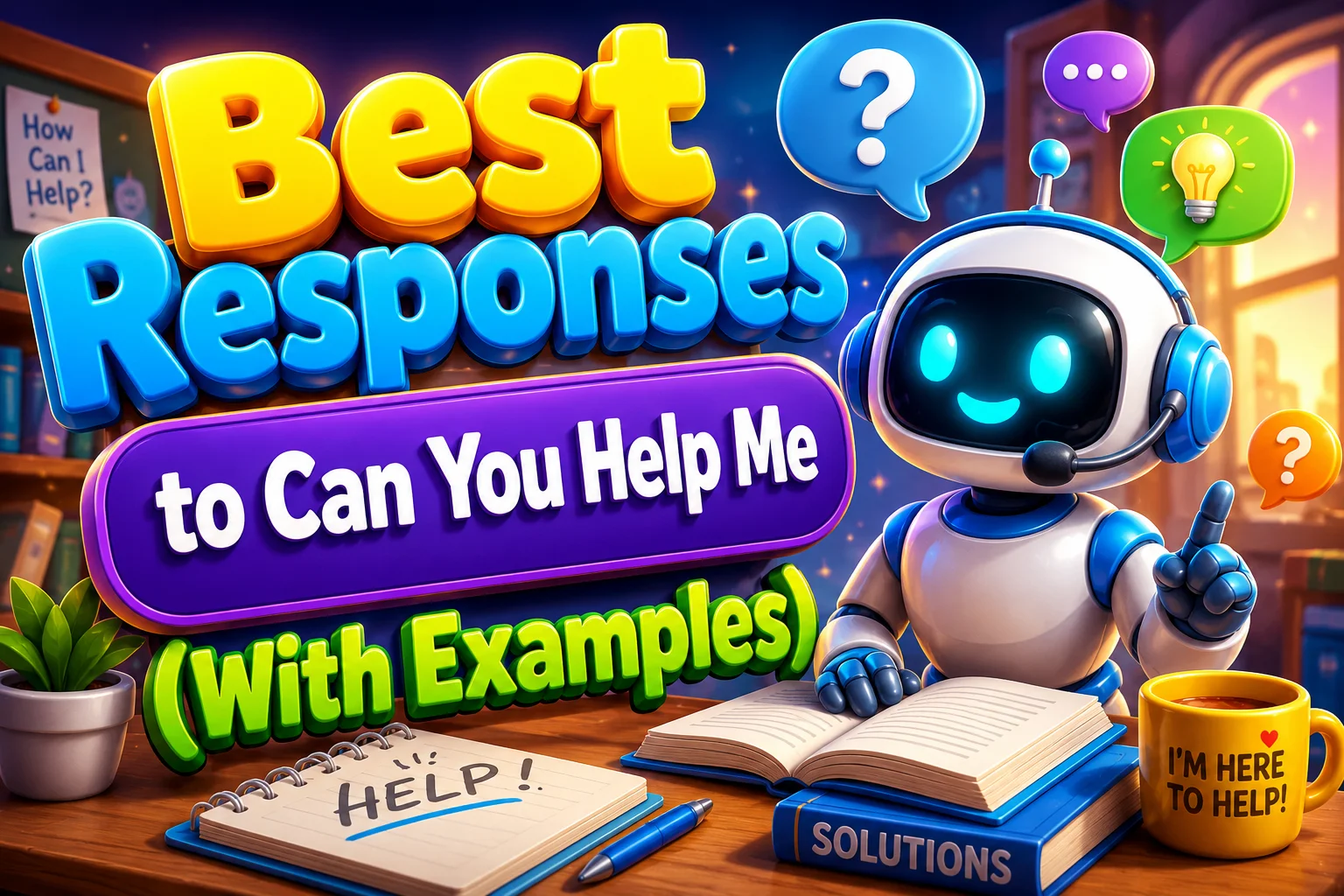
If someone asks, “Can you help me?”, your response can be friendly, supportive, funny, or professional depending on the situation. The best response to “Can you help me?” should show that you’re willing to listen and understand what the person needs. Simple replies like “Of course! What do you need help with?”, “Sure, I’d be happy to help,” or “Absolutely!
Tell me what’s going on” work well in most situations. Choose a response that matches your relationship with the person and the context of the conversation.
25 Best Responses to Can You Help Me (With Examples) can help you choose a natural reply for everyday conversations with a friend, coworker, family member, customer, or stranger.
A good response should match the situation, tone, and relationship. You may want to sound kind, supportive, professional, funny, honest, or creative while showing warmth, friendliness, gratitude, and appreciation. From my experience, a genuine and thoughtful response feels better than an awkward one, especially when someone offers help, assistance, or support. The right words can strengthen relationships, build trust, and create a lasting impression in casual conversations, formal conversations, workplace discussions, emails, DMs, office chats, and everyday life.
A simple “happy to help you” can become a perfect reply when it fits the moment. In professional settings, clear communication and problem-solving can support customer satisfaction, customer experience, customer support, and customer relationships.
Businesses can also use positive review response examples, review response templates, real-world examples, and best practices to respond to customer feedback.
1.Yes, I’d Be Happy to Help
When someone asks, “Can you help me?”, one of the warmest replies you can give is “Yes, I’d be happy to help.” This response instantly creates a friendly atmosphere and reassures the other person that you’re willing to assist. Whether a coworker needs advice, a friend needs support, or a family member asks for a favor, this reply feels genuine and encouraging. It shows kindness without sounding forced, making it one of the best responses to Can You Help Me in both personal and professional conversations.
Meaning: You are willingly offering your help with a positive attitude.
Tone: Friendly, supportive, caring, and polite.
Example:
Person: “Can you help me finish this report?”
You: “Yes, I’d be happy to help. Let’s go through it together.”
Best Use: Friends, coworkers, classmates, customers, or anyone asking for reasonable assistance.
2.Of Course! What Do You Need?
“Of course! What do you need?” is a natural response that immediately invites the other person to explain their situation. Instead of simply agreeing, you’re encouraging open communication. This response works especially well when you don’t yet know what kind of help they’re asking for. It keeps the conversation moving while showing patience, kindness, and genuine interest. It’s one of the most versatile replies because it fits almost every everyday conversation.
Meaning: You’re willing to help and want more details first.
Tone: Warm, approachable, and conversational.
Example:
Person: “Can you help me?”
You: “Of course! What do you need?”
Best Use: Everyday conversations, customer service, school, and workplace settings.
3.Absolutely, Tell Me What’s Going On
This response sounds reassuring and empathetic. Saying “Absolutely, tell me what’s going on” lets the other person know they have your attention before you offer advice or assistance. It’s especially useful when someone seems stressed, confused, or overwhelmed. Rather than jumping straight into solving the problem, you’re first giving them space to explain everything. This creates trust and helps you understand the situation more clearly.
Meaning: You’re ready to listen before helping.
Tone: Caring, understanding, and reassuring.
Example:
Person: “Can you help me? I’m having trouble with this project.”
You: “Absolutely, tell me what’s going on.”
Best Use: Emotional conversations, work discussions, family matters, and friendships.
4.Sure, I’ll Do My Best
Sometimes you genuinely want to help but aren’t completely sure you’ll have the perfect solution. “Sure, I’ll do my best” honestly communicates your willingness while setting realistic expectations. It shows humility and effort rather than making promises you may not be able to keep. People often appreciate this kind of honesty because it feels authentic and dependable.
Meaning: You’ll make a sincere effort to help.
Tone: Honest, modest, and encouraging.
Example:
Person: “Can you help me fix my laptop?”
You: “Sure, I’ll do my best. Let’s see what’s causing the issue.”
Best Use: Technical help, challenging tasks, and unfamiliar situations.
5.I’d Love to Help If I Can
This response balances enthusiasm with honesty. By saying “I’d love to help if I can,” you’re expressing genuine interest while acknowledging that your ability may have limits. It’s especially useful when you’re unsure whether you have the knowledge, time, or resources needed. Despite the uncertainty, your willingness still comes across clearly, making this a thoughtful and respectful reply.
Meaning: You’re willing to help if it’s within your ability.
Tone: Friendly, sincere, and realistic.
Example:
Person: “Can you help me prepare for my interview?”
You: “I’d love to help if I can. Tell me what you’re preparing for.”
Best Use: New situations, mentoring, volunteering, or offering advice.
6.No Problem at All
When someone asks, “Can you help me?”, replying with “No problem at all” immediately puts them at ease. It tells the other person that helping isn’t an inconvenience and that you’re happy to lend your time or effort. This response is common in everyday conversations because it sounds relaxed, positive, and welcoming. Whether you’re helping a neighbor carry groceries, assisting a coworker with a task, or answering a friend’s question, this reply makes the interaction feel comfortable and genuine. It’s one of the best responses to Can You Help Me because it removes any feeling of burden from the request.
Meaning: Helping you is easy, and I don’t mind doing it.
Tone: Casual, friendly, reassuring, and positive.
Example:
Person: “Can you help me move these boxes?”
You: “No problem at all. Where would you like me to put them?”
Best Use: Everyday conversations, helping friends, neighbors, coworkers, or family members.
7.Count Me In
“Count me in” is an energetic and enthusiastic way to accept someone’s request for help. Instead of simply saying yes, this response shows excitement and willingness to be part of the solution. It makes the other person feel supported because your answer sounds confident and committed. This phrase is especially popular when helping with group activities, community events, projects, or team assignments where cooperation matters.
Meaning: I’m happy to join and help.
Tone: Enthusiastic, supportive, and confident.
Example:
Person: “Can you help organize tomorrow’s event?”
You: “Count me in! Just let me know where you’d like me to start.”
Best Use: Teamwork, volunteer work, school projects, workplace collaboration, and social events.
8.Let’s Figure It Out Together
Sometimes you may not know the answer immediately, but you’re still willing to help. “Let’s figure it out together” emphasizes teamwork rather than expertise. It reassures the other person that they don’t have to solve the problem alone. This response builds trust because it shows you’re ready to work alongside them instead of simply giving instructions. It’s particularly effective when facing new challenges or solving complex problems.
Meaning: We’ll solve the problem as a team.
Tone: Encouraging, collaborative, and reassuring.
Example:
Person: “Can you help me understand this assignment?”
You: “Let’s figure it out together. We’ll go through it step by step.”
Best Use: Learning, brainstorming, workplace challenges, family discussions, and problem-solving situations.
9.I’m Here for You
When someone needs emotional support as much as practical help, “I’m here for you” can be one of the most meaningful responses. It tells the other person they’re not alone and that they can count on you during a difficult time. This reply goes beyond solving a problem—it strengthens relationships by showing compassion and empathy. Whether someone is feeling overwhelmed, stressed, or simply needs someone to listen, these words can provide comfort.
Meaning: You have my support, no matter what.
Tone: Compassionate, caring, comforting, and sincere.
Example:
Person: “Can you help me? I’m having a really hard day.”
You: “I’m here for you. Tell me what’s been happening.”
Best Use: Emotional conversations, close friendships, family situations, and supportive relationships.
10.Tell Me More First
Not every request for help is straightforward. Responding with “Tell me more first” allows you to understand the situation before committing to a solution. It demonstrates thoughtful communication because you’re gathering information rather than making assumptions. This approach often leads to better advice and more effective assistance since you fully understand what the other person actually needs.
Meaning: I need more information before I can help.
Tone: Curious, patient, professional, and thoughtful.
Example:
Person: “Can you help me with something?”
You: “Absolutely. Tell me more first so I know how I can help.”
Best Use: Professional discussions, customer support, coaching, consulting, and situations requiring clarification.
11.What Kind of Help Do You Need?
When someone simply asks, “Can you help me?”, it’s often unclear what they’re actually looking for. Responding with “What kind of help do you need?” politely asks for clarification before jumping into action. This reply shows you’re interested in helping while making sure you understand the request. It also prevents misunderstandings and allows you to offer the most useful support possible. Whether the person needs advice, physical assistance, or emotional encouragement, this question opens the door to a productive conversation and is one of the best responses to Can You Help Me.
Meaning: You’re willing to help but need to know exactly what’s required.
Tone: Polite, attentive, professional, and helpful.
Example:
Person: “Can you help me?”
You: “Of course. What kind of help do you need?”
Best Use: Workplace conversations, customer service, school, and situations where the request isn’t immediately clear.
12.I’ll See What I Can Do
Sometimes you’re unsure whether you’ll be able to solve the problem, but you still want to offer support. “I’ll see what I can do” communicates willingness without making unrealistic promises. It sets honest expectations while reassuring the other person that you’ll make a genuine effort. This response is appreciated because it combines kindness with honesty, making it suitable for both personal and professional conversations.
Meaning: I’ll make every reasonable effort to help.
Tone: Honest, supportive, and realistic.
Example:
Person: “Can you help me get this finished today?”
You: “I’ll see what I can do. Let’s check what still needs to be completed.”
Best Use: Difficult requests, workplace tasks, technical issues, and situations with uncertain outcomes.
13.Give Me a Minute, and I’ll Help
Not every request can be handled immediately. If you’re already busy, “Give me a minute, and I’ll help” is a polite way to acknowledge the request without ignoring it. This response lets the other person know they’re important while also giving you time to finish what you’re currently doing. It helps maintain respect and keeps expectations clear.
Meaning: I can’t help right this second, but I’ll be available shortly.
Tone: Friendly, respectful, and reassuring.
Example:
Person: “Can you help me with this printer?”
You: “Give me a minute, and I’ll help once I finish this email.”
Best Use: Busy workplaces, home situations, classrooms, and multitasking environments.
Also Read This: 25 Best Responses To I’ve Been Thinking About You (With Examples)
14.I’d Be Glad to Assist
If you’re looking for a polished and professional reply, “I’d be glad to assist” is an excellent choice. It sounds courteous and confident without being overly formal. This response is commonly used in customer service, business communication, and professional settings because it demonstrates respect and a willingness to provide quality assistance. It leaves a positive impression and helps build trust.
Meaning: I would be happy to provide professional help.
Tone: Professional, courteous, respectful, and confident.
Example:
Customer: “Can you help me update my account?”
You: “I’d be glad to assist. Let me pull up your information.”
Best Use: Customer support, business meetings, emails, and workplace communication.
15.That’s What Friends Are For
When helping someone close to you, “That’s what friends are for” adds warmth and reassurance to the conversation. It reminds the other person that friendship includes supporting each other during both good and difficult times. This response can strengthen relationships because it makes your willingness to help feel genuine rather than obligatory. It’s especially meaningful when a friend hesitates to ask for assistance.
Meaning: Friends naturally help and support one another.
Tone: Warm, caring, encouraging, and affectionate.
Example:
Friend: “Can you help me study for tomorrow’s exam?”
You: “Of course! That’s what friends are for. Let’s get started.”
Best Use: Close friendships, family-like relationships, and supportive personal conversations.
16.You’ve Come to the Right Person
When you’re confident you can genuinely help, “You’ve come to the right person” is an upbeat and reassuring response. It immediately boosts the other person’s confidence because it suggests they asked someone with the right knowledge or experience. Be careful not to sound arrogant—the goal is to inspire trust while remaining approachable. This response works especially well when you’re familiar with the topic or have solved similar problems before.
Meaning: I have the knowledge or experience to help you.
Tone: Confident, encouraging, friendly, and reassuring.
Example:
Person: “Can you help me set up my new computer?”
You: “You’ve come to the right person. I’ve done this many times.”
Best Use: Technical support, mentoring, tutoring, and situations where you have expertise.
17.Let Me Take a Look
Sometimes the best way to help is to first examine the situation. “Let me take a look” shows you’re willing to investigate before offering advice or a solution. Rather than making assumptions, you’re taking a thoughtful approach that often leads to better results. Whether it’s a broken device, a homework assignment, or an important document, this response demonstrates patience and attention to detail.
Meaning: I’ll examine the problem before deciding how to help.
Tone: Calm, practical, professional, and attentive.
Example:
Person: “Can you help me fix this spreadsheet?”
You: “Sure. Let me take a look and see what’s causing the issue.”
Best Use: Workplace tasks, technical problems, editing, repairs, and troubleshooting.
18.I’m Happy to Lend a Hand
The phrase “I’m happy to lend a hand” is a classic expression that means you’re glad to help with whatever is needed. It sounds warm, friendly, and generous without being overly formal. This response is suitable for everyday situations, from helping someone carry heavy bags to assisting with a community event. It creates a positive atmosphere and shows that you’re willing to contribute your time and effort.
Meaning: I’m pleased to help with the task.
Tone: Friendly, cheerful, supportive, and welcoming.
Example:
Neighbor: “Can you help me move this table?”
You: “I’m happy to lend a hand. Let’s lift it together.”
Best Use: Everyday favors, volunteering, neighborhood help, and teamwork.
19.I’ll Help However I Can
Not every problem has a simple solution, but “I’ll help however I can” communicates flexibility and commitment. You’re not promising miracles—you’re promising to contribute in any way that’s possible. This response makes people feel supported because it focuses on doing your best instead of guaranteeing a specific outcome. It’s especially valuable when someone is facing a difficult or emotional challenge.
Meaning: I’ll provide whatever assistance I’m able to offer.
Tone: Compassionate, flexible, supportive, and sincere.
Example:
Friend: “Can you help me prepare for my presentation?”
You: “I’ll help however I can. We can practice together and review your slides.”
Best Use: Difficult situations, emotional support, teamwork, and long-term projects.
20.Sure Thing!
If you’re looking for a short, cheerful reply, “Sure thing!” is an excellent option. It’s simple, natural, and widely used in everyday English. Despite its brevity, it clearly communicates your willingness to help while keeping the conversation relaxed. Because it sounds casual and upbeat, it’s especially popular among friends, coworkers, and family members.
Meaning: Yes, absolutely—I can help.
Tone: Casual, positive, friendly, and energetic.
Example:
Person: “Can you help me carry these groceries?”
You: “Sure thing! Which bags should I grab?”
Best Use: Casual conversations, quick favors, family interactions, and friendly workplace discussions.
21.Consider It Done
When you want to reassure someone that you’ll take care of their request, “Consider it done” is a confident and dependable response. It tells the other person that you’re committed to completing the task without making them worry about the outcome. This phrase is especially effective when the request is straightforward and you’re certain you can handle it. Because it expresses confidence and reliability, it helps build trust in both personal and professional relationships. Among the best responses to Can You Help Me, this one stands out for showing responsibility and initiative.
Meaning: I’m confident I can complete the task for you.
Tone: Confident, dependable, reassuring, and proactive.
Example:
Person: “Can you send me the meeting notes today?”
You: “Consider it done. I’ll email them before the afternoon.”
Best Use: Workplace tasks, errands, project assignments, and situations where you know you can deliver.
22.Let’s Solve This Together
Some challenges are easier when two people work together. “Let’s solve this together” emphasizes teamwork instead of individual effort. It reminds the other person that they aren’t facing the problem alone and that you’ll stay involved until a solution is found. This response creates a collaborative atmosphere and encourages open communication, making it ideal for both personal and professional situations.
Meaning: We’ll work as a team to find the best solution.
Tone: Encouraging, cooperative, supportive, and optimistic.
Example:
Person: “Can you help me fix this mistake?”
You: “Absolutely. Let’s solve this together and make sure everything is correct.”
Best Use: Team projects, family discussions, workplace challenges, study groups, and problem-solving sessions.
23.I Can Point You in the Right Direction
There may be times when you aren’t the best person to provide direct help, but you still know where the person can find the answer. “I can point you in the right direction” is a helpful response because it offers guidance instead of leaving someone without support. Sharing useful resources, recommending an expert, or explaining the next step can be just as valuable as solving the problem yourself.
Meaning: I may not solve it directly, but I can guide you toward the solution.
Tone: Helpful, informative, honest, and professional.
Example:
Person: “Can you help me learn graphic design?”
You: “I can point you in the right direction. I know some excellent online courses and tutorials.”
Best Use: Referrals, career advice, technical support, educational guidance, and customer service.
24.I Wish I Could, But I Can’t Right Now
It’s not always possible to help immediately, and that’s perfectly okay. “I wish I could, but I can’t right now” is a respectful way to decline while showing empathy. Instead of giving a blunt “no,” this response lets the other person know you’d like to help if your circumstances were different. Whenever possible, offering an alternative time or another resource makes this reply even more thoughtful.
Meaning: I’d like to help, but I’m unavailable at the moment.
Tone: Polite, empathetic, respectful, and honest.
Example:
Person: “Can you help me move this afternoon?”
You: “I wish I could, but I can’t right now. If you’re free tomorrow morning, I’d be happy to help then.”
Best Use: Busy schedules, conflicting commitments, or temporary unavailability.
25.I’d Love To, But I’m Busy at the Moment
Sometimes you’re willing to help but simply don’t have the time. “I’d love to, but I’m busy at the moment” communicates your situation honestly while maintaining kindness and respect. This response avoids sounding dismissive because it acknowledges the request and expresses genuine interest in helping later if possible. Adding an alternative time or suggesting another person who can help shows even greater consideration.
Meaning: I want to help, but my current responsibilities prevent me from doing so.
Tone: Friendly, courteous, sincere, and considerate.
Example:
Person: “Can you help me review my presentation?”
You: “I’d love to, but I’m busy at the moment. If you’re available this evening, we can go through it together.”
Best Use: Professional settings, school projects, personal commitments, and situations where your schedule is full.
FAQs
How should I respond when someone asks, “Can you help me?”
A good response depends on the situation. If you’re available, replies like “Of course! What do you need?”, “I’d be happy to help,” or “Let’s figure it out together” sound warm and supportive. If you’re unavailable, politely explain why and, if possible, offer another time or an alternative solution.
What is the most professional response to “Can you help me?”
Professional responses include:
- I’d be glad to assist.
- Certainly. How can I help you today?
- Let me take a look.
- I’ll see what I can do.
These replies sound respectful while maintaining a helpful attitude.
Is it okay to say no when someone asks for help?
Yes. You don’t have to agree to every request. A polite response such as “I wish I could, but I can’t right now” or “I’d love to, but I’m busy at the moment” allows you to set healthy boundaries while remaining respectful.
What’s a friendly response for casual conversations?
Casual responses include:
- Sure thing!
- No problem at all.
- Count me in.
- I’m happy to lend a hand.
These phrases sound natural among friends, family, and coworkers.
Why is choosing the right response important?
Your reply reflects your attitude, communication skills, and respect for others. Choosing the right words can build trust, strengthen relationships, reduce misunderstandings, and make conversations more positive.
Conclusion
Knowing the 25 Best Responses to Can You Help Me (With Examples) gives you the confidence to respond appropriately in any situation. Whether you’re speaking with a friend, colleague, customer, family member, or someone you’ve just met, the right response can make the conversation more meaningful and productive.
Some situations call for enthusiastic replies like “Sure thing!” or “Consider it done,” while others require thoughtful responses such as “Let’s solve this together” or “I’ll see what I can do.” When you’re unable to help, polite alternatives like “I wish I could, but I can’t right now” allow you to maintain kindness while setting clear boundaries.
By using these natural, supportive, and professional responses, you’ll communicate more effectively, leave a positive impression, and be better prepared whenever someone asks, “Can you help me?”